Special Report
Digital cable heart of Zee’s WWIL story

Zee Telefilms chairman Subhash Chandra is on a roll. The resurgence of flagship Hindi entertainment channel Zee TV has come after years of slippage since Kaun Banega Crorepati catapulted Star plus into leadership position.
But this is not just about Zee TV‘s prime time assault on Star Plus; it is also about how Chandra is preparing for the big fight against Rupert Murdoch in the direct-to-home (DTH) space which will determine who will dominate the broadcasting business.
Laying the preparatory ground, Chandra has streamlined his media empire to give it the right focus, resources and value. His announcement on 29 March: Zee Telefilms will be de-merged into four separate entities. While cable business will come under Wire and Wireless India Ltd (WWIL), Dish TV will handle the DTH operations. News and regional channels are being consolidated in Zee News Ltd. Under the umbrella of Zee Telefilms will be the newly launched Zee Sports.

The “sum total of the parts” concept ignited the scrip which, once hovering around Rs 130-150 in mid-2005, has breached the 200-mark and closed today at Rs 227.
In the first of a four-part series, Indiantelevision.com takes an in-depth look into the de-merged cable business of Zee Telefilms.
Subhash Chandra sees a golden opportunity in the cable TV business becoming a crown jewel in his media empire. His new mantra: digitalisation, broadband and Voice over Internet Protocol (VoIP).
 |
| Media czar Subhash Chandra |
Having built the largest network in the country with a base of 6.8 million subscribers, Chandra has set upon himself the task of refashioning the business model to discover hidden value. His first step: to hive off the cable assets into a separate company, Wire and Wireless India Ltd (WWIL), as it would allow for better allocation of capital and management resources.
Jagjit Singh Kohli, a doyen in the industry, is put at the steering wheel to chalk out a comprehensive business plan. “We have identified cable distribution as a thrust area. We are building a separate team under Kohli to work out the full plan. Digital cable will help push up the ARPUs (average revenue per user). We can also share the infrastructure with telecom companies for voice services,” Chandra told analysts at a meeting after announcing his de-merger plans.
Chandra is weary of the fact that multi-system operators (MSOs) have been incurring historical losses in an unorganised sector dominated by last mile operators (LMOs) who terribly under-report subscriber numbers. For the fiscal ended March 2006, Zee‘s cable business barely managed to post an operating profit of Rs 17 million on a revenue of Rs 1.5 billion. Lack of addressability in the industry has, in fact, dragged down valuations of analogue cable networks.
Making digital cable the heart of WWIL‘s growth strategy, Chandra has earmarked an investment of Rs 5 billion over three years to charge up the business. “The minimum we will be pumping in this fiscal is Rs 600 million. But we are working on two models and if we are able to push digitalisation in a big way, we will actually be investing Rs 1.3 billion this year,” says Essel Group CEO of corporate strategy and finance Rajiv Garg.
After Delhi, a digital headend is being set up in Mumbai, a lucrative market where WWIL currently has a small presence. Kolkata, Bangalore and Hyderabad are some other cities which will also inhabit the digital map.
 |
That does not mean that analogue expansion will be abandoned. WWIL is best poised to take up this role as, with a huge pile up of Zee channels, there are broadcasting interests to protect in an environment where cable bandwidth is choked. Siticable (earlier name of Zee‘s cable company), in fact, swung into action last year to snap up RPG-promoted Indian Cable Net, the biggest MSO in Kolkata. Spoiling Kalanithi Maran‘s SCV plans, the acquisition established Siticable as the leading MSO with a market share of over 60 per cent.
Siticable has also taken on lease two prominent cable networks of Bangalore, Ice Network and Atria Network. In Hyderabad talks with Maran to tie up against Hathway Cable & Datacom were initiated but failed. Expansion through affiliation schemes to existing cable networks is also much on the agenda.
By aggressively pursuing such plans, Chandra feels his cable business is sure to find a pot of gold. He has put WWIL‘s valuation in the region of $800-900 million (Rs 36-40.5 billion).
Just over six years back, Chandra had bought out News Corp‘s 50 per cent stake of Siticable at a valuation of Rs 15 billion. So how does he arrive at such a steep rise in valuation now?
The calculation runs somewhat like this: Siticable gets paid for a million homes which, according to Chandra, can attract a valuation of $500 (Rs 22,500) per subscriber. For the balance 5.8 million subscribers (for which Siticable is not paid), he puts a value of $50 (Rs 2,250) per subscriber, taking the total worth of the network to around $800 million.
Since the buyout in 1999, Chandra believes a turnaround in valuations is possible for two basic reasons: conditional access system (CAS), which will ensure rollout of digital cable TV in the country; and potential of cable to get into the arena of triple play convergence – voice, data and video.
 |
“We are bullish about our cable business. We can attract investors in our distribution businesses in cable and direct-to-home (DTH),” Chandra had told Indiantelevision.com soon after announcing de-merger of Zee Telefilms into four individual entities.
On annual revenue of Rs 1.5 billion, investors have to really bet their money on future earnings of the cable industry. The ARPU is around $3.5 a month, meaning a massive scale up has to take place.
A question that analysts ask is: how does he put a value of $50 for the 5.8 million subscribers which WWIL is not paid for?
A research firm has put the enterprise value (EV) of WWIL at $670 million (Rs 30.15 billion). This is based on EV per subscriber of $100 (with 6.7 million subscribers).
Traditional cable valuations have been high but not at the level Chandra is looking at. Hathway was valued at $225 million and Star took a 26 per cent stake for $75 million, paying for a presence in distribution after exiting from Siticable and hype on IP-driven content. Even after adding size to the network, digital cable to a small extent and broadband growth, analysts put Hathway‘s current valuation at $400-500 million. Hinduja-owned Incablenet has also got on Intel and Kudelski to invest at huge valuations, but these have been small stakes in the company.
What has changed this time, though, is CAS. This changes the business model of MSOs as it gives them direct control of the last mile subscribers.
For getting an investor at the valuation that Chandra wants, WWIL will have to get in digital cable. Besides, it needs to have more control over the LMOs. The pot of gold, after all, resides in the last-mile system. CAS, or addressability, will instantly ignite valuations when it comes, but at the moment it looks some distance away. Chandra‘s corporate restructuring, however, has come at the right time. Telecom majors like Reliance Infocomm are feeling the need of getting access to the last mile through the chain of cable operators for rollout of IPTV. And, if CAS is mandated, international players like Liberty and Comcast will be keen to invest into the existing MSOs as an entry strategy. Private equity investors will also find cable worth putting their bets on.
 |
|
WWIL CEO J S Kohli
|
Some investment bankers feel Hathway is handicapped in a way as, with Star as a 26 per cent partner, the MSO will find it difficult to woo in strategic investors. Even getting in private equity participation will require the approval of Star. Incablenet, on the other hand, may find reason to opt only for a strategic investor as it does not have any broadcast ownership.
Chandra can find a business case in expanding analogue business, particularly in territories where it can rake in carriage fees from broadcasters, with the strategy of putting digital later on the platform. In this arena, WWIL can be more aggressive than rival networks Incablenet and Hathway and may not even face competition from them. For Incablenet, the focus will be on converting its existing network into digital cable. As for Hathway, future expansion strategies will depend on how much Star is prepared to invest to support these plans. With Tata Sky, Star also has an interest in promoting its DTH business.
The tough question is: where and how can WWIL find the space to expand its footprint?
In the southern region, Tamil Nadu and Kerala will be impossibly tough territories to crack with Maran‘s SCV and Rajan Raheja‘s Asianet Satellite Communications Ltd. having a dominating presence. As for Andhra Pradesh, WWIL will have to regain lost ground in Hyderabad where it has not been getting signals from Star and Sony-Discovery bouquets after Hathway was appointed as distributor of these channels. Karnataka is a different story as WWIL has a sizeable presence in Bangalore, though it is yet to roll out digital services.
“We are plotting plans to revive our network in Andhra Pradesh. We will soon have a strategy in place,” says a Siticable joint venture partner in Hyderabad.
In Madhya Pradesh, the main markets of Bhopal and Indore are dominated by Bhaskar Multi Net Ltd, promoted by print media giant Bhaskar group. Rajasthan Patrika owners have also diversified into cable. Though Kolkata is under the grip of WWIL, it will be difficult to extend the footprint in the eastern region. Orissa is dominated by Ortel and the other markets may not be attractive.
WWIL has scope to expand in the smaller towns of western and northern India where it already has a well spread out presence. “It is nice to talk of expansion, but the market reality is different. In Karnataka there is scope to expand but ARPUs are low. It is also difficult to get carriage fees in the southern states where there is no appetite for Hindi content. WWIL can spread its wings in the northern and western regions but has to be careful if it wants to step into non paying and unstable markets,” says a trade analyst.
The main challenge is to gain market share in Mumbai and Delhi. “WWIL will have to start a war in Mumbai and Delhi by dropping feeder rates to poach distributors and local operators. These will be two big digital markets. If WWIL goes on the offensive, we may have a land grab like situation,” says the analyst.
Some analysts feel WWIL will have a distinct advantage in case of a fast digital rollout growth. “They have the widest presence and have the largest cable network in the country. They can take advantage of the digital environment and launch a headend-in-the-sky (HITS) platform,” says a market analyst.
What Chandra needs is to pump in money. As the ideal debt-equity ratio for WWIL is 1:1, getting an investor in would help though it is not imperative. “The net worth of the company currently is not that strong to support that size od debt. We are, after all, planing to invest Rs 5 billion to expand the business,” says Garg.
Trust the maverick Chandra to make the right move at the opportune moment. Unlike in 2000, Chandra has one advantage in roping in an investor this time. With WWIL getting listed, the piece of cable business in his media empire can be an attractive buy.





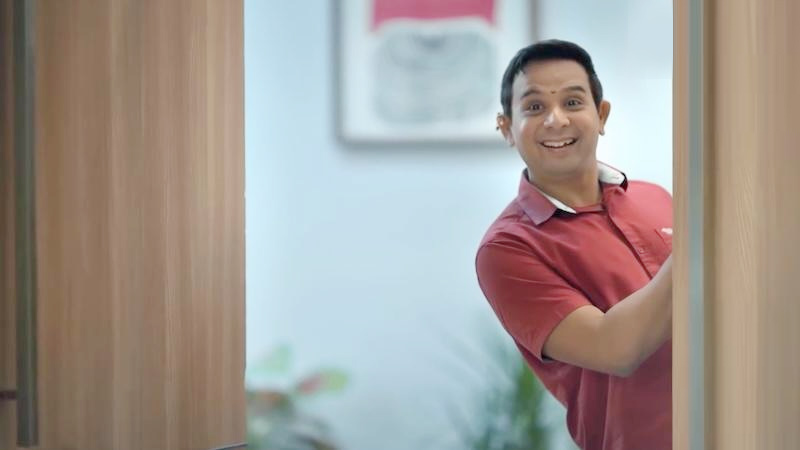
MUMBAI: Some friendships are made in heaven; others are coded in Mumbai. Hamara Vinayak, the first-ever digital original from Siddharth Kumar Tewary’s Swastik Stories, turns the divine into the delightful, serving up a story that’s equal parts start-up hustle and spiritual hustle.
Some tech start-ups chase unicorns. This one already has a god on board. Hamara Vinayak takes the leap from temple bells to notification pings and it does so with heart, humour and a healthy dose of the divine.
At its core, the show asks a simple but audacious question: what if God wasn’t up there, but right beside you, maybe even debugging your life over a cup of chai?
The show’s tagline, “God isn’t distant… He’s your closest friend” perfectly captures its quirky soul. Across its first two episodes, screened exclusively for media in Mumbai, the series proves that enlightenment can come with a good punchline.
The series follows a group of ambitious young entrepreneurs running a Mumbai-based tech start-up that lets people around the world book exclusive virtual poojas at India’s most revered shrines. But as their app grows, so do their ethical grey zones. Into this chaos walks Vinayak, played with soulful serenity and sly wit by the charming Namit Das, a young man whose calm smile hides something celestial.

He’s got the peaceful look of a saint but the wit of someone who could out-think your favourite stand-up comic. Around him spins a crew of dream-driven youngsters – Luv Vispute, Arnav Bhasin, Vaidehi Nair and Saloni Daini who run a Mumbai-based tech start-up offering devotees across the world the chance to book “exclusive” poojas at India’s most sacred shrines. It’s a business plan that blends belief and broadband – and, as the story unfolds, also tests the moral compass of its ambitious founders.
“The first time I read the script, I found the character very pretty,” Namit joked at the post-screening interaction. “It’s a beautiful thought that God isn’t distant, he’s your closest friend. And playing Vinayak, you feel that calm but also his cleverness. He’s the friend who makes you think.”
The reactions to the series ranged from smiles to sighs of wonder. Viewers were charmed by the show’s sincerity and sparkle, a quality that stems from its creator’s belief that faith can be funny without being frivolous.
Among the cast, Luv Vispute shines brightest, his comic timing adding sparkle to the show’s more reflective beats. But what keeps Hamara Vinayak engaging is the easy rhythm of its writing – one moment touching, the next teasing, always gently reminding us that spirituality doesn’t have to be solemn.
Luv spoke fondly of his long association with Swastik. “Since my first show was with Swastik, this feels like home,” he said. “Every project with them is positive, feel-good, and this one just had such a different vibe. I truly feel blessed.”
Saloni Daini, who brings infectious warmth to her role, added that she signed up the moment she heard the show was about “Bappa.”
“We shot during the Ganpati festival,” she recalled. “The energy on set was incredible festive, faithful, and full of laughter. It’s such a relatable story for our generation: chaos, friendship, love, kindness, and faith all mixed together.”

Vaidehi Nair and Arnav Bhasin complete the ensemble, each representing different shades of ambition and morality in the start-up’s journey. Their camaraderie is easy and believable, a testament to how much the cast connected off-screen as well.
This clever fusion of mythology and modernity plays to India’s two enduring loves, entertainment and faith. Mythology has long been the comfort zone of Indian storytellers, from the televised epics of the 1980s to the glossy remakes that still command prime-time TRPs. For decades, gods have been our most bankable heroes. But Hamara Vinayak tweaks the formula not by preaching, but by laughing with its characters, and sometimes, at their confusion about where divinity ends and data begins.
Creator Siddharth Kumar Tewary, long hailed as Indian television’s myth-maker for shows like Mahabharat, Radha Krishn and Porus, explained the show’s intent with characteristic clarity, “This is our first story where we are talking directly to the audience, not through a platform,” he said. “We wanted to connect young people with our culture to say that God isn’t someone you only worship; He’s your friend, walking beside you, even when you take the wrong path. The story may be simple, but the thought is big.”
That blend of philosophy and playfulness runs through the show. “We had to keep asking ourselves why we’re doing this,” Tewary added. “It’s tricky to make something positive and spiritual for the OTT audience, they’ve changed, they want nuance, not sermons. But when the purpose is clear, everything else aligns.”
For the creator of some of Indian TV’s most lavish spectacles, Hamara Vinayak marks a refreshing tonal shift. Here, Tewary trades celestial kingdoms for co-working spaces and cosmic battles for office banter. Yet his signature remains: an eye for allegory, a love for faith-infused storytelling, and an understanding that belief is most powerful when it feels personal.
Hamara Vinayak, after all, feels less like a sermon and more like a conversation over chai about what success means, what faith costs, and why even the gods might be rooting for a start-up’s Series A round.
As Namit Das reflected during the Q&A, “Life gives us many magical, divine moments we just forget to notice them. Sometimes even through a phone screen, you see something that redirects you. That’s a Vinayak moment.”
The series also mirrors a larger cultural pivot. As audiences migrate from television to OTT, myth-inspired tales are finding new form and flexibility online. The digital screen lets creators like Tewary reinvent the genre, giving ancient ideas a modern interface, without losing the emotional charge that’s made mythology India’s storytelling backbone for decades.
In a country where faith trends faster than any hashtag, Hamara Vinayak feels both familiar and refreshingly new, a comedy that’s blessed with heart, humour and just enough philosophy to keep the binge holy.
For a country where mythology remains the oldest streaming service, Tewary’s move from TV to OTT feels both natural and necessary. Indian storytellers have always turned to gods for drama, guidance and TRPs from Ramayan and Mahabharat on Doordarshan to glossy mytho-dramas on prime time. But digital platforms allow creators to remix reverence with realism, and in Hamara Vinayak, faith gets an interface upgrade.
The result is a show that feels like a warm chat with destiny, part comedy, part contemplation. And in an age of cynicism, that’s no small miracle.
As Tewary put it, smiling at his cast, “The message had to be positive. We just wanted to remind people that even in chaos, God hasn’t unfriended you.”
With 5 episodes planned, Hamara Vinayak promises to keep walking that fine line between laughter and light. It’s mythology with memes, devotion with dialogue, and a digital-age reminder that even the cloud has a silver lining or perhaps, a divine one.
If the first two episodes are any sign, the show doesn’t just bridge heaven and earth, it gives both a Wi-Fi connection.