Special Report
CAS comes at a price – let not government decide what that price is

There’s a lot of wishful thinking going on in government.That it can and should control pricing. That too, in a country which is moving from a shackled economy to a free one. That too, in a nation in which structures choked and weighed under by government control are being dismantled and slowly being handed out to private organisations to run. That too, in a nation in which price subsidies in almost every sector are being removed. And the sad part is that even the Prime Minister‘s name is being dragged into it. Continuously.
The issue we are referring to is the migration of the cable TV industry towards conditional access systems. The government has been driving it all along because the fractured, fragmented, rift-ridden cable and satellite TV industry has at first been playing the ostrich with its head buried in the sand, not in the least worried about getting order into its working. And later it has been playing the tortoise, loathe and slow to follow the government?s whip which was being cracked in the shape of the CAS amendment.
The government mandating CAS is something we can stomach, because authorities in some nations have done so. India boasts of being the largest democracy. The US is the second largest. However, in the US CAS was not mandated. It evolved over time, with HBO being the first pay TV service. The industry and consumers drove it, not government.

We will accept the government’s avowed honest intentions of having the consumer?s interest in mind for shoving CAS down everyone?s throats. That is a lower monthly cable TV tab for viewers.
But logic states that unless a free market situation is established with competitive forces coming into play, prices never come down. They always go up.
Even the US’ Federal Communications Commission is kept busy on this account. Like a vigilante, it keeps a hawk?s eye on anyone spiking rates, swooping down on any errant player once a cry of excess is heard. The propensity to cartelise and hike rates is there even in a competitive market like the US. Expect nothing different from monopolistic and opportunistic cable TV operators, MSOs and broadcasters in India.
The rate card proposed by broadcasters two days ago hence comes as no surprise. The MSOs are raising Cain and are asking the government to intervene by putting a ceiling on rates. And information & broadcasting minister Ravi Shankar Prasad has been like a CAS evangelist, preaching everytime that pay TV channel prices have to be consumer friendly. Who is to decide what is consumer friendly? Should it be consumers or consumer organizations with vested interests? Or should it be left to market forces? Does the government decide what the cover price of The Times of India or a Mid-Day should be on a weekday or on a Sunday? If it decides on pay TV channel rates, then it should do the same for even the price tags on shirts, pants, chocolates, and what have you.
The government should understand that if cable TV rates are pegged too high only those who can afford the sticker prices will subscribe to the service. Others will not. Those who find the cost too steep and cannot do without their daily TV fix will in all likelihood raise a hue and cry. And if there are enough numbers of these to justify rate cuts, there?s no doubt that the cable TV operators and broadcasters will wilt under the viewer pressure. Remember, pay TV and CAS has to be made viable as a business model.
What indiantelevision.com is trying to say is that let pricing be left to market forces, let not the government decide the cost to consumers. There is going to be pressure from all sides, especially the cable TV trade, and other vested parties. Stand firm. You have drawn the route map. Now work with the industry and trade towards its successful implementation.

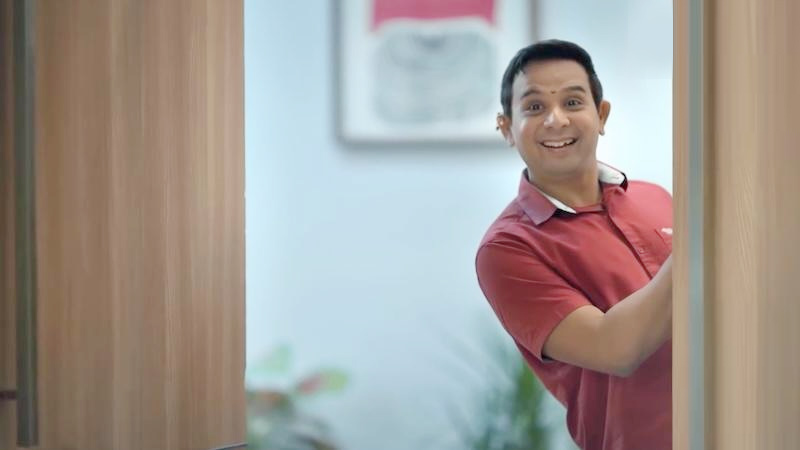
MUMBAI: Some friendships are made in heaven; others are coded in Mumbai. Hamara Vinayak, the first-ever digital original from Siddharth Kumar Tewary’s Swastik Stories, turns the divine into the delightful, serving up a story that’s equal parts start-up hustle and spiritual hustle.
Some tech start-ups chase unicorns. This one already has a god on board. Hamara Vinayak takes the leap from temple bells to notification pings and it does so with heart, humour and a healthy dose of the divine.
At its core, the show asks a simple but audacious question: what if God wasn’t up there, but right beside you, maybe even debugging your life over a cup of chai?
The show’s tagline, “God isn’t distant… He’s your closest friend” perfectly captures its quirky soul. Across its first two episodes, screened exclusively for media in Mumbai, the series proves that enlightenment can come with a good punchline.
The series follows a group of ambitious young entrepreneurs running a Mumbai-based tech start-up that lets people around the world book exclusive virtual poojas at India’s most revered shrines. But as their app grows, so do their ethical grey zones. Into this chaos walks Vinayak, played with soulful serenity and sly wit by the charming Namit Das, a young man whose calm smile hides something celestial.

He’s got the peaceful look of a saint but the wit of someone who could out-think your favourite stand-up comic. Around him spins a crew of dream-driven youngsters – Luv Vispute, Arnav Bhasin, Vaidehi Nair and Saloni Daini who run a Mumbai-based tech start-up offering devotees across the world the chance to book “exclusive” poojas at India’s most sacred shrines. It’s a business plan that blends belief and broadband – and, as the story unfolds, also tests the moral compass of its ambitious founders.
“The first time I read the script, I found the character very pretty,” Namit joked at the post-screening interaction. “It’s a beautiful thought that God isn’t distant, he’s your closest friend. And playing Vinayak, you feel that calm but also his cleverness. He’s the friend who makes you think.”
The reactions to the series ranged from smiles to sighs of wonder. Viewers were charmed by the show’s sincerity and sparkle, a quality that stems from its creator’s belief that faith can be funny without being frivolous.
Among the cast, Luv Vispute shines brightest, his comic timing adding sparkle to the show’s more reflective beats. But what keeps Hamara Vinayak engaging is the easy rhythm of its writing – one moment touching, the next teasing, always gently reminding us that spirituality doesn’t have to be solemn.
Luv spoke fondly of his long association with Swastik. “Since my first show was with Swastik, this feels like home,” he said. “Every project with them is positive, feel-good, and this one just had such a different vibe. I truly feel blessed.”
Saloni Daini, who brings infectious warmth to her role, added that she signed up the moment she heard the show was about “Bappa.”
“We shot during the Ganpati festival,” she recalled. “The energy on set was incredible festive, faithful, and full of laughter. It’s such a relatable story for our generation: chaos, friendship, love, kindness, and faith all mixed together.”

Vaidehi Nair and Arnav Bhasin complete the ensemble, each representing different shades of ambition and morality in the start-up’s journey. Their camaraderie is easy and believable, a testament to how much the cast connected off-screen as well.
This clever fusion of mythology and modernity plays to India’s two enduring loves, entertainment and faith. Mythology has long been the comfort zone of Indian storytellers, from the televised epics of the 1980s to the glossy remakes that still command prime-time TRPs. For decades, gods have been our most bankable heroes. But Hamara Vinayak tweaks the formula not by preaching, but by laughing with its characters, and sometimes, at their confusion about where divinity ends and data begins.
Creator Siddharth Kumar Tewary, long hailed as Indian television’s myth-maker for shows like Mahabharat, Radha Krishn and Porus, explained the show’s intent with characteristic clarity, “This is our first story where we are talking directly to the audience, not through a platform,” he said. “We wanted to connect young people with our culture to say that God isn’t someone you only worship; He’s your friend, walking beside you, even when you take the wrong path. The story may be simple, but the thought is big.”
That blend of philosophy and playfulness runs through the show. “We had to keep asking ourselves why we’re doing this,” Tewary added. “It’s tricky to make something positive and spiritual for the OTT audience, they’ve changed, they want nuance, not sermons. But when the purpose is clear, everything else aligns.”
For the creator of some of Indian TV’s most lavish spectacles, Hamara Vinayak marks a refreshing tonal shift. Here, Tewary trades celestial kingdoms for co-working spaces and cosmic battles for office banter. Yet his signature remains: an eye for allegory, a love for faith-infused storytelling, and an understanding that belief is most powerful when it feels personal.
Hamara Vinayak, after all, feels less like a sermon and more like a conversation over chai about what success means, what faith costs, and why even the gods might be rooting for a start-up’s Series A round.
As Namit Das reflected during the Q&A, “Life gives us many magical, divine moments we just forget to notice them. Sometimes even through a phone screen, you see something that redirects you. That’s a Vinayak moment.”
The series also mirrors a larger cultural pivot. As audiences migrate from television to OTT, myth-inspired tales are finding new form and flexibility online. The digital screen lets creators like Tewary reinvent the genre, giving ancient ideas a modern interface, without losing the emotional charge that’s made mythology India’s storytelling backbone for decades.
In a country where faith trends faster than any hashtag, Hamara Vinayak feels both familiar and refreshingly new, a comedy that’s blessed with heart, humour and just enough philosophy to keep the binge holy.
For a country where mythology remains the oldest streaming service, Tewary’s move from TV to OTT feels both natural and necessary. Indian storytellers have always turned to gods for drama, guidance and TRPs from Ramayan and Mahabharat on Doordarshan to glossy mytho-dramas on prime time. But digital platforms allow creators to remix reverence with realism, and in Hamara Vinayak, faith gets an interface upgrade.
The result is a show that feels like a warm chat with destiny, part comedy, part contemplation. And in an age of cynicism, that’s no small miracle.
As Tewary put it, smiling at his cast, “The message had to be positive. We just wanted to remind people that even in chaos, God hasn’t unfriended you.”
With 5 episodes planned, Hamara Vinayak promises to keep walking that fine line between laughter and light. It’s mythology with memes, devotion with dialogue, and a digital-age reminder that even the cloud has a silver lining or perhaps, a divine one.
If the first two episodes are any sign, the show doesn’t just bridge heaven and earth, it gives both a Wi-Fi connection.







