Regulators
Trai’s TV Trials & Tribulations

When in late 2003, a few months ahead of the general elections (in early 2004), the then Bharatiya Janata Party-led coalition government in Delhi issued a notification bringing broadcast and cable services under the Telecom Regulatory Authority of India (Trai), media wrote the epitaphs of the information and broadcasting ministry.
The reasoning given then, which in hindsight looks full of holes, was that with broadcasting coming under Trai’s jurisdiction, the ministry would be left with just the ‘I’ and it was only a matter of time before the final nail in the ministry’s coffin would be driven. The final verdict then: I&B ministry RIP.
The truth has been far from that perceived reality.

Though Trai has tried valiantly to grapple with the complex broadcast-related issues, the industry is more or less experiencing the same (growth?) pangs as was the case earlier. And, with new technologies like DTH, broadband and streaming over mobile phones making their appearance, the regulator has found little support from the industry and the government alike on these matters.
What makes things delicate at the moment are reports that a broadcast and cable industry stakeholder has moved the courts questioning the very validity of Trai to hold forth on industry matters. Especially those (like setting a price cap on some services and neutralizing the commercial impact of exclusive content) that govern business activities.
For example, existing and wannabe DTH operators for different reasons have been criticizing the regulator on the ‘must provide’ rule, which envisages making available all content to all delivery platforms on a non-discriminatory basis.
The country’s first private sector DTH operator Dish TV has been crying foul —- and even moved disputes tribunal TDSAT (Telecom Dispute and Settlement Appellate Tribunal) successfully — over the likes of the Sony-Discovery One Alliance and Star bouquet not agreeing to come on board (on commercial terms, of course). The leading pay TV broadcasters, on the other hand, have been shying away from Dish TV on the ground that such a Trai-mandated move will curb their business models even as the issue of piracy of signals would not get addressed.
Trai’s repeated contention that at this point of time it is more bothered about making available all types of content to consumers, thereby giving a go by to exclusivity, has failed to cut much ice.
It is debatable whether the regulator should start tinkering with a business model — exclusive content is definitely going to drive some viewership — in a segment that has just started off in India, but there’s no denying the fact that a consensus on the issue will elude all stakeholders at the moment.
If we try to be Devil’s advocate and petition on behalf of Trai, then we might say that all that the regulator is trying to ensure is that in the name of exclusivity broadcasters do not go in for predatory pricing and bundling which might not be in the best interest of consumers. More so when more players are expected to join the DTH party, which, according to Trai, might just turn out to be beneficial for consumers as aggressive marketing ploys are resorted to by players.
The thinking is on the lines of what happened in the telecom sector. More players, more competition, more benefits for consumers. However, from the broadcaster side of the fence, the picture doesn’t look quite the same. For them, a ban on exclusivity is like saying a general restaurant serving all types of food is always beneficial for consumers. But what about those who want to treat themselves to speciality menu? They go to speciality restaurants. The same way, those people who want to watch a certain type of programming and are willing to pay for it — maybe a bit more — should be allowed to do so.
Then of course there is the long festering issue of cable TV pricing. Trai has been under fire from pay broadcasters for regulating cable TV pricing, which is linked to annual rate of inflation. One such trenchant broadcaster opined, “With Trai being totally ineffective in addressing the issue of under declaration by cable ops, regulating cable TV pricing for over two years now is amounting to interference in business.”
Though the intentions seemingly are honest, the regulator has been unable to bring about the promised transparency in the whole system. For instance, its continued plea to broadcasters and cable operators to give it the pricing of individual channels for public knowledge has not only fallen on deaf ears, but has been defied openly. Add to that the reluctance of stakeholders of the industry to make public commercial deals struck amongst themselves.
A Trai regulation says that all deals between a cable op and a consumer, a broadcaster and a MSO, for example, should be made public so that the public at large would know of the economics involved. But here too, it’s a no go.
A la carte pricing is something that the Indian broadcast industry is shying away from, preferring to give out bundled and packaged prices. However, the industry might note a recent observation of America’s FCC, which is seen by all as a yardstick for regulation.
Coming down heavily on selling bundling of TV channels, FCC earlier in the month noted that consumers could be “better off under an “a la carte” model of pricing as it increases their choices in purchasing programming.
Pointing out discrepancies in a 2004 report by Booz Allen Hamilton, which gave the thumbs up to packaging, FCC said the 2004 report relied upon “unrealistic assumptions” and “presented biased” analyses in concluding that a la carte “would not produce the desired result of lower MVPD (multi-video programming distributors) rates for most pay-television households.”
If Trai thinks that it stands vindicated on many issues, a total lack of support from the government has tied its hands. A Trai report on phased implementation of CAS or addressability in Indian cable homes is not only gathering dust in the I&B ministry, but has been successfully blunted by politicians playing vote bank politics.
Should broadcast and cable services be taken out of Trai’s jurisdiction? And, is a content regulator more important?
The answers to these are tricky. Taking broadcasting and cable services away from Trai would not solve the problem as content regulation is not the only issue facing the industry.
With the $ 3.6 billion broadcast industry of India (including DTH, cable, IPTV, etc), estimated by Media Partners Asia to grow to $ 7.2 billion by 2010, the economies of scale and the investments involved would need not just a content regulator, but one with omnibus powers. A regulator that will firmly step in to take care of consumers’ financial interests too, even while creating an environment for the industry players to carry on fair business practices.
But for that to happen, the Indian government has got to show some spine and have a long-term vision. Blaming Trai for the entire sector’s ills is not going to benefit anybody.






I&B Ministry
Government sets up AI governance group to steer policy
AIGEG to align ministries, assess jobs impact, guide AI deployment.
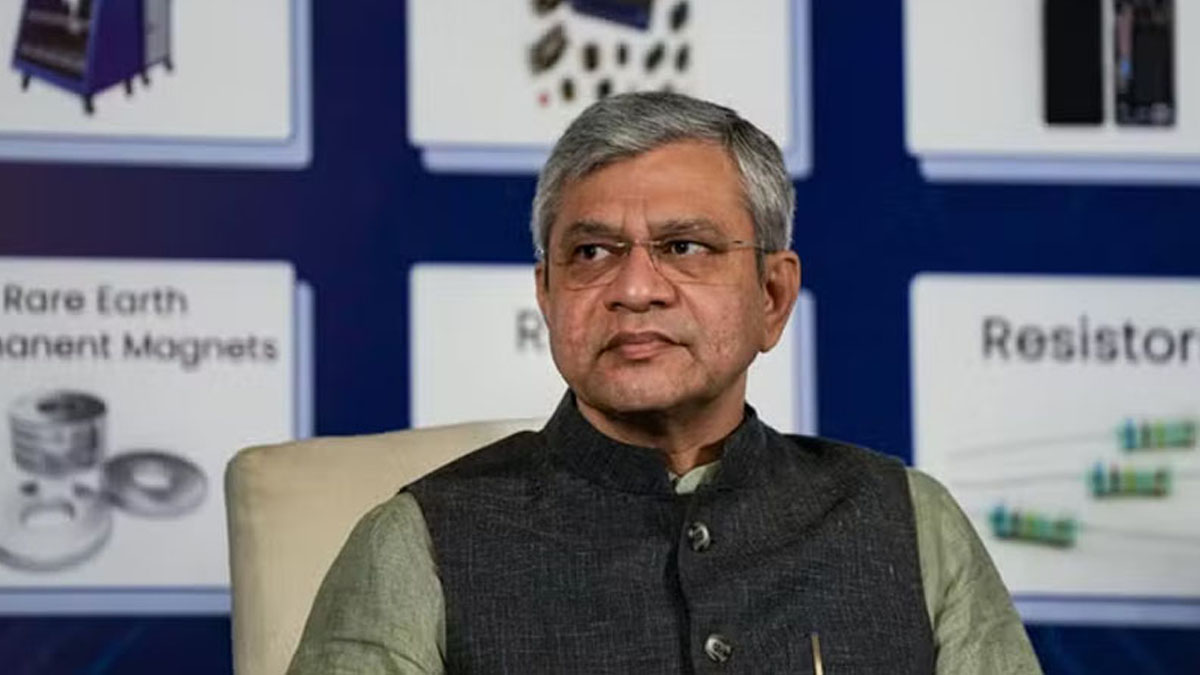
MUMBAI: If artificial intelligence is the engine, the government is now building the dashboard and making sure everyone reads from the same screen. The Centre has constituted a new inter-ministerial body to coordinate India’s approach to AI, formalising a key recommendation from its governance framework and the Economic Survey. The AI Governance and Economic Group (AIGEG), set up by the Ministry of Electronics and Information Technology, will act as the central platform to align AI-related policy across ministries, regulators and departments, an attempt to bring coherence to what has so far been a fragmented and fast-evolving landscape.
The group will be chaired by union minister Ashwini Vaishnaw, with minister of state Jitin Prasada as vice chairperson. Its composition reflects both technological and economic priorities, bringing together the principal scientific adviser, the chief economic adviser, and the CEO of NITI Aayog, alongside key secretaries from telecommunications, economic affairs and science and technology. A representative from the National Security Council Secretariat is also part of the group, while the MeitY secretary will serve as member convenor.
At its core, AIGEG is designed to do two things: coordinate and anticipate. On the policy front, it will review existing regulatory mechanisms, issue guidance across sectors and ensure companies remain compliant with evolving legal frameworks. Beyond that, it will oversee national initiatives on AI governance, with a focus on enabling responsible innovation rather than merely regulating it.
The economic dimension is equally central. The group has been tasked with assessing how AI-driven automation could reshape jobs identifying which roles are most at risk, where those impacts may be geographically concentrated, and whether technology will augment or replace human labour. Based on these assessments, it will develop mitigation strategies and transition plans, signalling a more proactive stance on workforce disruption.
In parallel, AIGEG will work with industry stakeholders to chart a long-term roadmap for AI adoption, categorising use cases into “deploy”, “pilot” or “defer” buckets depending on readiness factors such as data availability, skill levels and regulatory clarity. The aim is to move from broad ambition to structured execution deciding not just what can be built, but what should be built now.
The group will function as the apex layer in India’s AI governance architecture, supported by a Technology and Policy Expert Committee that will track global developments, emerging risks and regulatory priorities. Together, the two bodies are expected to shape both the pace and direction of AI adoption in the country.
In a landscape where technology often outruns policy, the creation of AIGEG signals an attempt to close that gap ensuring that India’s AI journey is not just rapid, but also coordinated, accountable and economically grounded.







