Regulators
Trai plans appeal option in DND app; MyCall relaunch in March

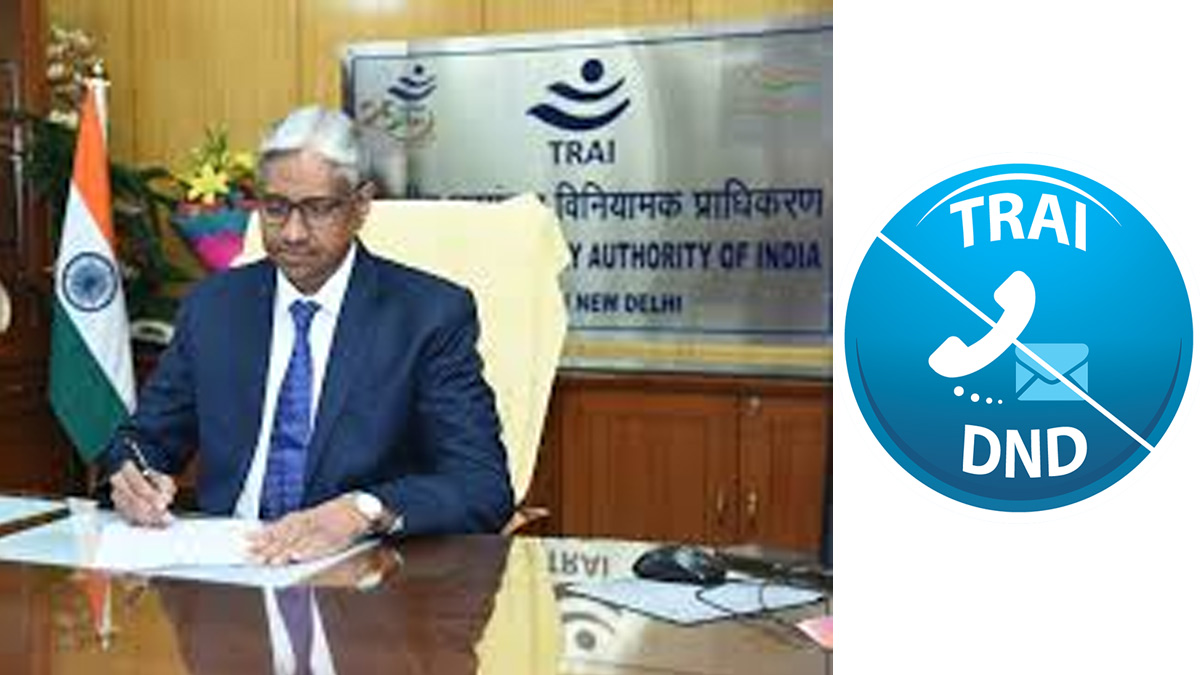
NEW DELHI: India’s telecom regulator is sharpening its tools against spam and poor call quality, with a fresh round of upgrades to its consumer apps and a new appeals feature in the works.
Telecom Regulatory Authority of India chairman Anil Kumar Lahoti said the authority plans to introduce an appeals option in the Do Not Disturb app, allowing users to escalate complaints if they are unhappy with the telecom operator’s response. The feature is currently under development, with no launch date announced.
The move comes as spam complaints continue to pile up. Of the 31 lakh unsolicited commercial communication complaints recorded in 2025, more than half were filed through the DND app. The new appeals mechanism is expected to plug gaps where complaints are closed by operators with incorrect or unsatisfactory reasons.

Lahoti was speaking at the unveiling of revamped versions of the regulator’s consumer-facing apps. The updated DND app will come with multilingual support, simpler complaint steps, improved preference controls and better handling of dual-SIM phones. Users will also be able to identify the sender behind SMS headers or numbers in the 1600 series directly through the app.
The overhaul comes nearly a decade after the apps were first launched, reflecting the scale and speed of today’s telecom ecosystem. Regulators say the updates are designed to match changing user behaviour, rising digital connectivity and the persistence of spam calls and messages.
The authority has also widened its enforcement net to include unregistered telemarketers. Once five unique complaints are logged against a sender, outgoing services across all linked numbers are barred for 15 days. Repeat violations can lead to disconnection of telecom resources for up to a year and blacklisting across operators.
So far, more than 7.3 lakh notices have been issued to unregistered telemarketers. About 4.7 lakh have faced month-long restrictions, nearly 90,000 repeat offenders have seen six-month communication caps, and over 1.8 lakh telecom resources have been disconnected.
Alongside the DND revamp, the regulator will roll out a refreshed MyCall app in March. The new version will allow users to report call drops, muting and voice distortion, giving authorities clearer insight into real-world call quality.
Another upgrade is coming to the MySpeed app, which will now support multilingual use and test speeds across 5G, fixed broadband and Wi-Fi. It will also measure jitter and packet loss, helping users understand why video streaming or web browsing sometimes stumbles despite high headline speeds.
With these updates, the regulator hopes to make its apps less of a formality and more of a frontline tool for everyday telecom complaints.





I&B Ministry
Digital radio, D2M tech set to reshape broadcasting and public messaging
Govt pushes next-gen delivery while TRAI tightens grip on spam ecosystem
NEW DELHI: India’s broadcasting and telecom landscape is undergoing a quiet but significant upgrade, with digital radio and Direct-to-Mobile (D2M) technologies emerging as powerful tools for mass communication, while regulators step up efforts to tackle spam calls.
According to the Ministry of Information and Broadcasting, digital radio and D2M are poised to transform how content reaches audiences by making more efficient use of spectrum. In simple terms, multiple channels can now be delivered over a single frequency, opening the door to a wider range of free-to-air content.
D2M technology takes this a step further by enabling video, audio and data to be broadcast directly to mobile handsets without relying on SIM cards or mobile data. The result is a resilient and cost-effective data pipe that can deliver everything from entertainment and education to critical emergency alerts, even in low-connectivity scenarios.
At the same time, the Telecom Regulatory Authority of India is tightening its grip on unsolicited commercial communication, better known as spam calls. The regulator has deployed a distributed ledger technology platform to bring transparency and accountability into the system.
Through this blockchain-based setup, consumers can register their preferences on receiving promotional messages, while businesses and telemarketers must also sign up and operate within defined rules. The platform also includes a complaint mechanism that allows users to report spam, with complaints shared across telecom operators for coordinated action.
The government’s broader push is being supported by infrastructure upgrades under the Broadcasting Infrastructure and Network Development scheme. Implemented through Prasar Bharati, the initiative focuses on modernising networks such as Akashvani and Doordarshan, including digitisation and adoption of next-generation broadcast equipment.
In a written reply in the Lok Sabha, Ministry of Information and Broadcasting minister of state for information and broadcasting L. Murugan said these steps are part of a larger effort to promote emerging technologies and strengthen the country’s broadcasting backbone. The response came to a query raised by member of Parliament Rao Rajendra Singh.
Together, these developments point to a dual-track strategy: expanding access to reliable, low-cost content while cleaning up the communication ecosystem. As digital pipes get smarter and spam filters sharper, India’s airwaves may soon feel a lot less noisy and far more useful.






