I&B Ministry
Press Sewa Portal digitises 1.5 lakh records, streamlines periodical registrations: MIB
Online system spans 780 districts; Rs 5.6 crore penalties, 88,315 titles cancelled

NEW DELHI: India’s print media registry has quietly moved from dusty files to digital dashboards. The government has digitised more than 1.5 lakh historical records of newspapers and periodicals and shifted registrations fully online through the Press Sewa Portal.
Introduced under the Press and Registration of Periodicals (PRP) Act, 2023, the portal now handles all applications for registering periodicals, replacing the earlier paper-heavy system created under the Press and Registration of Books Act, 1867, which has since been repealed.
The digital shift brings a wide range of services onto a single platform. Publishers can now register new periodicals, revise registrations, transfer ownership, file annual statements, pay penalties online and apply for circulation verification without navigating government offices.

As part of the rollout, specified authorities in 780 districts across India have been onboarded onto the platform. Since 1 March 2024, the portal has processed 11,081 applications and issued certificates across different categories.
The transition has also brought stronger compliance. According to government data, Rs 5.63 crore in penalties has been collected through the portal so far. States such as Maharashtra, Karnataka, Tamil Nadu, Uttar Pradesh and Madhya Pradesh account for some of the largest penalty collections.
At the same time, the authorities have carried out a major clean-up of inactive or non-compliant publications. A total of 88,315 periodicals have been cancelled nationwide, with Maharashtra, Uttar Pradesh and Delhi among the states reporting the highest number of cancellations.
The government says the system will continue to evolve based on feedback from users. The Press Registrar General of India (PRGI) regularly reviews suggestions to improve services and make compliance easier for publishers.
The full list of registered newspapers and periodicals is available on the PRGI website under the Registered Titles section.
The information was shared in a written reply in the Lok Sabha by minister of state for information and broadcasting and parliamentary affairs L Murugan, responding to a question from Damodar Agrawal.




I&B Ministry
Doordarshan, ICCR sign MoU to boost global reach of Indian culture
Pact taps TV, radio and digital platforms to take cultural content worldwide
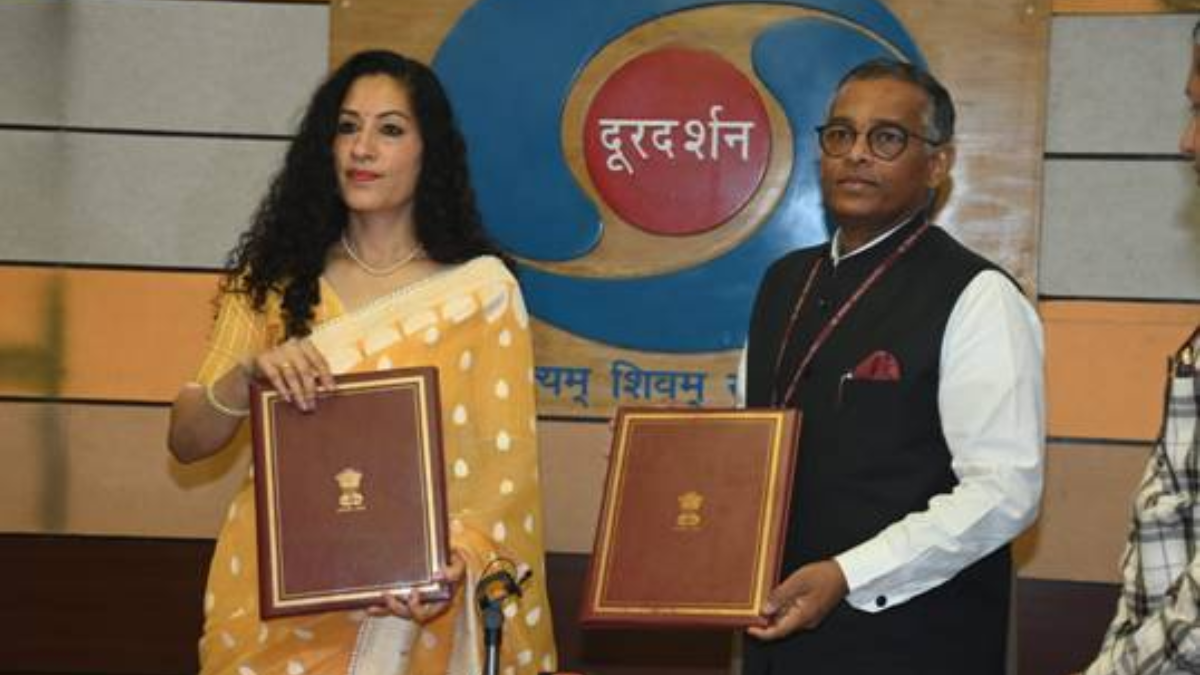
NEW DELHI: In a move aimed at taking India’s cultural story further across borders, Doordarshan under Prasar Bharati has signed a memorandum of understanding with the Indian Council for Cultural Relations to expand the global reach of Indian cultural content.
The agreement, signed on April 7 at Doordarshan Bhawan, brings together the content strength of ICCR and the wide broadcast network of Doordarshan, spanning television, radio and digital platforms.
Under the partnership, ICCR will provide a steady stream of cultural programming, including performances and events organised by Indian missions abroad such as embassies, consulates and cultural centres. Doordarshan will handle production, coverage and distribution, ensuring that these programmes find audiences not just in India but across the world.
The collaboration also opens the door for recorded cultural content from overseas missions to be aired across multiple platforms, including OTT and social media, making Indian art, music and heritage more accessible to global viewers.
A notable feature of the MoU is joint ownership of content rights in perpetuity, including digital rights. This allows both organisations to archive and reuse material over time, building a long-term cultural repository while maximising reach. Doordarshan will also support pre-event promotion and cross-platform visibility to drive engagement.
Speaking at the signing, Doordarshan director general K. Satish Nambudiripad and Indian Council for Cultural Relations director general K. Nandini Singla highlighted the potential of the partnership to strengthen India’s cultural diplomacy through modern media channels.
The agreement, initially valid for three years, also allows Doordarshan to explore monetisation opportunities from the content generated, adding a commercial layer to cultural broadcasting.
As India looks to blend tradition with technology, this partnership signals a clear intent to make its cultural voice not just heard, but seen and streamed across the globe.







