I&B Ministry
Prasar Bharati strengthens copyright safeguards, launches Creators Corner
Public broadcaster launches ‘Creators Corner’ to amplify cultural and socially relevant content

NEW DELHI: Prasar Bharati has said it actively safeguards the copyright of content produced or commissioned by the public broadcaster, while also keeping a close watch on digital platforms for potential infringements.
In a written reply in the Rajya Sabha, minister of state for information and broadcasting and parliamentary affairs L. Murugan, said the organisation has not recorded any recent instances of copyright violations by media production houses. However, the broadcaster regularly monitors intermediary platforms where individual users may upload content that infringes on its rights.
Prasar Bharati holds the copyright for programmes created in-house or commissioned by it. The broadcaster also noted that no cases of sub-contracting of production work have come to its notice. To prevent such practices, agreements with production companies include clauses that restrict sub-contracting.

Alongside protecting its intellectual property, the public broadcaster is also looking to expand its creative ecosystem. It has launched Creators Corner on Doordarshan as a platform to collaborate with digital creators and widen the reach of public service content.
The initiative aims to bring fresh voices to the broadcaster while spotlighting stories that reflect India’s culture, heritage and socially relevant themes. Content selected under the programme must meet Prasar Bharati’s programme and advertising codes and comply with applicable laws.
To qualify, creators must also demonstrate a reasonable digital reach on at least one major social media platform. Those selected will be remunerated according to duration-based rates set by the broadcaster.
The details were shared in response to a question raised by Tiruchi Siva in the Rajya Sabha.






I&B Ministry
Govt extends TRP suspension for news channels by four weeks amid concerns
I&B ministry cites sensationalism fears linked to West Asia conflict coverage
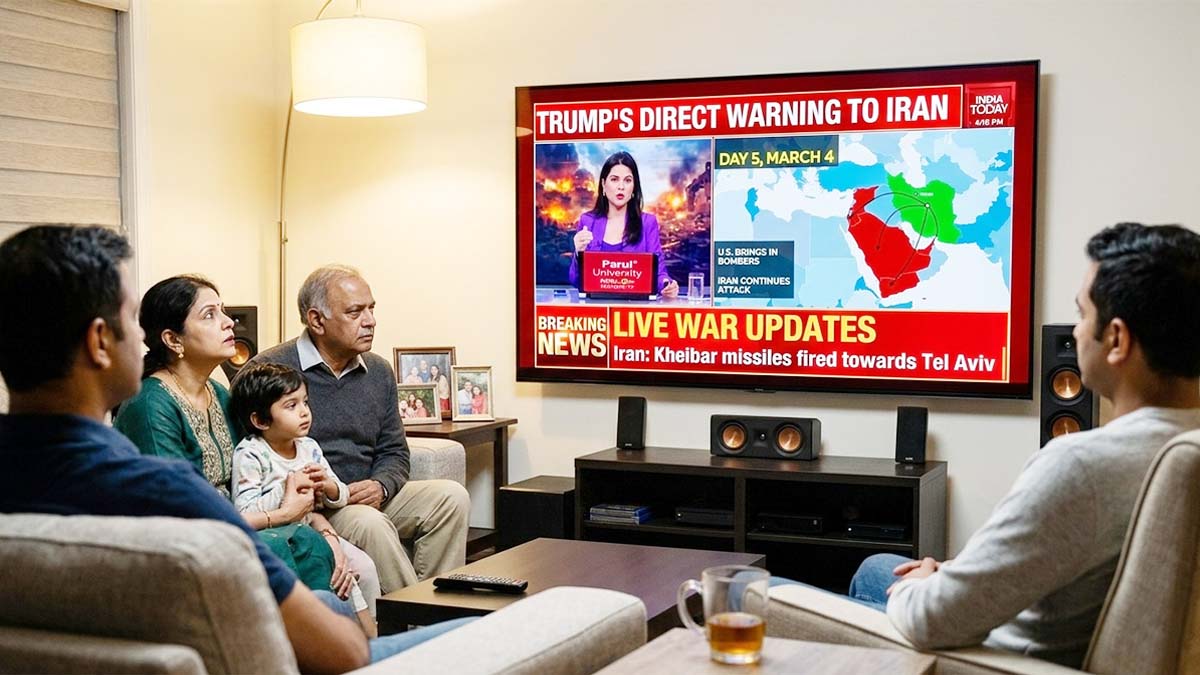
NEW DELHI: The Ministry of Information and Broadcasting has extended the suspension of Television Rating Points for news channels by another four weeks, keeping the industry in a ratings blackout for a longer stretch.
In an order dated March 31, the ministry directed the Broadcast Audience Research Council to continue withholding TRP data “for a further period of four weeks or until further directions, whichever is earlier.” This marks the second such directive after an initial four-week pause was imposed on March 6.
The government said the extension is aimed at curbing unwarranted sensationalism and speculative reporting, particularly in the context of the ongoing tensions in West Asia. It noted that the conflict continues to evolve and could trigger anxiety among viewers, especially those with personal or economic ties to the region.
TRPs serve as the primary yardstick for measuring television viewership and play a crucial role in shaping advertising revenues and competitive positioning among news broadcasters. Their absence effectively removes a key performance benchmark, forcing channels to operate without publicly available ratings.
The directive applies specifically to news television channels and has been issued under the government’s regulatory powers in the interest of public order. While the move is framed as a temporary measure, its continuation suggests ongoing concerns about the tone and nature of coverage.
For broadcasters, the extended blackout means navigating a high-stakes news cycle without the usual scoreboard. Whether it tempers the noise or simply shifts the battle elsewhere remains to be seen, but for now, the ratings race is officially on pause.






