I&B Ministry
JioStar surrenders licences for three sports channels
Unchi Udann, Sports18 Hindi HD and Sports18 2HD permissions revoked on 20 February 2026; follows integration into Star Sports.

MUMBAI: JioStar’s sports channels just got benched by the regulator because when the ministry says “off air”, even the biggest players can’t argue with the whistle. The Ministry of Information and Broadcasting (MIB) has revoked the uplinking and downlinking permissions for three non-news television channels operated by JioStar India Private Limited. The licences for Unchi Udann (previously Sports18 Hindi), Sports18 Hindi HD, and Sports18 2HD were cancelled on 20 February 2026, with the ministry citing a business decision by the broadcaster.
The move comes after JioStar integrated all Sports18 channels into the Star Sports Network, effective 15 March 2025, effectively consolidating its sports offerings under one umbrella. In India’s tightly regulated broadcast landscape, private satellite channels require MIB permissions for both uplinking (transmission to satellite) and downlinking (reception from satellite), making such cancellations a formal end to a channel’s on-air life.
This isn’t an isolated case. Earlier this month, on 12 February 2026, Living Foodz HD also surrendered its licence, with MIB noting the channel’s uplink and downlink had already been suspended since 13 November 2023 due to non-economic and financial viability issues.

For viewers, the change is largely seamless sports content continues uninterrupted on Star Sports channels. For JioStar, it’s a quiet pruning of legacy brands as the company sharpens focus on a unified sports portfolio in a crowded market. In a sector where spectrum and permissions are hard-won, losing them can feel like a red card but when it’s part of a deliberate strategy, it’s more tactical substitution than outright defeat.





I&B Ministry
IT Rules tweaks are clarificatory, not expansion of powers: MeitY
Govt signals flexibility as platforms push for clarity on user content rules
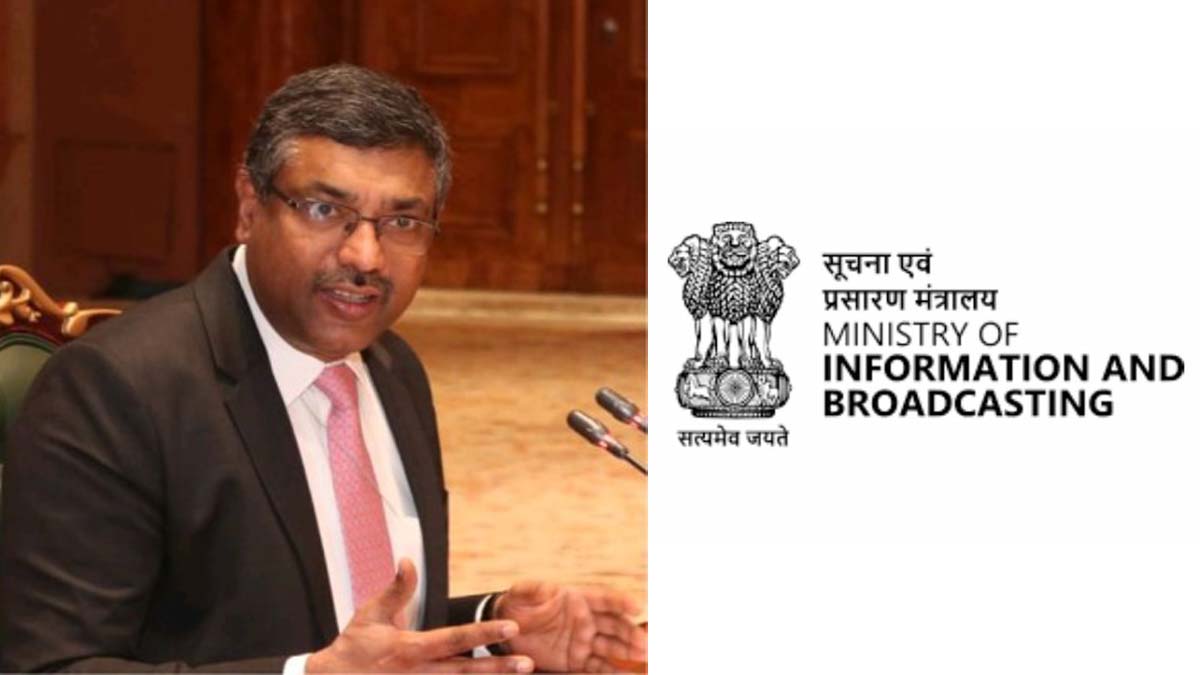
NEW DELHI: The Centre has sought to dial down concerns over its proposed amendments to the IT Rules, with Ministry of Electronics and Information Technology secretary S Krishnan asserting that the changes are intended as clarifications rather than an expansion of regulatory powers.
Pushing back against criticism from platforms and civil society, S Krishnan said the amendments “do not in any way actually give us wider powers” and are meant to remove ambiguity in how existing provisions are applied. He added that the trigger came largely from within the ecosystem, with intermediaries themselves seeking clearer guidance on compliance, takedowns and record preservation.
At the heart of the debate is the growing friction between platforms and policymakers over responsibility for user-generated content. Intermediaries have argued that they should not be treated on par with publishers, particularly when content is created and uploaded by users. Krishnan acknowledged this concern, noting that “a sharper distinction” between user content and publisher content is needed and is currently under examination.
The issue becomes more complex in enforcement scenarios. While registered publishers can be directly asked to modify or remove content, intermediaries often lack control over the original creator. “In such cases, the intermediary cannot direct those changes,” Krishnan explained, underlining the need for procedural nuance.
Another key proposal under discussion is to bring user-generated news and current affairs content within a more unified regulatory ambit, potentially under the Ministry of Information and Broadcasting. The move follows suggestions that a single authority should handle such content, regardless of whether it originates from a publisher or an individual user.
Even as the government frames the amendments as a tidy-up exercise, fault lines remain. Industry players have flagged concerns over compliance burdens, especially for smaller businesses, and questioned whether advisories could effectively become binding without explicit legislative backing. Krishnan said the government is mindful of these risks and is exploring ways to ease obligations, including possible relaxations under certain provisions.
The ministry is also considering consolidating multiple advisories and guidelines into a more structured framework, a step widely seen as addressing long-standing confusion over what platforms are expected to follow.
On takedowns, the government has reiterated that due process will remain unchanged. Krishnan stressed that actions will continue to be governed by established procedures, with reasons recorded and review mechanisms in place. He also pointed to the surge in deepfakes and synthetic media as a factor behind rising content disputes, calling it a “scale challenge” for regulators.
Interestingly, Krishnan also framed social media platforms as commercial entities rather than pure vehicles of free expression, hinting at a broader shift in regulatory thinking as platform economics come into sharper focus.
With stakeholders seeking more time and, in some cases, a rollback of the proposals, the government has kept the consultation process open-ended. Krishnan said further revisions remain on the table, signalling a willingness to adapt the draft based on feedback.
For now, the message from MeitY is clear: the rules may not be tightening in intent, but the effort to define them more clearly is well underway.






