Comment
For Reddy, where he left off last time round good place to start

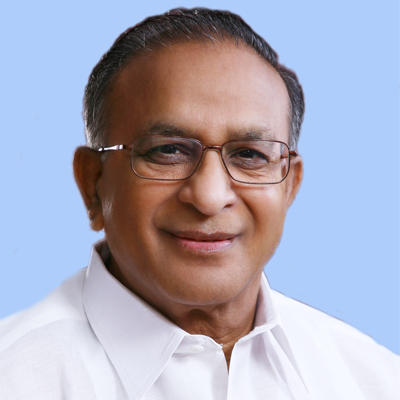
Jaipal Reddy’s second inning at the information and broadcasting ministry has one similarity — nothing much has changed since the time he was last here in 1997 when the United Front was in power at the Centre for a brief period.
Some basic issues — like bringing about true autonomy in Prasar Bharati and a regulatory framework for the chaotic broadcast and cable sector — still linger on having made little progress under successive ministers. In that sense, Reddy could begin from where he left off in the last decade.

However, it is easier said than done for Reddy. As was the case during his last stint at Shastri Bhawan, which houses the I&B ministry in the Capital, he was a minister in a coalition government and this time round too the allies of the Congress are unlikely to make life easy for any minister. Having to deal with the Left parties and regional satraps the likes of Laloo Prasad Yadav is not going to be easy street for Reddy.
What should be the priorities for Reddy this time round? If we at indiantelevision.com know a little about Reddy, then two thing could be taken for granted: he is unlikely to be an overzealous moral policeman (the likes of FTV and Trendz can heave a sigh of relief) and is not susceptible to corporate pressure for policy formulation.
Having said that, one would also like the new minister to take a definite stand on issues like the payment of license fee by private radio FM players, most of whom have been trying to put pressure on the government to waive the annual fee, which became payable on 30 April. Since most private FM radio stations are operated by big media organisations, the I&B ministry and its bureaucrats have been under intense pressure to rule in the former’s favour.
Talks of persistent phone calls from senior editors of organisations to bureaucrats in the I&B ministry on the issue were an oft-heard allegation. Though the sector regulator had suggested to the previous government to keep the license fee in abeyance till related issues are settled formally, Reddy needs to send out immediate signals that the government cannot be taken for granted and his ministry put under pressure to do something that may take quite some time. His immediate message to private FM radio players ought to be: withdraw the court cases, pay up the license fee now and the government would look into their grievances and suggestions from an expert panel on FM radio on priority.
Media houses may just be warned that Reddy is not a wimp because beneath the soft exterior, he hides a tough will. Remember the banning of reception of KU-band signals for DTH services way back in 1997 even when the then top honchos of Star TV were busy convincing Reddy the pitfalls of such a ban. At that time, the government and Reddy were convinced that Star TV was trying to cock a snook at the government on the DTH issue by holding a press conference and giving out ads to newspapers, even as the government said it was contemplating a legislation relating to DTH.
After having taken care of the FM radio (license) issue, Reddy also needs to look at the controversial CAS. Considering that his own party, the Congress, and one of its key allies, the Left parties, were against hasty implementation of addressability, it is expected that the new minister would tread cautiously, unlike his immediate predecessor Ravi Shankar Prasad, who despite the best of efforts could not shake off the (bad?) legacy that he inherited from an authoritarian Sushma Swaraj.
Again, treading cautiously is something easier said than done for this government. First, though the I&B ministry bureaucrats are likely to advise against implementation of CAS through a legislation, totally ignoring it would be difficult for Reddy. Simply because CAS has been mandated through a legislation okayed by Parliament. That it was Swaraj who steam-rolled it through both the Houses of Parliament like a woman possessed is another story.
Second, the cable fraternity is not going to take very kindly to Reddy’s dithering on CAS. At the end of the day, it was on a government’s insistence that the cable industry made investments in infrastructure for CAS rollout.
How would Reddy explain away such investments is something that needs to be seen. What is more important, is the way Reddy handles the cable fraternity and the broadcasters. There is a feeling that Prasad failed to ‘manage’ the broadcasters properly on the CAS issue.
Since it could be termed Reddy’s baby, he could well work towards making Prasar Bharati, India’s pubcaster, truly autonomous. He could begin by dusting the cobwebs off an expert panel’s (headed by the late Shunu Sen) recommendation on improving the functioning of Doordarshan and All India Radio, which he had himself commissioned during his last stint.
Moreover, Reddy needs to get out of the “filmi chakkar” as I&B minister because the media and entertainment industry is not just restricted to films only.
Considering Reddy also has the additional charge of the department of culture, originally under the human resources department, he could sit down with organisational heads of the likes of the Censor Board to chalk out a broad plan on Indian culture, its portrayal on various sectors of the media, including TV, and preferably bring in a more liberal cultural outlook.
Even with the seeming whittling down of power of the I&B ministry, the fact remains that this organization is of utmost importance to a government even if Prasar Bharati is given full autonomy. Because there are several others units of the ministry that can be easily and effectively used for propaganda.
What is heartening with Reddy at the helm of the I&B ministry is that we would see less of grand standing and more of serious work. Even if that means less colourful copy for the media from a man who is very academic in his approach.




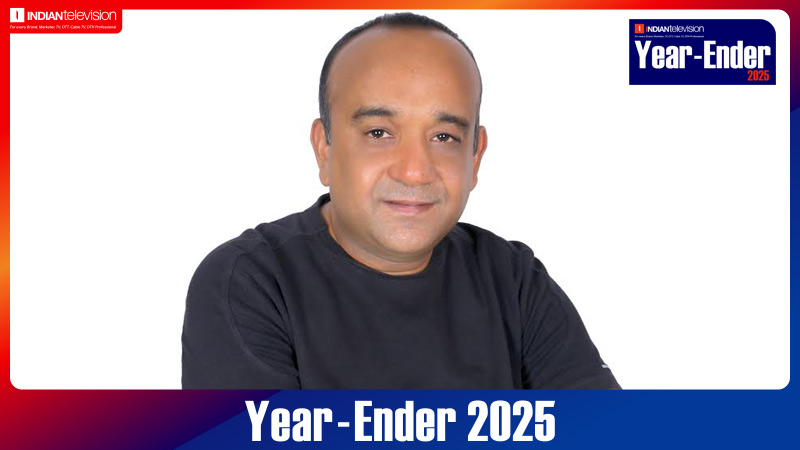
MUMBAI: 2025 will be remembered as the year India’s OTT industry stopped chasing scale for its own sake and began reckoning with how audiences actually consume content. Completion rates fell, patience wore thin and the limits of long-form excess became impossible to ignore. In this guest column, Pratap Jain, founder and CEO of ChanaJor, traces how micro-drama moved from the fringes to the centre of viewing behaviour, why short-form fiction emerged as a retention engine rather than a trend, and how platforms that respected time, habit and emotional payoff were the ones that truly grew up in 2025.
If there is one thing 2025 will be remembered for in the Indian OTT industry, it’s this: the industry finally stopped pretending.
Stopped pretending that bigger automatically meant better.
Stopped pretending that viewers had endless time.
Stopped pretending that scale without retention was success.
What began as a quiet reset in 2023 and a cautious correction in 2024 turned into a very visible shift in 2025. Business models matured. Content strategies tightened. And most importantly, platforms started aligning themselves with how Indians actually watch content, not how the industry wished they would.
At the centre of this shift was micro-drama—not as a trend, but as a behavioural inevitability.
When OTT finally understood the time problem
For years, long episodes were treated as a marker of seriousness. A 45–60 minute runtime was almost a badge of credibility. Shorter formats were pushed to the margins, labelled as “snack content” or “mobile-only.”
That belief quietly collapsed in 2025.
What platform data showed very clearly was not a drop in interest—but a drop in patience. Viewers weren’t rejecting stories. They were rejecting commitment.
Across platforms, the same patterns appeared:
* First-episode drop-offs on long-form shows kept increasing
* Completion rates continued to slide
* Viewers were sampling more titles but finishing fewer
At the same time, shows with episodes in the six to 10 minute range started showing the opposite behaviour: higher completion, higher repeat viewing, and stronger daily habit formation.
Micro-drama didn’t win because it was short. It won because it respected time.
Micro-Drama didn’t arrive loudly. It took over quietly.
There was no single moment when micro-drama “launched” in India. It crept in through dashboards and retention charts.
By mid-2025, it was clear that viewers were happy watching four, five, sometimes six short episodes in one sitting—even when they wouldn’t finish a single long episode. Romance, relationship drama, slice-of-life conflict, and grounded comedy worked especially well.
This wasn’t disposable content. It was compressed storytelling.
In shorter formats, there was no room for indulgence. Every episode had to move the story forward. Weak writing was punished faster. Strong writing was rewarded immediately.
Micro-drama raised the bar instead of lowering it.
Where ChanaJor naturally fit into this shift
ChanaJor didn’t pivot to micro-drama in 2025 because the market demanded it. In many ways, the platform was already built around the same viewing behaviour.
From the beginning, ChanaJor focused on short-to-mid-length fictional stories that felt close to everyday Indian life—hostels, rented flats, office romances, small-town relationships, young people figuring things out. Stories that didn’t need heavy context or cinematic scale to connect.
What worked in ChanaJor’s favour in 2025 was clarity:
* A clearly defined audience
* Tight episode lengths
* Storytelling that prioritised emotion and pace over spectacle
While several platforms rushed to copy global micro-drama formats, ChanaJor stayed rooted in familiar Indian settings and conflicts. That familiarity mattered. Viewers didn’t have to “enter” the world of the show—it already felt like theirs.
Why audiences started responding differently
One of the biggest misconceptions going into 2025 was that audiences wanted shorter content because their attention spans had reduced. That wasn’t entirely true.
What viewers actually wanted was meaningful payoff per minute.
On platforms like ChanaJor, episodes didn’t waste time setting the mood for ten minutes. Conflicts arrived early. Characters were recognisable within moments. Emotional hooks landed fast.
A typical consumption pattern looked like real life:
* One episode during a break
* Two more before sleeping
* A few the next day
This is how viewing habits are built—not through marketing spends, but through comfort and consistency.
Viewers came back not because every show was a blockbuster, but because they knew what kind of experience to expect.
2025 was also the year OTT faced business reality
The other big change in 2025 was on the business side. Subscriber growth slowed. Discounts stopped hiding churn. Customer acquisition costs rose.
Platforms were forced to ask harder questions:
* Are viewers finishing what they start?
* Are they returning without reminders?
* Is this content worth what we’re spending on it?
This is where micro-drama began outperforming expectations. A well-written short series could deliver sustained engagement without massive budgets. It didn’t peak for one weekend and disappear—it stayed alive through repeat viewing.
Platforms like ChanaJor benefited because they weren’t chasing inflated launch numbers. The focus was on consistency and retention, not noise.
Failures Became Visible Faster
2025 also exposed weaknesses brutally.
Several platforms assumed micro-drama was a shortcut—short episodes, quick shoots, instant traction. What they discovered was that bad writing fails faster in short formats than in long ones.
Viewers dropped off within minutes. Episodes were abandoned mid-way. Weak stories had nowhere to hide.
Micro-drama didn’t forgive laziness. It amplified it.
The platforms that survived were the ones that treated short storytelling with the same seriousness as long-form—sometimes more.
OTT Stopped Chasing Prestige and Started Chasing Habit
Perhaps the most important shift in 2025 wasn’t technical or creative—it was psychological.
OTT stopped trying to look like cinema. It stopped chasing validation through scale and awards alone. It began behaving like what it actually is in people’s lives: a daily companion.
Platforms like ChanaJor found their space here because that mindset was already baked in. The goal wasn’t to dominate a weekend launch. It was to quietly become part of someone’s everyday viewing routine.
That shift changed everything—from release strategies to how success was measured.
What 2025 Ultimately Taught the Industry
By the end of the year, three truths were impossible to ignore:
* Time is the most valuable thing a viewer gives you
* Retention matters more than reach
* Format must follow behaviour, not ego
Micro-drama didn’t take over because it was fashionable. It took over because it fit real life.
Looking Ahead
Micro-drama is not replacing long-form storytelling. It is redefining the baseline of engagement.
Longer shows will survive—but only when they earn their length. Short-form fiction will continue to evolve, becoming sharper, more emotionally confident, and better written.
Platforms like ChanaJor have shown that it’s possible to grow without shouting—by understanding the audience, respecting their time, and telling stories that feel real.
2025 wasn’t the year OTT became smaller. It was the year it became smarter.
Note: The views expressed in this article are solely the author’s and do not necessarily reflect our own.