People
Expansion of Oxford Business College Sparks Job Growth with 150 Lecturer Roles

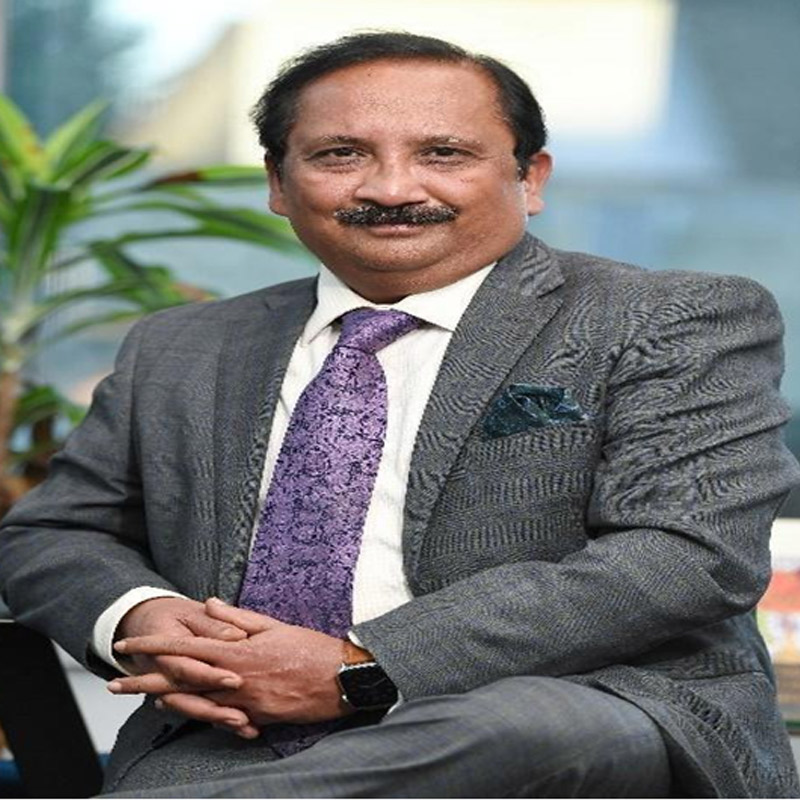
JOBS GENERATION: Padmesh Gupta, Managing Director, Oxford Business College. The independent higher education provider for business students is launching the largest staff recruitment drive of its kind in its 38-year history due to rising student numbers across the College’s campuses in England. An initial 150 posts, mostly at lecturer level, are being created. With 350 employees, the College expects to enrol more than 10,000 students at campuses in Oxford, North West London, Nottingham, Coventry and Slough. One in Brentford, West London, opens in September 2023.
The largest staff recruitment drive of its kind by an independent higher education provider for business students in the UK is under way.
Founded as Oxford’s first business school in 1985, Oxford Business College currently has 350 employees and 10,000students.

Due to demand from UK students for business-related courses and workplace soft skills, the College has expanded campuses in the UK and forged partnerships with degree-awarding universities.
An initial 150 posts, mostly for lecturer positions, are being created over the next 12 months, including at the newly opened Coventry campus.
There are also campuses at the university city of Oxford, Park Royal in NorthWest London, Nottingham and Slough, Berkshire.
Furthermore, this September sees the opening of the Brentford campus in West London, with the entire 2,458 sq m building at One Brentside Park occupied by the College.
The College provides a wide range of job-orientated undergraduate courses in business and management.
In addition, the College is the pioneer of the longest-running International Foundation Programme in Oxford, which has prepared international students for more than 30 years to successfully progress on to UK university degrees.
The Business English Language Preparation programme (BELP) is added to the International Foundation in Business to help students work in English with confidence; the high-quality English language teaching and learning is accredited by the British Council.
Degree partnerships are in place with Buckinghamshire New University and Ravensbourne University London.
Undergraduate courses at the three universities, each with a foundation year, are, respectively, BA (Hons) Business Management and BA (Hons) Business Management.
Padmesh Gupta, Managing Director, Oxford Business College, said: “Due to the unprecedented growth of the College in the UK, the largest employment recruitment drive in our 38-year history is taking place.
“We are looking to fill an initial 150 vacancies across all our campuses, including at Coventry and our new Brentford one.
“Most of the posts are for highly qualified lecturers looking to develop their careers at one of the most sought-after places of learning in the independent, for-profit higher education sector.”
He added: “We look forward to hearing from talented academics in Coventry and from any of our other campuses.
“The College is incredibly proud of providing academic programmes for students who are keen to either run their own businesses or want to earn more money than their current job – in turn, both can generate taxes for UK plc.
“We also appeal to students who may otherwise be written off because their English language skills might not be initially strong but who have the flair, passion and dedication to run or contribute to successful businesses.
“There stills persists a terribly old-fashioned and corrosive notion that the best businesspeople have come through long-established universities.
“Thankfully, our students are proving that what matters is not wealth or social class but ability, talent and an overwhelming ambition to succeed in a working world where merit is the only judge.
“Our lecturers see this every day from motivated students who have enrolled, having passed robust admissions standards which result in 60% of applicants being rejected.”
Mr Gupta also stressed that new lecturers need to excel as their future colleagues are already doing; at 92.3% the College was ranked in the top 15% of all teaching institutions for students overall satisfaction in the National Student Survey (NSS) 2022.
The College performed above the NSS benchmark in six out of seven key themes, securing 66th place amongst 431 higher education teaching institutions which took part in the UK.
Furthermore, Mr Gupta also cited the College as being the recipient of two consecutive ‘WhatUni’ Student Choice Awards.
In another development, the Chartered Association of Business Schools (CABS) recently awarded its associate membership to the College; it is CABS’ first membership with any private higher education institution in the UK.
Mr Gupta said: “People looking to join us will understand that the College has a mission to excel in everything it does in order to provide the best higher education opportunities for students – young or mature – who want to better themselves in the world of business.”
He added: “Oxford Business College has grown considerably over the past several years, with profits being reinvested in new jobs and the campuses.
“The initial 150 posts, which, once filled, will generate income for the public purse through salary taxes, is an example of the College’s strategic expansion.
“Our courses offer flexible start dates throughout the year, making the College ideal for anyone embarking on their career or as an alternative route to an undergraduate or postgraduate degree or a professional qualification.”


New Delhi: Every year as the winter mist lifts over the Kartavya Path, India does more than just display its military hardware; it renews a sacred covenant made three-quarters of a century ago. Republic Day is the grandest celebration of the Indian identity. It marks the precise moment when a civilization of antiquity formally transformed into a modern, constitutional powerhouse. This year, the 77th Republic Day stands as a particularly poignant milestone, intertwining the historical echoes of the 19th-century freedom struggle with the cutting-edge aspirations of a 21st-century global leader.
The historical choice: Why January 26?
To understand the soul of this day, one must look back beyond 1950 to the freezing banks of the Ravi River in 1929. It was there, during the Lahore Session of the Indian National Congress, that the flame of absolute independence was first lit. On January 26, 1930, the nation observed Purna Swaraj Day, a collective pledge to reject colonial dominion in favor of total self-rule.

When the Constituent Assembly finished its Herculean task of drafting the Constitution on November 26, 1949, the leaders made a deliberate, poetic choice. They waited two months to bring the document into force, ensuring that the new Republic was born on the same date that the dream of Purna Swaraj was first articulated. By doing so, they anchored India’s legal future in its revolutionary past. The Constitution did not just replace the Government of India Act 1935; it shifted the source of sovereignty from the British Crown to the Indian people.
The 77th Milestone: 150 Years of Vande Mataram
The theme of the 2026 celebrations, “150 Years of Vande Mataram,” serves as the emotional spine of the festivities. Bankim Chandra Chattopadhyay’s composition was more than a song; it was a mantra that unified a fractured nation against colonial rule. This year, that spirit is resurrected through:
• The cultural mosaic: Around 2,500 artists have converged on the Kartavya Path to perform a multi-sensory presentation titled Swatantrata ka Mantra – Vande Mataram. This performance chronicles the evolution of the song from a literary verse to a national rallying cry.
• Art as history: The parade route is adorned with archival paintings and visual installations that illustrate the verses of the national song, turning the ceremonial boulevard into a corridor of living history.
• Global solidarity: In a significant diplomatic gesture, the 2026 celebrations welcome the President of the European Council and the President of the European Commission as Chief Guests. This partnership underscores India’s pivotal role in the international order and its commitment to shared democratic values.

The new vanguard: Military innovation and Jan Bhagidari
The 2026 parade has broken tradition to showcase a modernizing military. For the first time, the Indian Army has debuted a Battle Array format. Rather than a standard march, this tactical display simulates real-world combat readiness, featuring reconnaissance units and mechanized columns that highlight the shift toward high-tech, integrated warfare.
Crucially, the concept of Jan Bhagidari (People’s Participation) has been elevated to the forefront. Among the spectators are 10,000 Special Guests—not politicians or foreign dignitaries, but the “Architects of New India.” These include:
• Farmers and artisans who provide the nation’s sustenance and soul.
• Scientists and innovators pushing the boundaries of space and technology.
• Women entrepreneurs and students who represent the Republic’s future.
• Frontline workers and beneficiaries of national welfare schemes, ensuring that the parade is a reflection of the people it serves.
The path to Samriddhi: Atmanirbhar Bharat
Parallel to the theme of freedom is the theme of Samriddhi ka Mantra – Atmanirbhar Bharat (The Mantra of Prosperity – Self-Reliant India). This is visible in the 30 diverse tableaux presented by States and Union Territories. From showcasing the digital revolution in rural hamlets to the indigenous defense platforms like the Shaktibaan Regiment, the parade highlights a nation that is no longer just consuming global technology but creating it.
The celebrations extend far beyond the capital. Through the MY Bharat portal, millions of young Indians have engaged in essay competitions, singing contests, and quizzes about the evolution of Vande Mataram and India’s space achievements. This digital outreach ensures that the constitutional values of liberty, equality, and fraternity are debated and celebrated in every household.
A strong conclusion: The living Republic
As the Indian Air Force flypast concludes with a thunderous roar over the canopy of New Delhi, we are reminded that a Republic is not a static achievement or a dusty document kept in a library. It is a living, breathing commitment to institutional accountability and social justice.
The journey from the first meeting of the Constituent Assembly on December 9, 1946, to the 77th Republic Day of 2026 is a testament to the resilience of the Indian spirit. It is a journey that transitioned from the “servants’ language” of a colonial past to the confident, multi-lingual voice of a global leader.
The solemn tribute at the National War Memorial and the upcoming Beating the Retreat ceremony on January 29th serve as the bookends to this celebration. They remind us that the peace we enjoy is protected by the brave, and the democracy we cherish is fueled by the participation of the many. India remains a Sovereign, Socialist, Secular, and Democratic Republic—a nation that honors its martyrs, celebrates its diversity, and moves forward with the unwavering belief that its greatest chapters are yet to be written.
A guide to the grand Finale: 2026 Tableaux themes and the echoes of the retreat
The 77th Republic Day is defined by a dual narrative: the 150-year legacy of Vande Mataram and the forward-looking vision of a self-reliant India. Here is a detailed look at the symbolic highlights of the 2026 celebrations.

The 30 tableaux: A visual narrative of progress
This year, the 30 tableaux (representing States, Union Territories, and Central Ministries) are divided into two thematic clusters that bridge the gap between India’s revolutionary roots and its industrial future.
1. Swatantrata ka Mantra: Vande Mataram
These displays focus on the cultural and spiritual awakening that fueled the independence movement:
• West Bengal: A stunning depiction of Bankim Chandra Chattopadhyay’s study in Naihati where *Vande Mataram* was penned, surrounded by the faces of revolutionaries inspired by the song.
• Maharashtra: A tribute to the 1896 session of the Indian National Congress where Rabindranath Tagore first sang the anthem, highlighting the song’s role as a unifying force.
• Uttar Pradesh: Focusing on the “Sacred Soil of Ayodhya,” this tableau links the ancient concept of *Janmabhoomi* (motherland) with the modern spirit of national service.
• Ministry of Culture: A “Living Museum” of the 1870s, showcasing how the anthem transitioned from a literary verse in the novel *Anandamath* to the heartbeat of the streets.
2. Samriddhi ka Mantra: Atmanirbhar Bharat
These tableaux highlight the technological and social triumphs of a modernising nation:
• ISRO (Dept. of Space): A futuristic display of the Gaganyaan mission and the upcoming lunar habitats, symbolising India’s self-reliance in the final frontier.
• Gujarat: Showcasing the “Green Hydrogen Mission” and the transformation of the Rann of Kutch into a global renewable energy hub.
• Ministry of Defence: Highlighting indigenous naval might, featuring a miniature model of the INS Vikrant and the *Shaktibaan* missile systems.
• Karnataka: A celebration of the “Digital Village,” where women entrepreneurs use AI to manage local cooperatives, blending traditional weaves with modern markets.
The Beating the Retreat Ceremony: January 29
While the parade on January 26th is a display of might and culture, the Beating the Retreat ceremony at Vijay Chowk is a soulful, rhythmic conclusion to the festivities.
Historical roots
This tradition dates back to 17th-century England, where troops ceased fighting at sunset. Upon the sounding of the “Retreat,” soldiers sheathed their arms and withdrew from the battlefield. In India, it has evolved into a world-class musical spectacle that formally closes the Republic Day celebrations.
The 2026 Ceremony Highlights
• The Massed Bands: Regimental bands of the Army, Navy, and Air Force perform a blend of traditional martial tunes and Indian classical ragas.
• Indianisation of Music: Moving away from colonial-era marches, the 2026 repertoire focuses heavily on Indian compositions, featuring traditional instruments like the Sitar, Tabla, and Santur integrated with the brass bands.
• The drone show: A signature segment involving 5,000 indigenously developed drones. This year, they will create a 3D aerial portrait of the Constituent Assembly and a shimmering map of the 29 States, ending with a dynamic “Vande Mataram” calligraphy in the sky.
• The final note: As the sun sets behind the Raisina Hill, the National Flag is lowered with precision. The ceremony concludes with the hauntingly beautiful *Sare Jahan Se Achha*, followed by a simultaneous illumination of the North Block, South Block, and Rashtrapati Bhavan.
A legacy beyond the parade
The 77th Republic Day proves that India’s strength lies in its ability to remember. By honouring Vande Mataram, the nation remembers the struggle; by inviting farmers and scientists as special guests, it remembers the people; and through the Battle Array, it remembers the need for vigilance.