I&B Ministry
AI as a tool, not a voice: I&B Ministry marks World Radio Day 2026
Global theme highlights AI as a tool while preserving trust in the human voice

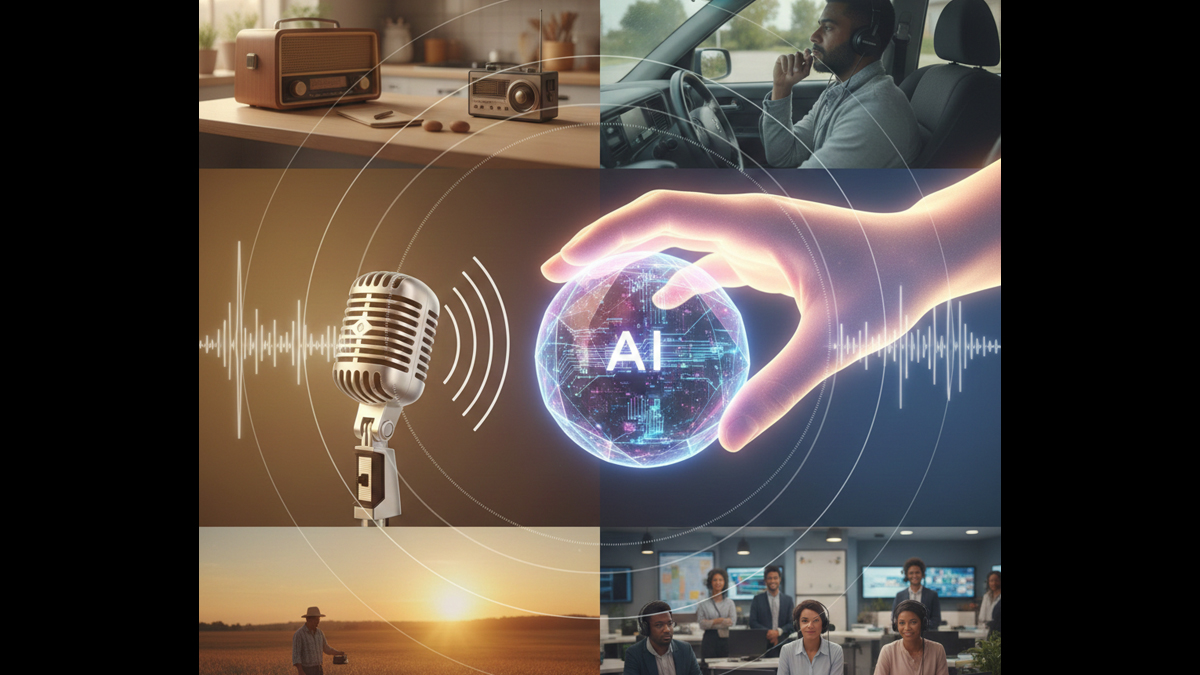
NEW DELHI: Radio, that quiet companion in kitchens, taxis and farm fields, is getting its annual moment in the sun. World Radio Day, marked every 13 February, returns in 2026 with a timely theme: “Radio and Artificial Intelligence: AI is a tool, not a voice.”
The message is simple. Technology may sharpen the tools, but it should never replace the people behind the microphone. In an era where algorithms can write scripts and generate voices, the theme reminds broadcasters that credibility, empathy and editorial judgement still belong to humans.
The day itself commemorates the launch of United Nations Radio in 1946, an early step towards global communication after the second world war. Unesco declared the observance in 2011, and the United Nations General Assembly gave it official recognition a year later.

In India, radio’s reach remains vast and varied. All India Radio, better known as Akashvani, continues to serve as the country’s public service broadcaster. Established in 1936 and later brought under public ownership, it now operates one of the world’s largest broadcasting networks.
AIR runs 591 centres across the country, covering nearly 92 per cent of India’s land area and more than 99 per cent of its population. Its programming is produced in 23 languages and 182 dialects, reaching audiences in big cities, remote villages and border regions alike.
From news and agriculture to health, music and youth shows, the station’s schedule reflects everyday India. In times of crisis, radio often becomes the most reliable voice in the room. During cyclones, fishermen along the coasts of Odisha and Tamil Nadu rely on AIR weather bulletins before setting out to sea. When schools shut during the pandemic in parts of Bihar, Jharkhand and Madhya Pradesh, students tuned in to educational broadcasts to keep learning.
Public radio is only part of the story. Private FM has added colour, humour and hyperlocal content to urban and regional airwaves. In August 2024, the Union Cabinet approved the rollout of 730 new FM channels across 234 previously uncovered towns and cities, a move expected to boost local programming and create jobs.
Community radio, often described as the third tier of broadcasting, continues to amplify grassroots voices. India now hosts 528 community radio stations, run by educational institutions, non profits and local groups.
These low power stations focus on local needs, from farming advice and health tips to folk music and cultural storytelling. In places such as Bundelkhand, women led stations have become platforms for discussions on education, welfare schemes and agriculture. In Kutch, community radio keeps the Kutchi dialect alive through songs and oral histories.
Even unusual spaces have found a voice. In Tihar Jail, inmates produce programmes on mental health, music and legal awareness, using radio as a tool for expression and rehabilitation.
The Indian Army has also tapped into radio’s reach in remote areas. In June 2025, it launched Ibex Tarana 88.4 FM in Jyotirmath, Uttarakhand, to share information on education, health and disaster preparedness. In January 2026, Radio Sangam 88.8 FM went live in Rajouri, Jammu and Kashmir, becoming the first community station along the Line of Control and offering verified local information.
To celebrate the occasion, All India Radio in Raipur is hosting a World Radio Day Conclave on 13 February 2026 in collaboration with Unesco. The event will focus on how AI can assist in content creation, translation, archiving and audience engagement while keeping the human voice at the centre of broadcasting.
Radio’s strength lies in its simplicity. It does not demand screens, data packs or literacy. It slips into daily routines and keeps company with listeners on the move. In cities like Delhi and Mumbai, cab drivers still tune in for traffic updates, cricket commentary and the day’s hit songs.
Prime minister Narendra Modi’s monthly programme Mann Ki Baat, first aired in October 2014, is another reminder of radio’s enduring pull. With more than 130 editions, it continues to reach millions across the country, both on air and online.
Radio’s emotional pull is best captured by the story of Ram Singh Bouddh from Amroha in Uttar Pradesh. Known as the “Radio Man of India”, he was recognised by Guinness World Records in 2025 for owning the world’s largest collection of radios, a staggering 1,257 sets.
His collection, housed in a small museum at Siddharth Inter College, charts the journey of radio technology from bulky wooden receivers to pocket sized transistors. What began as a hobby has become a living archive for students and visitors alike.
As digital platforms multiply, radio continues to hold its ground as a trusted, accessible and inclusive medium. It reaches those beyond the internet’s edge, carries vital information during disasters and gives communities a voice of their own.
World Radio Day 2026 does not just celebrate technology. It celebrates a human connection, carried on invisible waves, where the voice still matters more than the machine.





I&B Ministry
Doordarshan, ICCR sign MoU to boost global reach of Indian culture
Pact taps TV, radio and digital platforms to take cultural content worldwide
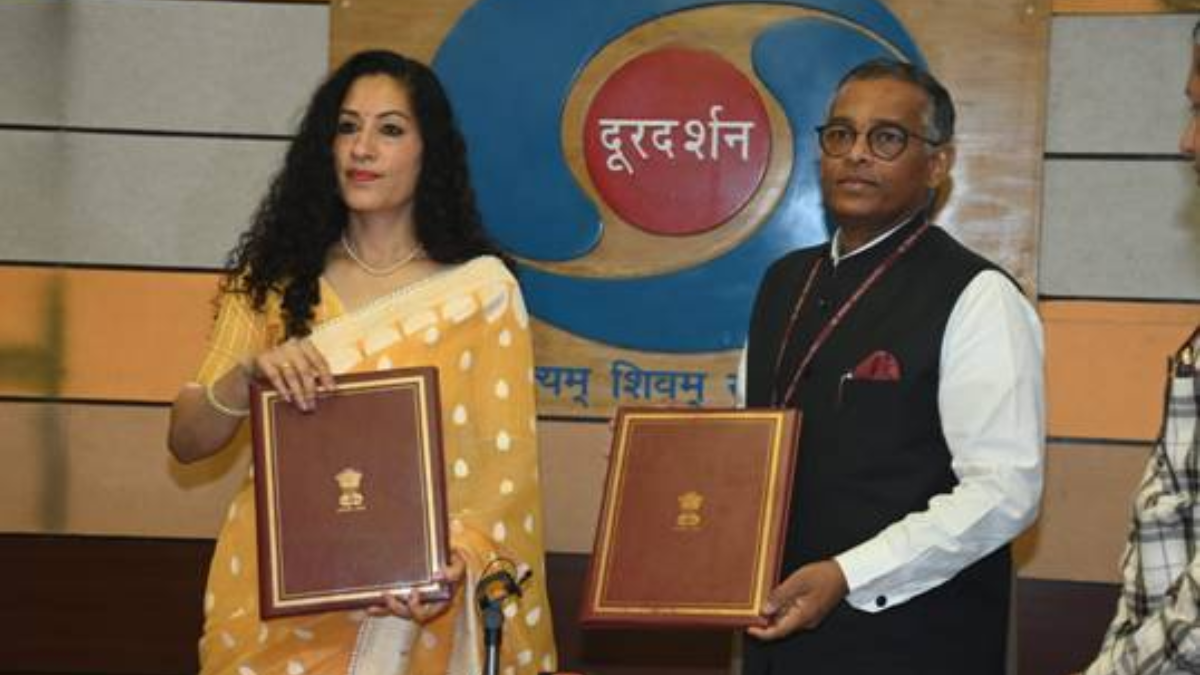
NEW DELHI: In a move aimed at taking India’s cultural story further across borders, Doordarshan under Prasar Bharati has signed a memorandum of understanding with the Indian Council for Cultural Relations to expand the global reach of Indian cultural content.
The agreement, signed on April 7 at Doordarshan Bhawan, brings together the content strength of ICCR and the wide broadcast network of Doordarshan, spanning television, radio and digital platforms.
Under the partnership, ICCR will provide a steady stream of cultural programming, including performances and events organised by Indian missions abroad such as embassies, consulates and cultural centres. Doordarshan will handle production, coverage and distribution, ensuring that these programmes find audiences not just in India but across the world.
The collaboration also opens the door for recorded cultural content from overseas missions to be aired across multiple platforms, including OTT and social media, making Indian art, music and heritage more accessible to global viewers.
A notable feature of the MoU is joint ownership of content rights in perpetuity, including digital rights. This allows both organisations to archive and reuse material over time, building a long-term cultural repository while maximising reach. Doordarshan will also support pre-event promotion and cross-platform visibility to drive engagement.
Speaking at the signing, Doordarshan director general K. Satish Nambudiripad and Indian Council for Cultural Relations director general K. Nandini Singla highlighted the potential of the partnership to strengthen India’s cultural diplomacy through modern media channels.
The agreement, initially valid for three years, also allows Doordarshan to explore monetisation opportunities from the content generated, adding a commercial layer to cultural broadcasting.
As India looks to blend tradition with technology, this partnership signals a clear intent to make its cultural voice not just heard, but seen and streamed across the globe.






