News Broadcasting
Win 1 lakh every hour on Budget Day on CNBC-TV18


– Win your annual household budget every hour by tuning in to CNBC-TV18 on Budget Day
– Answer simple questions on the Budget by SMS to 2622
– Prize money to be won from 10 am – 10 pm on Budget Day on CNBC-TV18
MUMBAI: CNBC-TV18, India’s premier business news channel has lined up innovative and informative shows as pre-cursors to the Budget 2006.The ‘Budget Bonanza Contest’, unique to CNBC-TV18 has been launched this year, to the overwhelming response it received from its viewers.

Viewers tuning into the CNBC-TV18’s Budget programming can win their annual household budget every hour on Budget Day.
On Budget Day, February 28, 2006, winners can win Rs 1 lakh every hour for upto 12 hours i.e. 10 am – 10 pm by answering questions posed by the channel. These questions are straightforward to answer and pertain to the Budget to be announced. Viewers can participate in the Budget Bonanza by sending in their answers via an SMS to 2622.
CNBC-TV18, the leader in budget programming, is also presenting interesting, innovative and informative shows on its channel. ‘The Great Indian Dream’ is the theme for CNBC-TV18’s Budget line up for 2006. CNBC-TV18 will address the question: Will Budget 2006 make or break the Indian dream?
As part of its budget programming, CNBC-TV18 has lined up a one-hour special on the Economic Survey giving an intelligent and comprehensive overview of the booming Indian economy, the India Business Hour Budget Special, LIVE and uninterrupted coverage of the FM’s speech and the CNBC-TV18 and MTV budget fundas , an initiative that will touch base with the youth of the country and how it has affected their lives.
The winners will be declared every hour on CNBC-TV18. Viewers of CNBC-TV18 now stand a chance to win even if the FM’s Union Budget 2006 is not a rewarding experience!
About CNBC-TV18:
CNBC-TVI8 is India’s No.1 business medium. CNBC Asia Pacific holds a strategic equity stake in the Indian registered broadcaster; Television 18. CNBC-TV18 is the undisputed leader in the business. The channel’s benchmark coverage extends from corporate news, financial markets coverage, expert perspective on investing and management to industry verticals and beyond. CNBC-TV18 has been constantly innovating with new genres of programming that helps make business more relevant to different constituencies across India. CNBC-TV18 is currently available in over 20 million households in India.
For further information please contact:
Glen D’Souza/ Janice Goveas / Niketa Tekawade
Hanmer & Partners
56335969/ 55524600






News Broadcasting
CNN-News18 to host Fury in the Gulf conclave on West Asia crisis
Three-hour summit to unpack geopolitical fallout and impact on India
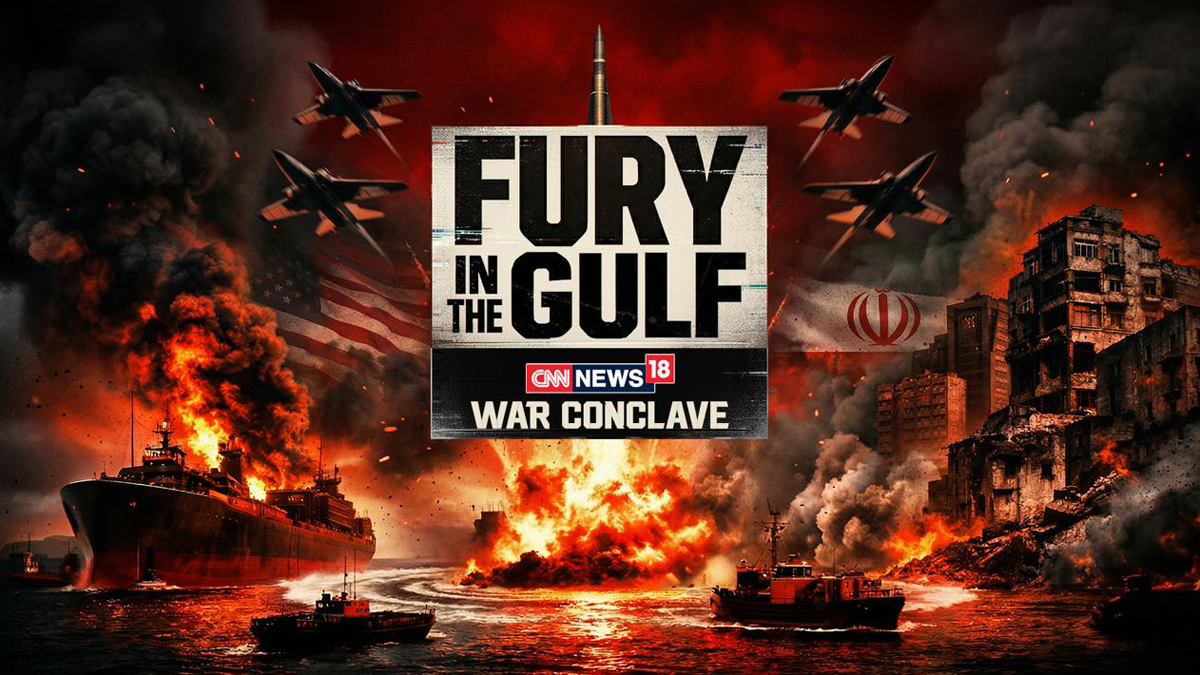
MUMBAI: CNN-News18 is set to host a special three-hour broadcast, Fury in the Gulf – War Conclave, on April 7, aiming to decode the escalating West Asia crisis and its far-reaching implications for India.
Scheduled from 4:00 PM to 7:00 PM, the conclave comes at a time when tensions between Iran and the United States are reshaping global geopolitics and triggering economic uncertainty. With India’s deep energy ties, trade links and large diaspora in the Gulf, the developments carry significant domestic relevance.
Built around the theme ‘Conflict, Consequences, and The Future,’ the programme will feature six curated sessions combining one-on-one interviews and panel discussions. The focus is to cut through the clutter and offer viewers a clearer understanding of the fast-evolving situation.
Key sessions include ‘Diplomacy in Times of War’ featuring Shashi Tharoor, and ‘World After the Iran Conflict’ with voices such as Ram Madhav, Reuven Azar, representatives from the European Union and the Iranian Deputy Envoy. Another session titled ‘Another Dunkirk?’ will bring together K. J. S. Dhillon and Jitin Prasada among others.
CNN-News18 editorial affairs director Rahul Shivshankar said, “In times of war, clarity becomes the most powerful tool. Fury in the Gulf – War Conclave brings together credible voices to address the questions and confusion that arise amid an overwhelming influx of information.”
He added that the initiative is aimed at delivering “facts, perspective, and insight” at a time when misinformation can easily cloud public understanding.
Echoing the sentiment, CNN-News18 CEO– English and business news Smriti Mehra said the conflict marks a defining global moment, with consequences that extend well beyond the region. She noted that the conclave seeks to present the crisis with “depth, nuance and responsibility” so audiences can better grasp its real-world impact.
As geopolitical tensions continue to dominate headlines, the conclave positions itself as an attempt to bring order to the noise, offering viewers a structured, insight-led look at a complex and rapidly shifting global situation.






