International
Uday Chopra’s Grace of Monaco starring Nicole Kidman to open the 67th Cannes

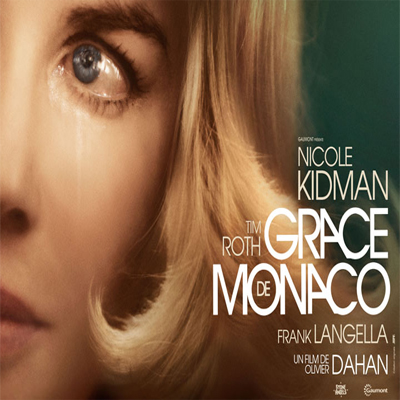
MUMBAI: French director Olivier Dahan’s Grace of Monaco is to open the next Festival de Cannes. The world preview will take place on Wednesday 14 May, 2014, in the Grand Théâtre Lumi?re of the Palais des Festivals, in the Official Selection category, Out of Competition. Grace of Monaco follows on from The Great Gatsby by Baz Luhrmann.
The film portrays a period in the life of American Actress Grace Kelly (played by Nicole Kidman) who became Princess Grace of Monaco when she married Prince Rainier III (Tim Roth) in 1956, in what was dubbed “the marriage of the century”. An Oscar winner, she was already a huge film star, having worked with the very greatest (John Ford, Alfred Hitchcock, Fred Zinnemann) and acclaimed the world over. Six years later, amid occasional difficulties in fulfilling her role, she was invited back to Hollywood by Alfred Hitchcock, to play in his new film Marnie. At the time, France was threatening to tax and even annex Monaco, the tiny Principality whose monarch Kelly had become. Was she still an actress? Was she really Princess of Monaco?
Produced by Pierre-Ange Le Pogam, Uday Chopra and Arash Amel, who also wrote the screenplay, Grace de Monaco sees Nicole Kidman play the role of Grace, with Tim Roth as Prince Rainier. Their co-stars include Frank Langella, Parker Posey, Jeanne Balibar, Sir Derek Jacobi and Paz Vega, who plays Maria Callas. The film was shot in Scope 2.35 using Kodak 35mm film. The Director of Photography was France’s Eric Gautier and the 16-weeks shoot took place in Monaco, South of France, Paris, Vintimille, Gand and Bruxelles.

Born in 1967 in La Ciotat, Olivier Dahan previously directed La Vie en Rose (2007) which garnered Marion Cotillard the Oscar for Best Actress in 2008. Grace of Monaco will be released on the opening day of the Festival, Wednesday 14 May, in France and in several cities around the world. The opening ceremony will be broadcast to participating cinemas, with the kind cooperation of Canal+.
Grace of Monaco is A Stone Angels and YRF Entertainment production. The film is co-produced by TF1 Films Productions, Gaumont, Lucky Red, OD Shots, Ufilm, and in association with Silver Reel – Ufund. Distributor in France is Gaumont and International Sales is with Lotus Entertainment.






International
Russia-India cinematic spectacle Persimmon of My Love set for grand Moscow debut
Hindi cinema style musical revives Indo-Soviet cinema ties for today

MUMBAI: A new chapter in cross-border storytelling is set to unfold as Persimmon of My Love gears up for its premiere in Moscow on 1 April 2026, marking the first large-scale cinematic collaboration between Russia and India in decades.
Positioned as a modern nod to the cultural exchange that once brought Indian classics to Soviet audiences, the film blends Hindi cinema flair with Russian storytelling, aiming to rekindle a long-standing cinematic friendship.
Directed by Marius Weisberg, the musical comedy follows two brothers navigating a lively world of music, family and romance. The lead roles are played by Demis Karibidis and Mikhail Galustyan, with Karibidis also contributing as a screenwriter.
Shot entirely in India, the production leans heavily into Hindi cinema style spectacle. Filming took place across Mumbai studios and the cities of Udaipur and Jodhpur, whose architecture was used to create the fictional setting of Khurmada. A crew of over 350 worked on the project, with large-scale sequences featuring up to 1,000 extras.
The film also brings Indian creative talent into the mix. Dance sequences are choreographed by Jay Kumar, while music by Zurab Matua features songs in both Hindi and Russian, adding to its cross-cultural appeal.
Backed by TNT channel, MyWayStudio and the Russian Cinema Fund, the project reflects a broader push to strengthen cultural ties between the two countries.
With its mix of colour, comedy and cross-border collaboration, Persimmon of My Love is not just a film release but a reminder that cinema, much like music, travels well across borders.






