Education
Top 10 Fittest Bollywood Actors

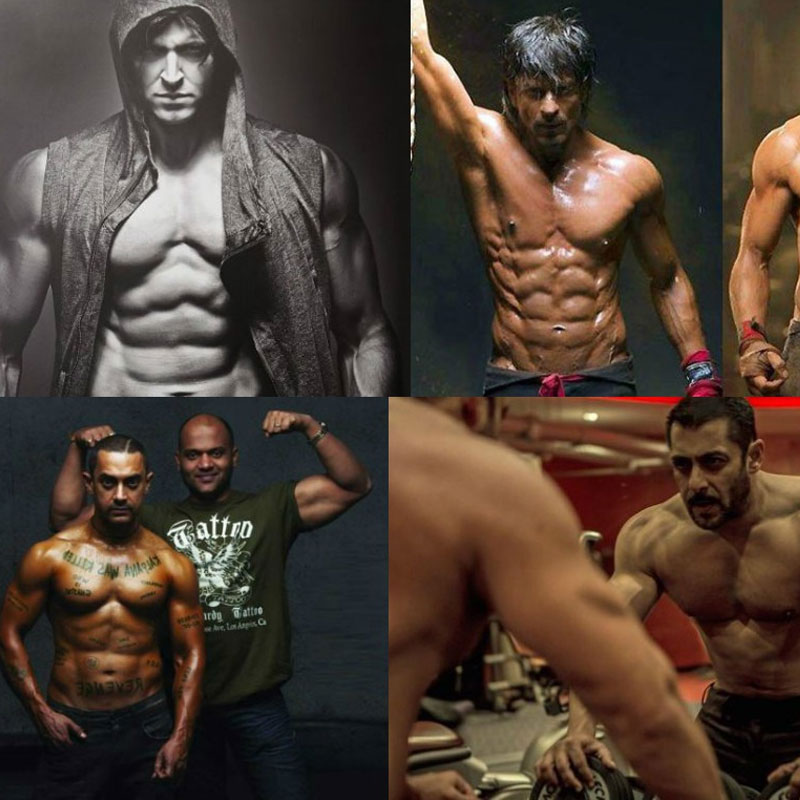
Pursuing a career in show business is a hard path. Training to be a professional actor will take you through acting schools and many other classes to develop skills in singing, dancing, and other skills useful in entertainment. It also takes a lot of tries to land a role in a television show or a film. Overall, an acting career is a challenging career path for people with little charisma and entertaining skills.
Still, there is a distinct quality that successful actors and actresses have in common: an attractive and pleasing appearance. Overall appearance is a huge factor for success in show business. The physical appearance of an actor or actress can determine if they fit the role they are auditioning for. Some roles may require actors to build up more muscle or to slim down from their original weight. Thus, actors have been keeping their bodies in the fittest state possible, so it will be easier to change their weight to adapt to their desired roles.
Bollywood

Bollywood is one of the filming industries that has so much versatility in terms of movie genres. Bollywood is the Indian-Hindi language cinema in Mumbai, India. It is home to great actors and actresses who have starred in films that have impacted not only the local audience but also people worldwide with their international films.
Fittest Bollywood Actors
Bollywood actors are known for their dedication to their work and excellent acting skills. Also, many of these actors have gained popularity due to their fitness and how well they build their bodies for specific roles. A balanced diet and rigorous training exercises are the secrets to building a fit and muscular body. Still, some Bollywood actors prefer a vegan diet due to their preference or culture, and it may be harder to build muscle due to less protein intake. Luckily, tons of Total Shape products can help them get all the protein that their body needs. A combination of a good workout plan, diet, supplements, and proper training equipment helps actors achieve the fitness they aim for.
In this article, we will talk about the top ten of the fittest Bollywood actors in the business, as well as their fitness routines, diets, and lifestyle choices that help them maintain their bodies to their utmost fitness levels:
1. Hrithik Roshan
Hrithik Roshan is an Indian actor that stars in many Indian films and has won many major awards throughout his career. Being one of the most highly-paid actors in this business, he has also appeared in Forbes India’s Celebrity 100 multiple times. Currently 47 years old, he has proven that fitness can be achieved at any age. He has notably achieved a weight loss of almost 11 kilograms in only 10 weeks and has also reduced his waistline by 3 inches. He said that his diet mostly contained protein-rich food paired with foods rich in fiber to aid in digestion. Also, he refrains from any form of starvation to prove that getting fit does not have to be too difficult. He also takes multivitamins that help keep his diet balanced.
2. Shah Rukh Khan
Shah Rukh Khan is an Indian actor and film producer who is known in many titles given to him by the media, such as the “Baadshah of Bollywood”, “King Khan”, or “King of Bollywood”. He is known for his work locally and internationally and has gained international awards throughout his career. He is also one of the most famous celebrities that is known for his fitness and body shape. His ab workout is undoubtedly one of the most rigorous regimens, having trained 4 to 6 times a week on his abdominal area, and the results have indeed shown. His diet mainly consists of complex carbs and food high in fiber content. He also takes protein shakes after each workout to supplement his body’s protein intake.
3. Aamir Khan
Aamir Khan is an Indian actor and filmmaker and is one of the most popular Hindu actors internationally. He is best known for his films that have achieved the highest gross in Bollywood and the highest-grossing international Bollywood film. He keeps his body in top shape by working out 6 times a week, and he consumes small meals before the start of each workout to take in enough energy. In addition, he keeps his diet varied, switching between vegetarian and non-vegetarian meals and avoids too much sugar intake. His exercises primarily focus on high-intensity and high-interval cardio training, and he has built up significant muscle mass while maintaining overall body fitness. This article will show you how to balance your diet and weight training to attain a healthy and fit body and know more about high-intensity training.
4. Farhan Akhtar
Farhan Akhtar is an Indian actor, director, screenwriter, and singer and has won numerous awards in the Indian film industry. This actor is one of the most dedicated to keeping their body in top shape for his acting roles. While preparing for one of his films, he has trained by doing various activities such as running through stairs multiple times, playing football, swimming, and cycling. The variety in his training has produced excellent results, and his body was ready in time for filming. His diet also included lean meat and egg whites for proteins, paired with fresh fruits and vegetables, while avoiding rice, bread, and alcohol.
5. Arjun Rampal
Arjun Rampal is an Indian actor, filmmaker, and model who starred in over 40 films in his career. He has shown great care and effort in developing his body as he worked as a model and pursued an acting career that led him to continue to work on his body to land more roles that require a character in top shape. His physical training mainly focuses on stamina and cardio rather than weight-lifting and gives time to develop his spiritual health.
6. Varun Dhawan
Varun Dhawan is an Indian actor famous for his achievement of hitting eleven box office successes in a row. He has been featured in Forbes India’s Celebrity 100. He has previously struggled with overweight issues but has overcome these with proper training and a balanced diet. He also practices dancing which is also a big help in keeping his body fit and healthy.
7. John Abraham
John Abraham is an Indian actor and a former model. His career as a model helped him to work on his fitness level continuously, and pursuing an acting career also required him to keep up with his training exercises. He likes to wake up early, start immediately on his workouts, and focus on two body parts per day to ensure maximum body growth and development. He says that a balanced diet also helps in maintaining his body’s fitness.
8. Milind Soman
Milind Soman is a fitness advocate, supermodel, and Bollywood actor. Famous for his charmingly good looks, Soman has also been a key figure in fitness. He is a swimmer who has competed at the international level and has attained the “ironman” title by completing the Ironman Challenge, a triathlon challenge that the strongest people worldwide only complete. Given his background in sports, he has maintained his fitness level by continuously training, mostly in swimming.
9. Kunal Kapoor
Kunal Kapoor is an Indian actor and martial artist. At the age of 53, he has maintained his fitness by continuously training his body in the gym. His background in martial arts also helped in maintaining discipline in his training. In addition, he has switched his diet to vegan home-cooked meals, which is beneficial for people in his age group.
10. Saif Ali Khan
Saif Ali Khan is an Indian actor and film producer. At the age of 50, he is still one of the fittest actors in Bollywood. Some of his films show the behind-the-scenes clips of how he trains for his roles. He concentrates on his training regimen of cardio and yoga that keeps his body fit and healthy, and he sticks to his diet of rice, vegetables, and dal.



Education
Abhishek Singh appointed director general of National Testing Agency
Technocrat with deep roots in India’s digital infrastructure push takes charge of the exam body that has faced intense scrutiny
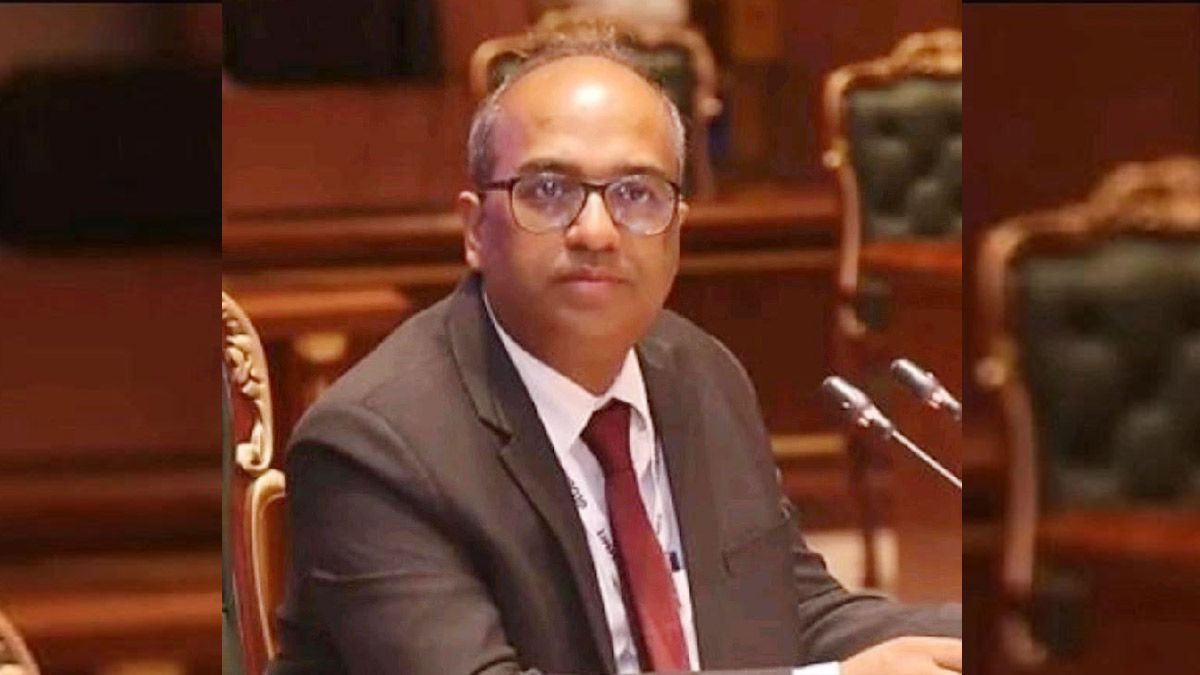
NEW DELHI: India’s beleaguered examination authority has a new boss. Abhishek Singh, currently director general of the National Informatics Centre (NIC), has been appointed director general of the National Testing Agency (NTA), which sits under the Ministry of Education. In a signal of just how seriously the government is treating the role, the post has been temporarily upgraded to the rank and pay of secretary to the government of India.
Singh is not your typical bureaucrat shuffled sideways into a troubled institution. At the NIC, he also held additional charge as additional secretary in the Ministry of Electronics and Information Technology (MeitY), overseeing artificial intelligence, emerging technologies and the Digital India Bhashini division, while simultaneously serving as chief executive of the India AI Mission. That is a formidable technology portfolio by any measure.
His CV reads like a guided tour of India’s digital public infrastructure. He served as president and chief executive of the National e-Governance Division, managing director and chief executive of Digital India Corporation, chief executive of Karmayogi Bharat, and chief executive of MyGov between 2019 and 2024. Before that, from 2014 to 2017, he was executive director at the Food Corporation of India, where he handled information technology, engineering, storage and, additionally, the North Zone operations and the role of chief vigilance officer.
His field credentials are equally robust. Singh has served in both Nagaland and Uttar Pradesh across multiple tenures, navigating law and order, floods, droughts and communal tensions with equal measure. As principal secretary to the chief minister of Nagaland between 2017 and 2019, he also held charge of urban development, personnel and administrative reforms, and, in 2018, home commissioner. At the grassroots, he built roads, irrigation systems, schools and hospitals, and drove welfare programmes focused on poverty alleviation, education and healthcare.
Singh has also worked alongside international agencies including DFID, UNICEF and WHO, contributing to the Child’s Environment Project in Budaun and the Pulse Polio Eradication Programme in Uttar Pradesh. He has conducted elections at the parliamentary, state assembly and local body levels.
Academically, he is no slouch either. Singh holds a master’s degree in public administration from Harvard Kennedy School, where he was a Mason Fellow, and completed his B.Tech and M.Tech from IIT Kanpur.
Meanwhile, the broader bureaucratic reshuffle sees Bihar cadre IAS officer Chanchal Kumar named the new secretary in the Ministry of Information and Broadcasting. Rohit Kansal of the UT cadre moves to the Rural Development Ministry as special secretary, while IAS officer Vikram Yadav has been appointed director general of the Directorate General of Civil Aviation. The outgoing I&B secretary has been reassigned as secretary in the Ministry of Development of North Eastern Region.
The NTA needed someone who could rewire both its credibility and its systems. Singh has spent a career doing exactly that.






