Press Release
The true stories of real life feral children on raised wild

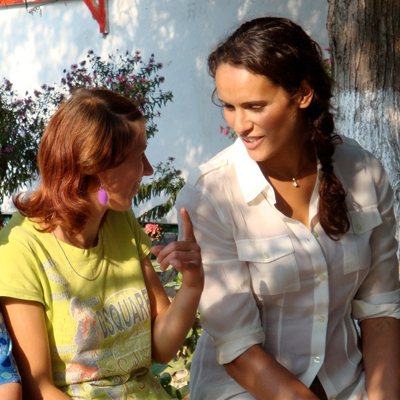
MUMBAI: Stories of children raised by animals have fascinated us for many centuries; Mowgli from The Jungle Book, the myth of Romulus and Remus, and even Tarzan. Do wild children who have been reported to be brought up by untamed animals actually exist, or are they merely folklores or elaborate hoaxes? On Animal Planet’s RAISED WILD, discover the shocking phenomenon and horrifying truth of real life feral children who have actually been bred by undomesticated animals.
A three-part special, join anthropologist Mary-Ann Ochota as she sets off on the trails of these extraordinary youths to uncover the actuality of their existence and unravel their remarkable stories. From the deep jungles of Uganda, to the rural heartlands of Ukraine, and to one of the most isolated places on Earth, the island of Fiji, follow Mary-Ann on RAISED WILD as her quest to separate fact from fiction takes her across three continents to disentangle the truth about these wild children, who live and survive on the very edge of humanity. RAISED WILD premieres on Sunday, January 26 at 7 pm. The episodes will repeat the following Sunday, February 2 at 11 am.
RAISED WILD begins with the search for John Ssabunnya, the alleged ‘monkey boy’ of Uganda. Reported to be living deep in heart of these East African forests, it has been described that he not only moves and sounds like our cousins of the animal kingdom, but also displays numerous monkey-like characteristics such as his nocturnal behaviour, his fur-like, hairy body, and his ability to survive solely on fruits and plants, a diet that is highly identical to that of Africa’s native vervet monkeys. With Charles Darwin’s extensive study of men evolving from primates and centuries of research and scientific theories closely linking human beings to these creatures, is it possible that ‘monkey humans’ really do exist?

RAISED WILD then continues with the investigation of one of the most infamous cases of feral children in Kiev, Ukraine, where a girl called Oxana Malaya has been reported to astoundingly exhibit dog-like behaviour; barking, panting, snarling, jumping and running on all fours amid a pack of untamed dogs, and feeding on dead animals when hunger strikes. Is this ‘dog girl’ a well-conceived fable or a fact? Just how did she end up in the care of these animals, picked up their habits and managed to survive for so long as one of them, away from civilisation for years? Follow Mary-Ann as she scours the country to unriddle the mystery, travelling far and wide from Kiev to Kherson to Odessa and even to Novaya Blagoveschenka, the village where Oxana is believed to have been born.
RAISED WILD ends in Fiji with possibly one of the strangest tales of wild children. As a child, ‘bird boy’ Sujit Kumar was supposedly kept and raised in a coop full of chickens for a few years by his poverty-stricken parents, for reasons unknown, and was cited to have then continued living his life being tied to a wall in the corner of a home for the aged for almost 25 years. Having being amongst chickens for so long, he apparently started to behave like them; pecking on the ground for food, clucking, squawking, screeching occasionally and lashing out when people try to touch him. Who is this ‘bird boy’ and how credible is his story? Join Mary-Ann as she digs deep to delve into the truth of the mysterious and disturbing world of savage feral youths. What is the likelihood that these wild children are mere figments of imagination? Is it even possible for animals to raise human beings? Are these children so far gone that it is too late for them to blend back into society and lead normal lives? How many more of such youths are out there? Find out on the following episodes of RAISED WILD:
MONKEY BOY OF UGANDA: Mary-Ann journeys to equatorial Africa to uncover the truth behind the rumour of young boy living with monkeys. In 1992, a young boy was discovered in the jungle acting disturbingly similar to a monkey. Rumours circulated that the boy screeched like a monkey, squatted instead of stood and was covered in hair from head to toe. Join Mary-Ann as she investigates to determine if this child really could have been raised by monkeys, and if so, how he survived in the wild.
DOG GIRL OF UKRAINE: Mary-Anna journeys to Ukraine to uncover the truth behind the incredible story of Oxana Malaya, a young girl allegedly raised by dogs. Born during the Soviet era to alcoholic parents, young Oxana is said to have turned to the family dogs for warmth and love. Years later, she reportedly was acting exactly like a dog, a claim supported by compelling video footage. How might a child recover from such beginnings? Can her feral behaviour fade with time?
BIRD BOY OF FIJI: Mary-Ann travels to Fiji to uncover the shocking truth behind the story of the Bird Boy of Fiji. Rumours circulate that police discovered the small boy while he was squawking, flapping his arms and pecking at his food. Villagers claim the child’s parents kept him locked under the house with the family chickens, and it was his years spent with the birds that affected his development. Can this child recover from such an upbringing?



Bali is full of memorable moments, and some of them involve animals. Temple monkeys tug at bags, beach dogs nap near sunbeds, and cats wander into cafés like they own the place. Most interactions are harmless, but a bite or scratch can change the day quickly, because you may need immediate medical care and follow-up treatment. This is where Bali travel insurance becomes more than a box to tick.
In this article, you will explore whether animal bite treatment is insured, the exclusions, and the steps to claim easily in Bali.
Why Animal Bites in Bali Need Special Attention
Bites are not only about the visible wound. Insurers and doctors both treat them as medical events that can pose an infection risk, especially when the bite breaks the skin.
A scratch that looks small in the moment can still lead to:
● A doctor’s examination and wound cleaning
● Medicines and dressings
● Follow-up consultations if the doctor advises observation or further care
From an insurance perspective, this matters because claims are usually assessed on medical necessity and documentation, not on how dramatic the injury appears in a photo.
How International Travel Insurance Looks at an Animal Bite
Most travel policies are built around emergency medical expenses for unexpected illness or accidental injury abroad. A bite or scratch usually fits the accidental injury bucket, but coverage is rarely blanket.
In many plans, the following may be considered if a doctor prescribes them and bills and medical notes support them:
● Consultation and outpatient treatment
● Emergency care and procedures, such as wound dressing or stitches, if clinically required
● Prescribed medicines and investigations
● Hospitalisation if the treating doctor confirms it is needed
Common Reasons Claims Get Reduced or Rejected
This is the part travellers often miss. Insurers usually do not deny claims because an animal was involved. Claims become difficult when the event looks avoidable, the reporting is delayed, or the paperwork is weak.
Avoidable-Risk Situations Insurers Scrutinise
Policies commonly exclude or limit claims linked to unsafe conduct or preventable exposure. For animal bites, scrutiny may increase if the incident appears connected to:
● Provoking, feeding, or trying to handle wild animals
● Ignoring warning signs at tourist spots
● Being intoxicated at the time of the incident
● Activities that a policy lists as excluded or restricted
The takeaway is simple: if your own description sounds like a risky choice rather than a sudden accident, the insurer may challenge it.
Delays, Missing Papers, and Policy Conditions
Even when your incident is genuinely accidental, claims can still stall due to basics such as:
● Not informing the insurer or assistance partner within the required time
● Missing itemised bills, prescriptions, or clinical notes
● No proof of travel dates or passport entry details when requested
● Submitting only pharmacy slips without a doctor’s consultation record
International travel insurance is paperwork-driven. If you document it well, you reduce the chance of avoidable back-and-forth.
What to Do If You Are Bitten or Scratched in Bali
Your health comes first, always. But a few sensible steps can protect your recovery and keep your insurance file clean.
Medical Steps That Help You and Your Claim
Act fast, stay calm, and get proper care before worrying about bills.
● Clean the wound promptly and seek medical care, even if it seems minor
● Follow the doctor’s advice, including follow-ups if recommended
● Avoid self-medicating in place of a clinical assessment, because insurers often ask for a doctor’s report
Claim Notes and Documents to Collect
Keep these handy; they’ll save time and avoid follow-up questions later.
● Doctor’s notes that mention the nature of injury, treatment given, and advised next steps
● Prescriptions and pharmacy invoices
● Itemised hospital or clinic bills
● A brief written note of where and when it happened, while it is still fresh in your mind
Final Word
Animal bites in Bali are not rare, and they are not always dramatic, which is exactly why travellers underestimate them. Many travel policies can cover bite-related medical treatment when it is accidental and medically necessary, but the outcome depends on your policy terms and the quality of your documentation. If you buy cover thoughtfully, keep the assistance number handy, and respond sensibly if an incident happens, you give yourself the best chance of both good medical care and a smoother claim experience.