GECs
The search for answers to hook audiences


The year of the game show. The year will be remembered specifically because this programming genre was the buzz of activity. It all started with the raging success of Kaun Banega Crorepati, anchored by an ageing and dismissed-as-a-has-been Bollywood actor on a written-off TV channel Star Plus. Phrases like Lock kiya jayein, Confident have now become part of our every day vocabulary. Based on the popular US show Who Wants to be a Millionaire? which was licensed to Star by rights owner Calendar, the show gave birth to clones all over the country, on TV, in marketing promotions, and on the world wide web. Some sizzled, some simply fizzled. (Game shows had been attempted in the past: Tol Mol ke Bol, Antakshri, Family Fortunes, Wheel of Fortune, Kriket etc , but none of them worked as well as KBC has.)
| The biggest disaster was the hurriedly-launched poorly-executed two-anchor-hosted Sawal Dus Crore Ka on Zee TV, which highlighted the fact that great programmers can make lousy programmes. Zee TV is struggling to find an answer to KBC instead of getting its other programme menu card right. |  |
The result: it is losing audience share even for its bread and butter programming, and in the process its ad revenues. Surprisingly, one of its not so heavily promoted game shows hosted by Ruby Bhatia in the afternoon slot appears to be drawing viewers. It could do wonders if given the right push.
Sony Entertainment on the other hand has been lying low and working hard at creating a show that is different from KBC and hosted by Govinda. It looks to have a potential winner on its hands if one goes by the trailers on the channel.
Other players who have boarded the game show gravy train include: Sabe TV, DD, Sun TV – with its mega success Koteeswaran – ESPN Star Sports with its Sports Quiz. Clearly, the game show fad will fade but right now it appears to be the season for this genre.

The year also witnessed the revival of family-based series. The primary evidence of this was the runaway success of Kyunki Saas Bhi Kabhi Bahu Thi and Kahani Ghar Ghar Ki, both produced by new diva of TV production Ekta Kapoor of Balaji Telefilms. Both deal with the issues of normal middle to upper class joint families and are extremely well and tightly scripted with good performances by the cast.It’s not as if the programming sub-genere is really new – several family based series have aired on TV in the past – but it’s the way the series have been treated that has attracted audiences.
Cricket lost some of its charm during the year as audiences refused to watch tainted cricketers play in stadia and on their TV screens. Surely, the revenues of ESPN-Star Sports will show some erosion in the coming year, reflecting the disenchantment of viewers with the sport. No other sport has been able to replace cricket. Some major cricket deals were struck with WSG-Nimbus bagging the Sri Lanka cricket rights and ICC rights. The latter decision hurt Zee so bad that it yelped racial discrimination.
News and current affairs programming came to the forefront during the year on the back of the hijacking of the Indian Airlines plane to Kandahar in Afghanistan and the subsequent freeing of the hostages at the airport there. International channels like CNN ad BBC started showing some snazzily produced current affairs shows. Business reportage really came to the forefront with the success that CNBC has notched up with the telecast of the goings-on on the stock exchange.Technology shows also appeared with the launch of the first IT and internet channel TMG Enter.
The year also saw an explosion in language programming with about half a dozen new regional language channels debuting. From about a few thousand hours of programming mainly courtesy DD at the beginning of the decade, Indian television today airs hundreds of thousands of hours of regional shows – whether dubbed or original fare. And this is likely to increase in the coming years, spurring further production activity from regional languages producers. Quality shows will make their mark in Marathi, Punjabi, Bengali as the programmers attain maturity.
 |
The year was also a high for religious programming. Channels on religion – an example is Sanskar and Maharishi Ved Vision – run for more than 12 hours a day and every channel be it entertainment or or current affairs air daily morning half hour or more shows to satisfy the spiritual hunger of TV viewers. |
The television production sector is attaining some maturity. Many more genres have to evolve, and the Indian TV viewer has to be kept enthralled as the options multiply.
The government, on its part, has extended IT sops to film and TV exporters giving them an incentive to export their products to global channels and local cable channels catering to the NRI diaspora worldwide. Hopefully, the industry will come up to the challenge and deliver.







GECs
EPIC Company unifies all brands under single EPIC identity
IN10 Media rebrand aligns TV, digital and films into one ecosystem
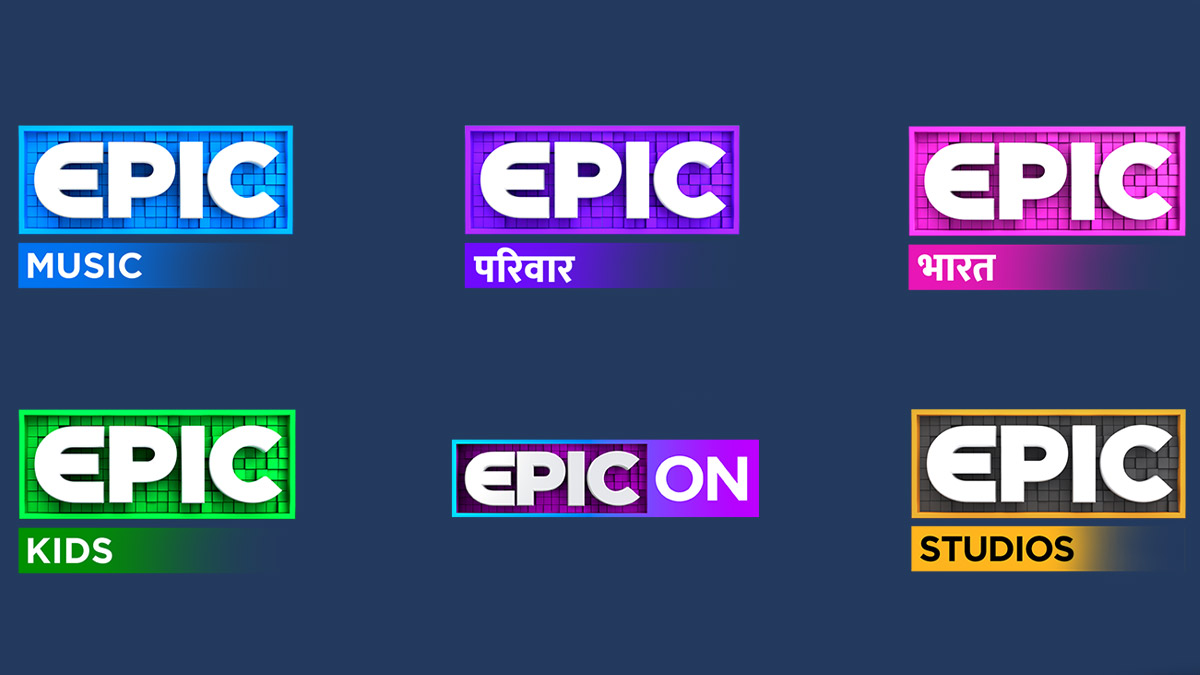
MUMBAI: The EPIC Company, formerly known as IN10 Media Network, has announced a sweeping brand consolidation, bringing its television channels, digital platforms and content IPs under a single identity, EPIC.
The move is aimed at simplifying the company’s structure while creating a more connected content ecosystem spanning television, digital and films. By aligning multiple verticals under one umbrella, the company is looking to present a sharper, more cohesive face to both audiences and partners.
As part of the transition, several channels have been rebranded to align with the EPIC identity. EPIC will now operate as EPIC TV, while Nazara becomes EPIC Bharat, Filamchi is now EPIC Bhojpuri, Gubbare transitions to EPIC Kids, and ShowBox is reintroduced as EPIC Music. Ishara will continue under the identity EPIC Parivaar, maintaining its core positioning.
The company has also refreshed EPICON, its streaming platform, to reflect a more unified and modern brand experience. The overhaul is designed to improve content discovery and create a seamless experience across platforms.
This consolidation follows the recent launch of EPIC Studio, a unified production arm that brings together Juggernaut Productions and MovieVerse Studio, as the company expands its footprint across films, OTT and television.
The EPIC Company managing director Aditya Pittie said, “As our scale has grown, it has become important to simplify how we operate and how we present ourselves to the ecosystem. This consolidation gives us a clearer, more future-ready structure to partner, invest, and build at scale, while ensuring that for viewers, the experience is more seamless and intuitive.”
With the rebrand, The EPIC Company is positioning itself as a platform-agnostic content network, focused on scale, simplicity and integrated storytelling. By bringing everything under one banner, it is aiming to make its content universe easier to navigate and harder to ignore.






