Education
The Best Way to Learn Forex Trading


Today, online trading is in vogue. Over 15 million people around the world partake in the activity, and their community is growing. This is hardly surprising, given the sheer profit potential. On Forex, you are free to set your own goals and use your favourite strategies. Every trader has their own road map to success. But where to get started?
There is no shortage of information online, so you can just Google the subject. However, not all sources are equally trustworthy. Follow our guide to master Forex and turn it into a lucrative career. Trading can be a hobby or a full-time job. It offers maximised flexibility.

1. Find Reliable Brokerage

Brokers are the middlemen between traders and the global market. You cannot connect to the foreign exchange directly: without an account, trading software is useless. Therefore, it is important to choose a firm that will meet your expectations (at the very least). Account registration is always free.
Brokers share educational content on their official websites. They have support centres which are ready to assist you 24/7. Clients may also be provided with links to recommended sources of trading wisdom. So, how should you choose a broker in India?
Residents may pick a local or international provider based on their needs. Always look for licensed operators which are authorised by respectable authorities. These could include the FCA in the United Kingdom, the FCSA in South Africa, the CySEC in Cyprus, etc. They are industry watchdogs which monitor the quality of services. Compliant organisations like ForexTime adhere to such norms as protection of clients' investment, negative balance protection, etc.
2. Find Suitable Software
You cannot learn to trade Forex without a trading terminal. Every broker recommends particular software. These systems may function as desktop platforms, mobile apps, or web-based systems. The latter work without downloads: they may be opened in any popular browser.
The most popular examples like MetaTrader 4 and MetaTrader 5 have all three versions. Users may easily switch devices during their trading day, as data is shared via clouds. The earlier version is geared towards currency pairs, while the fifth edition is best for diverse portfolio management. When you are only learning the basics, a sophisticated interface may only confuse you.
3. Learn Theory and Practice
If you rely on theory alone, you are bound to fail in the live market. Start with a demo account (aka practice account). It is a priceless opportunity to hone skills before venturing into the real currency exchange.
Remember that you will work in a gigantic market. In fact, it is the largest in the world.
Every single day, close to $6 trillion is exchanged between its participants: institutions and individuals. Until the 1990s, Forex welcomed only large-scale players like hedge funds, major banks, and businesses. Today, it is classified as over-the-counter, which means that everything is done online.
So, the purpose of the demo mode is practical learning. You can test-drive your system without risk. Get familiar with the controls and explore analytical tools. You need to know how to initiate, manage and finalise a trade, what parameters must be set, etc. Any theoretical insight must be applied to virtual positions first.

Opening a Demo Account
To register a demo, fill in a simple form on your brokerage site. Typically, it includes only basic contact details like full name, email address, country of residence, and phone number. Submit it and check your inbox: usually, credentials are generated and emailed almost immediately. You can enter them on the terminal straight away.
Other Sources
Since the 1990s, countless books and articles have detailed popular Forex strategies. Today, you can also find podcasts, video tutorials, and webinars on the subject. YouTube has dozens of channels created by expert traders. For example, check out Warrior Trading.
Choosing a Style
Try common styles in the practice mode to see which one suits you. Some strategies require more time than others. For instance, swing trades can last for days or even weeks. Meanwhile, scalpers dip in and out of the market several times per day. For day traders, Forex is a full-time job.
Switch to a live account when you are confident in your knowledge. Do not rush it: the longer you practise — the better your actual results. Remember that real trading always feels different, as you manage your own money.

Education
Abhishek Singh appointed director general of National Testing Agency
Technocrat with deep roots in India’s digital infrastructure push takes charge of the exam body that has faced intense scrutiny
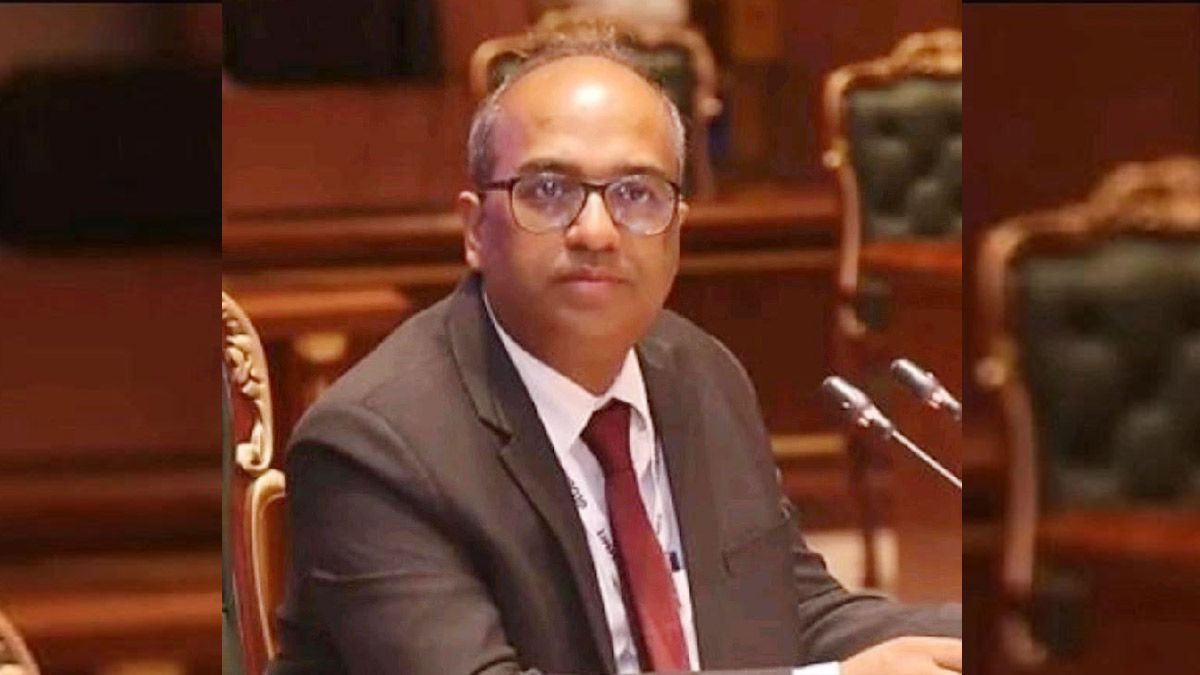
NEW DELHI: India’s beleaguered examination authority has a new boss. Abhishek Singh, currently director general of the National Informatics Centre (NIC), has been appointed director general of the National Testing Agency (NTA), which sits under the Ministry of Education. In a signal of just how seriously the government is treating the role, the post has been temporarily upgraded to the rank and pay of secretary to the government of India.
Singh is not your typical bureaucrat shuffled sideways into a troubled institution. At the NIC, he also held additional charge as additional secretary in the Ministry of Electronics and Information Technology (MeitY), overseeing artificial intelligence, emerging technologies and the Digital India Bhashini division, while simultaneously serving as chief executive of the India AI Mission. That is a formidable technology portfolio by any measure.
His CV reads like a guided tour of India’s digital public infrastructure. He served as president and chief executive of the National e-Governance Division, managing director and chief executive of Digital India Corporation, chief executive of Karmayogi Bharat, and chief executive of MyGov between 2019 and 2024. Before that, from 2014 to 2017, he was executive director at the Food Corporation of India, where he handled information technology, engineering, storage and, additionally, the North Zone operations and the role of chief vigilance officer.
His field credentials are equally robust. Singh has served in both Nagaland and Uttar Pradesh across multiple tenures, navigating law and order, floods, droughts and communal tensions with equal measure. As principal secretary to the chief minister of Nagaland between 2017 and 2019, he also held charge of urban development, personnel and administrative reforms, and, in 2018, home commissioner. At the grassroots, he built roads, irrigation systems, schools and hospitals, and drove welfare programmes focused on poverty alleviation, education and healthcare.
Singh has also worked alongside international agencies including DFID, UNICEF and WHO, contributing to the Child’s Environment Project in Budaun and the Pulse Polio Eradication Programme in Uttar Pradesh. He has conducted elections at the parliamentary, state assembly and local body levels.
Academically, he is no slouch either. Singh holds a master’s degree in public administration from Harvard Kennedy School, where he was a Mason Fellow, and completed his B.Tech and M.Tech from IIT Kanpur.
Meanwhile, the broader bureaucratic reshuffle sees Bihar cadre IAS officer Chanchal Kumar named the new secretary in the Ministry of Information and Broadcasting. Rohit Kansal of the UT cadre moves to the Rural Development Ministry as special secretary, while IAS officer Vikram Yadav has been appointed director general of the Directorate General of Civil Aviation. The outgoing I&B secretary has been reassigned as secretary in the Ministry of Development of North Eastern Region.
The NTA needed someone who could rewire both its credibility and its systems. Singh has spent a career doing exactly that.






