Education
Stuck with Rs. 1 Crore Life Cover? You Need to Know This


Life insurance has become a necessity in life, especially during the COVID19 pandemic. Keeping that in mind, people rush towards the nearest insurance company’s office or look for suitable types of insurance plans online. In any case, if there is one thing that almost every such individual witness, it is ‘a sum assured of Rs. 1 crore.’
You can easily find this number advertised through various mediums or highlighted in bold when you use online life insurance calculators. Indeed, Rs. 1 crore is a significant amount, and backing your family’s financial security with it can make a big difference in their lives. For instance, if you buy a pure term plan with a sum assured of Rs. 1 crore, the policy nominee will get this amount in case of your untimely demise. This could help the family members plan for their financial well-being without facing a burden. Similarly, you can get this amount back by choosing a term plan with a return of premium option.
At this point, many people ask a common question – ‘Is Rs. 1 crore the only option of sum assured we can select?’

This is not true. There are various options available at the time of buying life insurance. A mere glimpse of an online life insurance calculator can tell you what these options are.
The next important question that comes up – ‘How much sum assured should you choose?’
It is time for you to look at various factors before selecting a sum assured.
1. Your Specific Needs
Everyone should indeed invest in a life cover. But this does not mean people need to choose the same sum assured under their life insurance policies.
Before making the selection of sum assured, you must consider your financial contribution towards the family income and well-being of your dependents. In case you are the only earning individual in the family, there would not be any other source that your loved ones can depend on except your total income.
A clear idea of these expenses along with existing debts, if any, can help you decide how much sum assured you should choose. Even using a life insurance calculator is to be considered the next step after need analysis.
2. Your Total Income

Image Source: Shutterstock
Whether you are a salaried or running a business, you would agree that regular income equals the day-to-day expenses for most individuals. It is one reason why they need to think twice about making an additional investment or fulfilling a sudden, unexpected expense.
Buying a life insurance plan also means taking the responsibility to pay its premium on time to get its benefits. Your affordability to pay the premium for the chosen policy term does matter in selecting a sum assured.
Before you purchase any type of insurance, check if it will be easier for you to include the premium in your budget. Use an online life insurance calculator to know how the premium varies with sum assured. As said above, there is no such bound to select the sum assured of Rs. 1 crore only. Choose it only if it feels suitable for your needs.
3. Your Current Life Stage
As you grow old, you will pass through different life stages, each of which requires you to plan for things differently. For instance, if you have recently started the career and other family members are not financially dependent on you, you look at life-planning from a different perspective. However, on getting married and have kids, you will get more responsibilities to handle over time. Accordingly, life goals will change, as well.
The selection of sum assured under a life insurance plan should also be based on the current life stage and goals you may have in mind. Think of it as a crucial part of investment planning in life. Plan for the amount you would need after a certain time and how a life insurance plan can help you achieve that. Use life insurance calculators to arrive at a premium-sum assured combination that is most suitable for you.
Benefits of Using Online Life Insurance Calculators
Next to considering the factors mentioned above, comes the crucial steps of getting a premium estimate online. There are several benefits that you can avail of by using life insurance calculators.
– You can select a specific sum assured and see how the premium varies as per the age parameter.
– You can check the premium variation on changing the policy period, keeping both the sum assured and age same in their respective fields. In case the premium does not seem to fit into your budget, you can increase the policy tenure and spread it over an extended period.
– You can assess the benefits of opting for limited pay or regular pay options while buying life insurance plans.
So, make sure you utilize online life insurance calculators to the fullest and get a life cover that strikes the right chords in various spheres of your life.



Education
Abhishek Singh appointed director general of National Testing Agency
Technocrat with deep roots in India’s digital infrastructure push takes charge of the exam body that has faced intense scrutiny
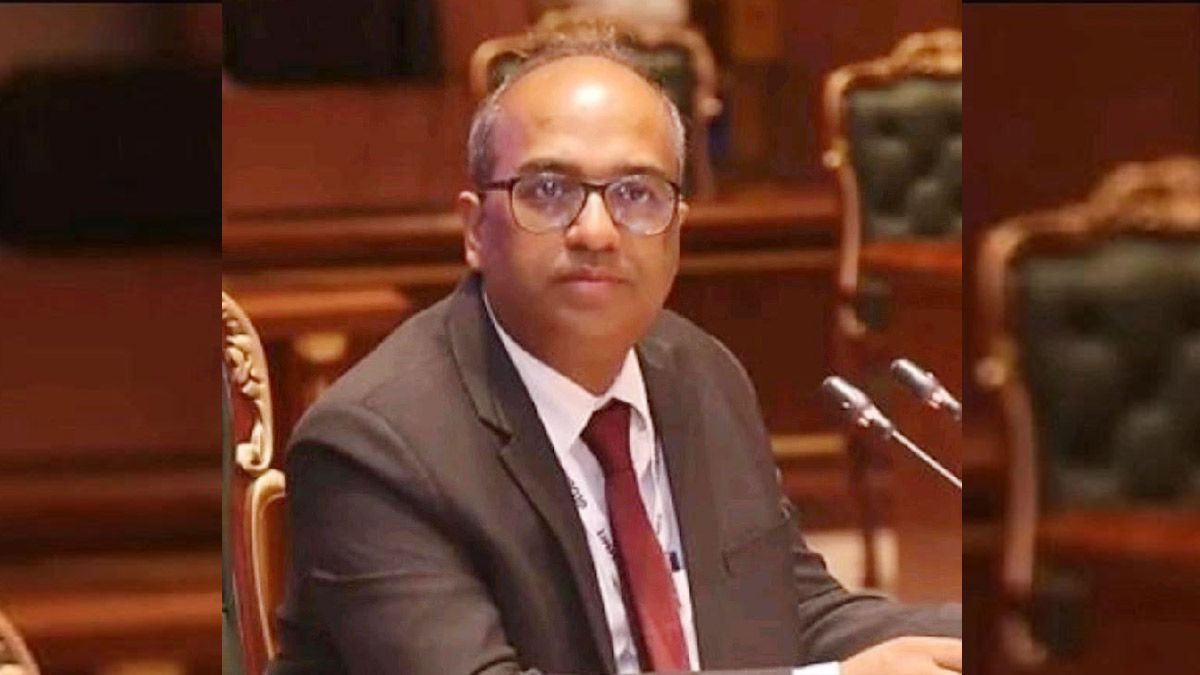
NEW DELHI: India’s beleaguered examination authority has a new boss. Abhishek Singh, currently director general of the National Informatics Centre (NIC), has been appointed director general of the National Testing Agency (NTA), which sits under the Ministry of Education. In a signal of just how seriously the government is treating the role, the post has been temporarily upgraded to the rank and pay of secretary to the government of India.
Singh is not your typical bureaucrat shuffled sideways into a troubled institution. At the NIC, he also held additional charge as additional secretary in the Ministry of Electronics and Information Technology (MeitY), overseeing artificial intelligence, emerging technologies and the Digital India Bhashini division, while simultaneously serving as chief executive of the India AI Mission. That is a formidable technology portfolio by any measure.
His CV reads like a guided tour of India’s digital public infrastructure. He served as president and chief executive of the National e-Governance Division, managing director and chief executive of Digital India Corporation, chief executive of Karmayogi Bharat, and chief executive of MyGov between 2019 and 2024. Before that, from 2014 to 2017, he was executive director at the Food Corporation of India, where he handled information technology, engineering, storage and, additionally, the North Zone operations and the role of chief vigilance officer.
His field credentials are equally robust. Singh has served in both Nagaland and Uttar Pradesh across multiple tenures, navigating law and order, floods, droughts and communal tensions with equal measure. As principal secretary to the chief minister of Nagaland between 2017 and 2019, he also held charge of urban development, personnel and administrative reforms, and, in 2018, home commissioner. At the grassroots, he built roads, irrigation systems, schools and hospitals, and drove welfare programmes focused on poverty alleviation, education and healthcare.
Singh has also worked alongside international agencies including DFID, UNICEF and WHO, contributing to the Child’s Environment Project in Budaun and the Pulse Polio Eradication Programme in Uttar Pradesh. He has conducted elections at the parliamentary, state assembly and local body levels.
Academically, he is no slouch either. Singh holds a master’s degree in public administration from Harvard Kennedy School, where he was a Mason Fellow, and completed his B.Tech and M.Tech from IIT Kanpur.
Meanwhile, the broader bureaucratic reshuffle sees Bihar cadre IAS officer Chanchal Kumar named the new secretary in the Ministry of Information and Broadcasting. Rohit Kansal of the UT cadre moves to the Rural Development Ministry as special secretary, while IAS officer Vikram Yadav has been appointed director general of the Directorate General of Civil Aviation. The outgoing I&B secretary has been reassigned as secretary in the Ministry of Development of North Eastern Region.
The NTA needed someone who could rewire both its credibility and its systems. Singh has spent a career doing exactly that.






