International
Sony Pictures Ent appoints Man Jit Singh president of Sony Pictures Home Ent

-
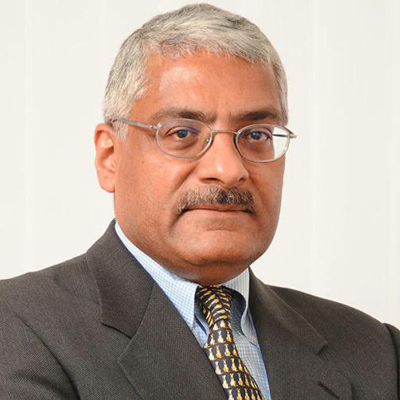
CALIFORNIA: Sony Pictures Entertainment today announced that Man Jit Singh has been named President of Sony Pictures Home Entertainment (SPHE), reporting to Michael Lynton, CEO, Sony Entertainment, Inc., and Amy Pascal, Co-Chairman, Sony Pictures Entertainment.
-
Man Jit, who was previously Chief Executive Officer, Multi Screen Media Pvt. Ltd. (MSM), the operating company that manages Sony Pictures Television’s TV networks in India, will continue as Non-Executive Chairman at MSM while transitioning from his role in the Television division to his new role in Home Entertainment.
-
N.P. Singh, formerly Chief Operating Officer at MSM, has been appointed Chief Executive Officer, managing Sony Pictures Television’s Indian TV networks. N.P. will report to Andy Kaplan, President, Worldwide Networks, Sony Pictures Television.
-

“Man Jit is a savvy global executive with a long track record of success at Sony Pictures, having built our Indian TV channels into high-performance, high-margin businesses. I am confident in his vision for Sony Pictures Home Entertainment and his ability to provide strong leadership for the division as the marketplace continues to evolve,” said Lynton.
-
Under Man Jit, Sony Pictures Television’s Indian TV networks leveraged changing technologies and consumer behaviors to grow into some of the most profitable and highest-rated channels in the market.
-
At SPHE, Man Jit will continue the studio’s focus on reducing overhead costs, while growing high-margin businesses.
-
“As the ways in which consumers experience our content continue to change and multiply, our organization and its strategy for delivering content must evolve to meet the demands of the market. I look forward to building on the foundation of innovation and operational discipline at SPHE to position this business for future growth,” said Man Jit.
-
On N.P. Singh’s appointment to CEO of MSM, Man Jit added, “NP and I have worked closely together as equal partners these last five years and the success of the company is largely due to his efforts. The time has come for him to lead the company to the next level and I fully expect the innovations he brings as CEO will ensure we have years of success ahead. As the Non-executive Chairman of MSM, I look forward to supporting NP and will continue to remain involved with the Indian television industry.”
-
In his new role at MSM, N.P. will continue to focus on developing original, local-language programming and expanding the audience for MSM’s eight highly-profitable channels across India and the more than 70 countries around the world where they are viewed.
-
Man Jit Singh has a strong background in technology, entertainment, and consumer products, with over 20 years of experience in global operations. He has worked in North America, Europe, Asia and Australia. Since 2009, he has overseen Sony Pictures Television’s Networks business in India, which includes SET, SAB, PIX, AXN, MIX, SIX, LIV and MAX. Man Jit was previously Chairman of the Board of Directors of MSM. He spent much of his early career in general management consulting, and he held senior positions at firms including Sibson & Co., LLP in Los Angeles, The Cast Group AG in Zurich, Switzerland and Los Angeles, and Cresap in Los Angeles. Man Jit began his career at Nestle India.
-
N. P. Singh originally joined MSM in 1999 and has been Chief Operating Officer of MSM since December 2004, overseeing day-to-day operations at the company’s highly profitable TV channels and working closely with Man Jit on long-term strategies for continued growth. Previously, Singh served as Chief Financial Officer. Before joining MSM, N.P. held Chief Financial Officer roles at Spice Telecom and Modicorp, and was Controller at Modi Xerox Limited, in addition to other positions.
-
Sony Pictures Entertainment (SPE) is a subsidiary of Sony Entertainment Inc., a subsidiary of Tokyo-based Sony Corporation. SPE’s global operations encompass motion picture production, acquisition and distribution; television production, acquisition and distribution; television networks; digital content creation and distribution; operation of studio facilities; and development of new entertainment products, services and technologies. For additional information, go to http://www.sonypictures.com.
-
Media Contact:
Charles Sipkins
310-244-5651
Charles_Sipkins@spe.sony.com






LOS ANGELES: Acting has never been an easy profession, but in recent years, it has acquired a new existential anxiety. Artificial intelligence can now mimic faces, clone voices and, in theory at least, speak any language it is fed. The fear that actors may soon be replaced by algorithms no longer belongs exclusively to science fiction. And yet, despite the rise of digital inauthenticity, some performers remain stubbornly resistant to replacement. The reason is not celebrity, nor even talent. It is language.
On paper, this should not be a problem. AI can translate. It can imitate accents. It can string together grammatically correct sentences in dozens of languages. But acting, inconveniently, is not about grammatical correctness. It is about meaning, and meaning is where AI still falters.
Machine translation offers a cautionary tale. Google Translate, now powered by neural AI, has improved markedly since its debut in 2006. It can manage menus, emails and airport signage with impressive efficiency. What it struggles with, however, are the moments that matter most: idioms, metaphors, irony, and cultural shorthand. Ask it to translate a joke, a threat disguised as politeness, or a line heavy with emotional subtext, and it begins to unravel. Acting lives precisely in those gaps.
This matters because film language is rarely literal. Scripts, particularly in independent cinema, rely on figurative speech and symbolism to convey what characters cannot say outright. Pedro Almodóvar’s Volver is a useful example. The film’s recurring use of red operates on multiple levels: grief, desire, repression, liberation, and memory. These meanings are inseparable from the Spanish cultural context and emotional cadence. A translation may convey the words, but not the weight they carry. An AI-generated performance might replicate the sound, but not the sense.
This is where multilingual actors gain their edge. Performers such as Penélope Cruz and Sofía Vergara do not simply switch between languages; they move between cultural logics. Their fluency allows them to inhabit characters without flattening them for international consumption. Language, for them, is not an accessory but a structuring force.
Beyond European cinema, this becomes even more pronounced. Languages such as Hindi, Arabic and Mandarin are spoken by hundreds of millions of people and underpin vast cinematic traditions. As global audiences grow more interconnected, the demand for authenticity increases rather than diminishes. Viewers can tell when a performance has been filtered through approximation. Subtle errors, misplaced emphasis, and an unnatural rhythm break the illusion.
There is also a practical dimension. Multilingualism expands opportunity. Sofía Vergara has spoken openly about how learning English enabled her to work beyond Colombia and access Hollywood roles. But this movement is not a one-way export of talent into English-speaking cinema. Multilingual actors carry stories, styles and sensibilities back with them, enriching multiple industries at once.
Cinema has always thrived on such hybridity. Denzel Washington’s performances, for instance, draw on the cultural realities of growing up African American in the United States, while also reflecting stylistic influences from classic Hollywood and Westerns. His work demonstrates how identity and influence intersect on screen. Multilingual actors extend this intersection further, embodying multiple cultural frameworks simultaneously.
At times, linguistic authenticity is not merely artistic but ethical. Films that confront historical trauma, such as Schindler’s List, rely on language to anchor their moral seriousness. When Jewish actors perform in German, the choice is not incidental. Language becomes a site of memory and confrontation. It is difficult to imagine an automated voice carrying that responsibility without hollowing it out.

This is why claims that AI heralds the death of language miss the point. Language is not just a delivery system for information. It is a repository of history, humour, power and pain. Fluency is not only about knowing what to say, but when to hesitate, when to understate, and when to let silence do the work. These are not technical problems waiting to be solved; they are human instincts shaped by lived experience.
AI may one day improve its grasp of metaphor and nuance. It may even learn to sound convincing. But acting is not about sounding convincing; it is about being convincing. Until algorithms can acquire memory, cultural inheritance and emotional intuition, multilingual actors will remain irreplaceable. AI may learn to speak. But it cannot yet learn to mean.
In an industry increasingly tempted by shortcuts, language remains stubbornly resistant to automation. And for actors who can move between worlds, linguistic, cultural, and emotional, that resistance is not a weakness, but a quiet, enduring advantage.