News Broadcasting
Shriram Sanlam Awards 2013 – for Excellence In Financial Journalism


MUMBAI: The Shriram Group is delighted to continue our contribution and recognition to the Journalist community through our SHRIRAM SANLAM AWARDS FOR EXCELLENCE IN FINANCIAL JOURNALISM. This year, Shriram Capital enters its second year of recognizing and commemorating Excellence In Financial Journalism. Having successfully launched the Shriram Sanlam Awards for Excellence in Financial Journalism last year, Shriram Capital is pleased to share with you the format for the awards for this year. Nominations can be made from now onwards till January 31, 2014.
You would recall that the 2012 awards event held in May 2013 in Chennai with the H’ble Finance Minister Mr. P. Chidambaram as the chief guest unveiled the following winners: LIFE TIME ACHIEVEMENT AWARD presented to Mr. Swaminathan S. Anklesaria Aiyar, Consulting Editor, The Economic Times. HALL OF FAME presented to Mr. P. A. Seshan for his extraordinary contribution to the field of Financial Journalism for over 70 years. INDIAN ECONOMIC POLICY AND MACRO ECONOMIC ISSUE awarded to the Article “The Last Mile” in Business World (Raghu Mohan was the recipient).
For the year 2013, the Shriram Sanlam Awards have been broad based to include the International Print (English Mainlines/Financials/ Magazines), Wires and Online media as well. Hence, the new categories going forward are:
1. ARTICLES ON BUSINESS/ FINANCE/ CAPITAL MARKETS/ ECONOMY BY INDIAN MEDIA (ENGLISH MAINLINES/ FINANCIALS/ MAGAZINES/ WIRES)

2. ARTICLES BY INTERNATIONAL MEDIA JOURNALISTS CENTERED ON INDIAN BUSINESS OR ECONOMY CATEGORY
Nominations can be made by Editors and/or Chief of Bureaus. We will also permit self nomination by individual journalists as long as they are accompanied with two references either from senior corporate executives or journalists or editors (may be from same or different publication).
Unlike last year, the specific categories of awards will be decided by the awards committee after the receipt of all nominations. This is only to enable recognition of good work done in the field of financial journalism without constraining ourselves by specifying sub categories in advance. Each Category will have a cash prize of Rs. 1 lakh along with a citation. Parameters for the Awards remain unchanged, i.e. Insight, Analysis, Depth, Uniqueness, Originality, Comprehensive and Balanced Approach, Level of research, Follow up of story by others leading to wider discussion, Overall Impact of the story apart from the above.
I am pleased to inform you that the Lifetime Achievement Award winner for the last year, Mr. Swaminathan S. Anklesaria Aiyar has been inducted into the awards jury for the Shriram Sanlam Awards. The other distinguished panel of independent jury members now comprises: Mr. Gopal Srinivasan, Chairman & Managing Director – TVS Capital Ltd.; Dr. Nachiket Mor, Chairman, CARE India P. Ltd.; Mr. Srinivasan K. Swamy, Chairman & Managing Director, R. K. Swamy BBDO; Ms. Ashu Suyash, CEO, L&T Mutual Fund; & Mr. Adit Jain, Chairman, IMA Asia.




News Broadcasting
News18 India launches Command Centre war explainer with Arya
New show shifts from debates to decoding global conflicts and impacts
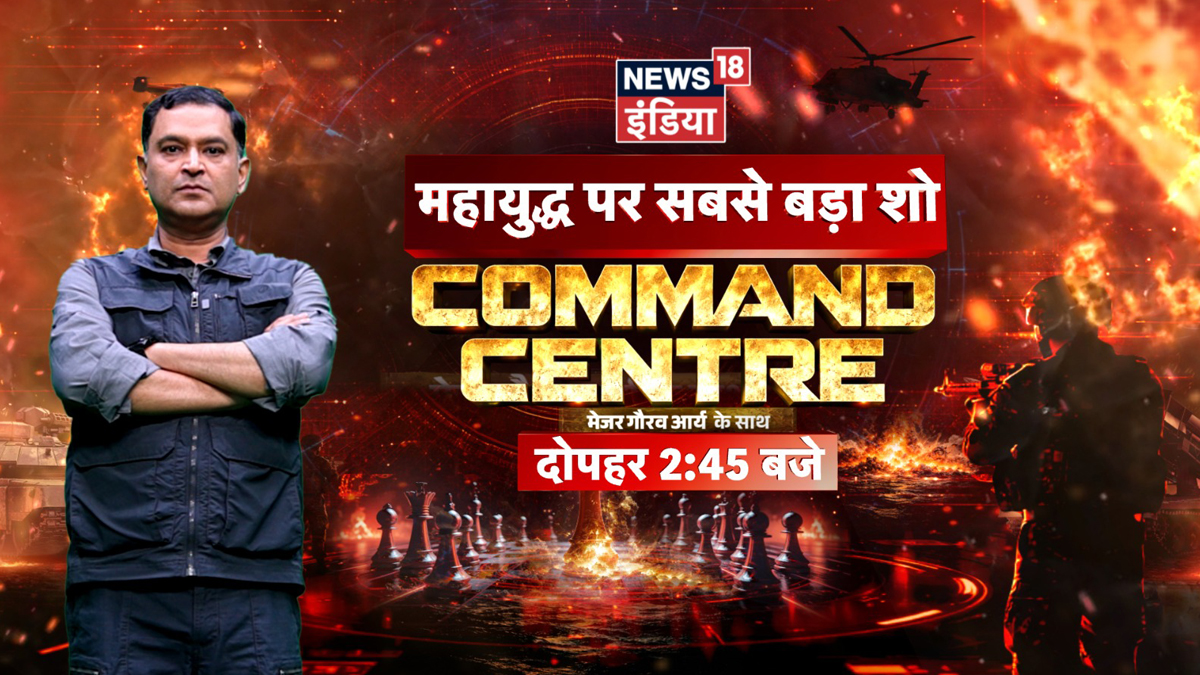
MUMBAI: News18 India has rolled out a new war-focused programme, Command Centre, featuring Gaurav Arya, as it looks to offer viewers a sharper, more grounded take on global conflicts amid rising tensions in West Asia.
Positioned as an “insider war room”, the show moves away from conventional panel debates and instead focuses on explaining military developments, decoding strategy and connecting global events to their everyday impact, from fuel prices to economic shifts.
The format leans heavily on visuals and data. The studio has been designed like a command hub, complete with large LED war maps, real-time graphics and an alert system to track developments as they unfold.
At the centre of it all is Arya, who brings his military background to simplify complex war strategies for viewers. His signature line, “Seedhi baat samjhiye”, anchors the show’s promise of clarity over noise.
News18 India managing editor Jyoti Kamal said, “Command Centre, featuring Major Gaurav Arya is designed to deliver accurate insights and a clear perspective on how evolving conflicts impact everyday life, from household budgets to national security. With expert voices analysing every development in real time, the show goes beyond headlines to decode what’s happening now, what it means, and what could come next.”
Echoing the intent, Gaurav Arya added, “In times of war, confusion is the biggest threat. With News18 India’s Command Centre, we are bringing viewers inside the war room, decoding strategies, tracking every escalation, and explaining, in the simplest terms, what it means for India and for every household. Seedhi baat samjhiye, this is where you understand not just what is happening, but what happens next.”
The weekday show will air in the afternoon slot and will also feature Gaurav Shukla, adding to its editorial depth.
With its mix of analysis, visuals and a clear focus on impact, the show reflects a broader shift in news consumption. Viewers are no longer just watching events unfold, they are looking to understand what those events mean for them.






