Education
Richard Branson Flies to Space with Sirisha Bandla


There was a time when the idea of someone other than an astronaut flying to space seemed absurd.
Now that dream has become a reality, with Virgin Galactic CEO and famous businessman Richard Branson flying to the edge of space on a rocket plane.
Branson was joined on his flight by a select group of passengers, which includes an Indian-born woman by the name of Sirisha Bandla.

Below is a detailed explanation of their trip, background on both Branson and Bandla, along with more information about the upcoming race for space tourism.
Branson Flies to Space
Richard Branson, who has long been a proponent of space travel and space tourism, took an exclusive flight to the edge of space. His rocket flew from New Mexico in the United States, spent roughly 30 minutes reaching the edge of the Earth’s atmosphere, spent some time up in space, and then flew back down.
The entire journey was over in a little over an hour, which may have seemed anticlimactic to some. However, Branson and his group made history, as they were the first non-astronauts to fly into space. That is a feat no one can take away from them.
When he spoke after the trip, Branson talked about how he had the time of his life. He said it was an experience he will never forget, and he hoped that his trip would show others that space travel can eventually become attainable to the masses.
Jeff Bezos Joins Branson in Space Travel
Amazon’s Jeff Bezos has also flown into space in recent weeks, as he took his own crew a little further beyond the earth’s atmosphere shortly after Branson made his famous journey. Bezos also spoke positively about his experience when he flew off from Texas in the United States.
The two giants of business showed that space travel is now something that can be achieved by people who are not astronauts. While neither of their rockets were in space for more than a few minutes, the trips do show that going up to and beyond the Earth’s atmosphere is no longer a fantasy for the vast majority of people.
When Bezos came down from his trip, he said he had just experienced the “best day ever.” The excitement in his voice was hard to miss, which shows that even the most successful people in the world can be impressed by experiences they previously thought were insurmountable.
India Celebrates Sirisha Bandla
A new era of space tourism has emerged with the trip taken by Branson and his crew to space. With them was an Indian-born woman, Sirisha Bandla, who is gaining a lot of recognition in her home country.
Bandla became the second woman born in India to go to space, after Kalpana Chawla. The latter sadly passed away when the Columbia Space Shuttle crashed on its re-entry to earth back in 2003.
Bandla has a high position within Virgin Galactic, which Branson owns. She works as the vice president of government affairs for the company. Bandla has been with the company since 2015, earning her way through the ranks with her business acumen and knowledge of space travel.
When news of the trip broke, her grandfather gave an interview to Reuters, in which he spoke about her long standing love for space and traveling beyond our planet.
Bandla was part of a five-man crew that took the journey into space with Branson on his rocket. The 33-year-old is an aeronautical engineer who was born in Andhra Pradesh, India. Her family eventually moved to Houston, Texas in the United States, where she went on to attend Purdue University and George Washington University.
Richard Branson and Space
Richard Branson is an English businessman who has spent his entire life hoping to travel to space. He always wanted to be an entrepreneur, with his business sense quickly taking him to the very top of his profession.
Branson began his empire with Virgin Records, a music record label that went on to sign many great artists over the years. He then transitioned into packaged holidays and founded his Virgin Atlantic airline.
The subsequent decades saw Branson try his hand at nearly every industry that caught his interest. Everything from telecom ventures to railways to space-related projects were on the agenda for the English billionaire.
His Virgin Galactic space tourism company was founded in 2004, during a time when most people felt the idea of regular folks traveling to space was laughable. Branson always believed that his journey would end with him going into space, and now he hopes to bring down the costs of such trips for the masses.
The Age of Space Tourism
With Richard Branson, Jeff Bezos and others going into space, traveling beyond Earth is officially open for non-astronauts. Such trips are likely to cost a lot of money in the near future, but prices will go down eventually.
Experts believe that within five or six years, space travel may be a feasible option for middle class and higher class people in affluent countries. Very rich people in Third World countries may be able to make such trips with regularity as well.
If you have been dreaming of the day you would fly to space and see the Earth as a blue and green dot among a larger solar system, your dream could soon become a reality. The privilege of going to space may cost you a lot of money, but so do most great experiences in life.

Education
Abhishek Singh appointed director general of National Testing Agency
Technocrat with deep roots in India’s digital infrastructure push takes charge of the exam body that has faced intense scrutiny
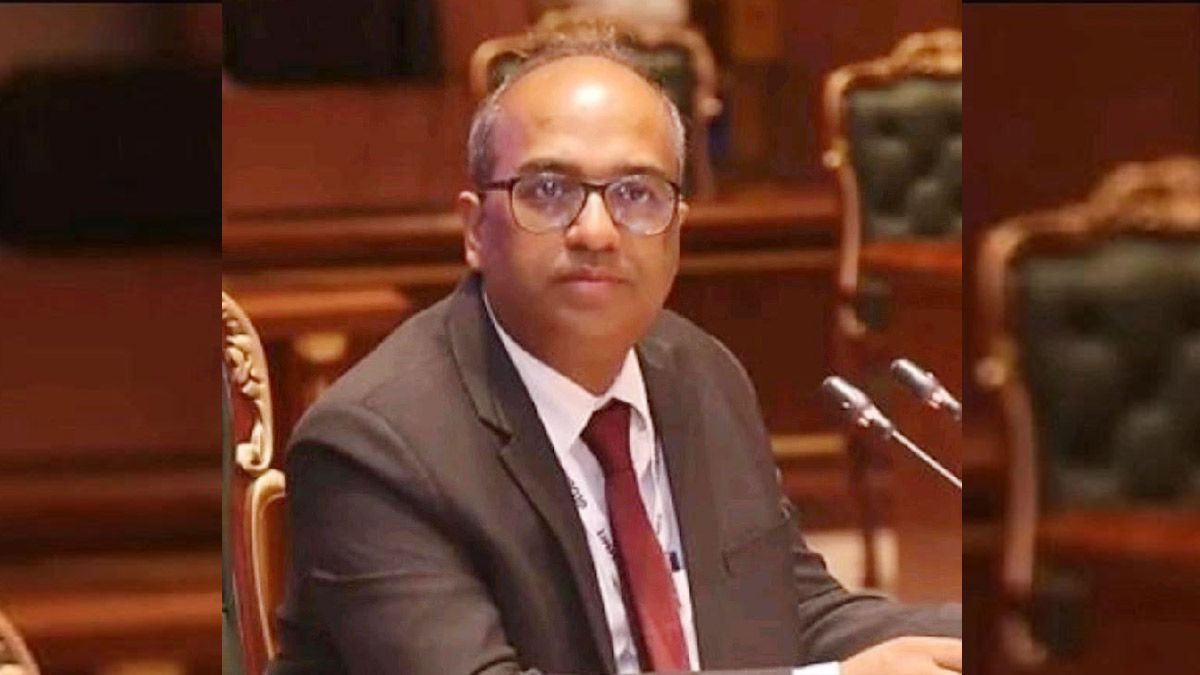
NEW DELHI: India’s beleaguered examination authority has a new boss. Abhishek Singh, currently director general of the National Informatics Centre (NIC), has been appointed director general of the National Testing Agency (NTA), which sits under the Ministry of Education. In a signal of just how seriously the government is treating the role, the post has been temporarily upgraded to the rank and pay of secretary to the government of India.
Singh is not your typical bureaucrat shuffled sideways into a troubled institution. At the NIC, he also held additional charge as additional secretary in the Ministry of Electronics and Information Technology (MeitY), overseeing artificial intelligence, emerging technologies and the Digital India Bhashini division, while simultaneously serving as chief executive of the India AI Mission. That is a formidable technology portfolio by any measure.
His CV reads like a guided tour of India’s digital public infrastructure. He served as president and chief executive of the National e-Governance Division, managing director and chief executive of Digital India Corporation, chief executive of Karmayogi Bharat, and chief executive of MyGov between 2019 and 2024. Before that, from 2014 to 2017, he was executive director at the Food Corporation of India, where he handled information technology, engineering, storage and, additionally, the North Zone operations and the role of chief vigilance officer.
His field credentials are equally robust. Singh has served in both Nagaland and Uttar Pradesh across multiple tenures, navigating law and order, floods, droughts and communal tensions with equal measure. As principal secretary to the chief minister of Nagaland between 2017 and 2019, he also held charge of urban development, personnel and administrative reforms, and, in 2018, home commissioner. At the grassroots, he built roads, irrigation systems, schools and hospitals, and drove welfare programmes focused on poverty alleviation, education and healthcare.
Singh has also worked alongside international agencies including DFID, UNICEF and WHO, contributing to the Child’s Environment Project in Budaun and the Pulse Polio Eradication Programme in Uttar Pradesh. He has conducted elections at the parliamentary, state assembly and local body levels.
Academically, he is no slouch either. Singh holds a master’s degree in public administration from Harvard Kennedy School, where he was a Mason Fellow, and completed his B.Tech and M.Tech from IIT Kanpur.
Meanwhile, the broader bureaucratic reshuffle sees Bihar cadre IAS officer Chanchal Kumar named the new secretary in the Ministry of Information and Broadcasting. Rohit Kansal of the UT cadre moves to the Rural Development Ministry as special secretary, while IAS officer Vikram Yadav has been appointed director general of the Directorate General of Civil Aviation. The outgoing I&B secretary has been reassigned as secretary in the Ministry of Development of North Eastern Region.
The NTA needed someone who could rewire both its credibility and its systems. Singh has spent a career doing exactly that.