News Broadcasting
NDTV Prime presents Stand Up Planet

MUMBAI: NDTV Prime is proud to present Stand Up Planet, a travelogue hosted by L.A.-based Indian American comic, Hasan Minhaj (Arrested Development, MTV’s Failosophy), that takes viewers on a quest to find some of the best humour coming from across the world.
Along the way, Minhaj follows the jokes and personal experiences of these international comics deep into the hard truths of some of the toughest global poverty issues of our time.

With a posse of comedian friends, including Nate Bargatze, James Adomian and Michelle Buteau, Minhaj invites one comic from India and one from South Africa to take part in the biggest night of their lives – performing in an international comedy showcase and television show in Hollywood – after a stop to meet comedy legend Bill Cosby.
NDTV Prime has partnered with KCETLink, the national independent public media organization (USA) to premiere STAND UP PLANET. The two part comedy documentary will be aired on NDTV Prime as part of the channel’s Comedy time band at 10:00pm on May 17 & May 24.
Speaking on the association Vikram Chandra, Group CEO, NDTV said, “We at NDTV have always strived towards providing global quality content to our viewers and the association with KCETLink’s original comedy special STAND UP PLANET is yet another step towards achieving this. Comedy is gaining great popularity in India and through the platform of NDTV Prime; we will showcase the best in the genre to our viewers.”
STAND UP PLANET is funded by a grant from The Bill & Melinda Gates Foundation and produced by independent broadcaster KCETLink in association with [http://www.kontentfilms.com/] Kontent Films. The television elements were directed by David Munro, and the project’s executive producers are Wendy Hanamura, Caty Borum Chattoo, Paul S. Mason, Craig Minassian, David Munro, Xandra Castleton, Mark Decena and Teri Heyman. Munro and Castleton are the TV programís creators. The project’s transmedia executive producers and directors are Caty Borum Chattoo and Wendy Hanamura. The special is being distributed nationally in the U.S. by KCET, Link TV and Pivot TV.
STAND UP PLANET’s robust website will provide viewers with behind-the-scenes content and ways to learn, share information and take action on global poverty in India and South Africa.
Follow STAND UP PLANET on Twitter at @standupplanettv and on Facebook at facebook.com/StandUpPlanet. Follow the conversations at #StandUpPlanet. To learn more, please visit www.standupplanet.org.

News Broadcasting
CNN-News18 to host Fury in the Gulf conclave on West Asia crisis
Three-hour summit to unpack geopolitical fallout and impact on India
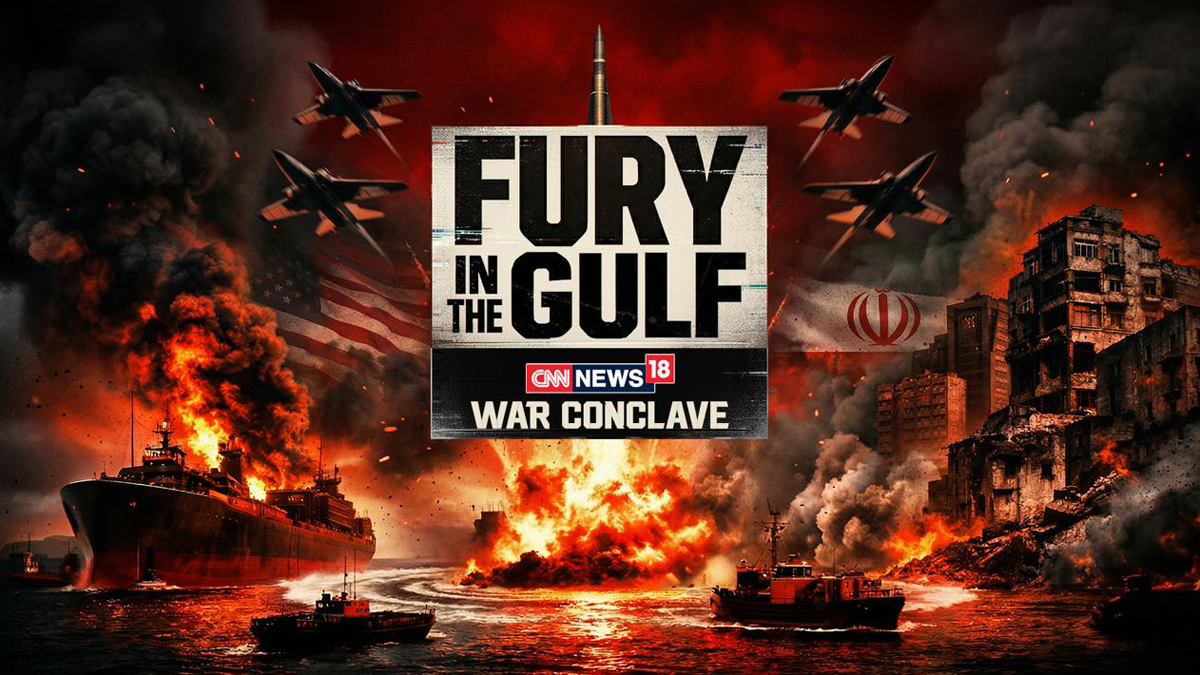
MUMBAI: CNN-News18 is set to host a special three-hour broadcast, Fury in the Gulf – War Conclave, on April 7, aiming to decode the escalating West Asia crisis and its far-reaching implications for India.
Scheduled from 4:00 PM to 7:00 PM, the conclave comes at a time when tensions between Iran and the United States are reshaping global geopolitics and triggering economic uncertainty. With India’s deep energy ties, trade links and large diaspora in the Gulf, the developments carry significant domestic relevance.
Built around the theme ‘Conflict, Consequences, and The Future,’ the programme will feature six curated sessions combining one-on-one interviews and panel discussions. The focus is to cut through the clutter and offer viewers a clearer understanding of the fast-evolving situation.
Key sessions include ‘Diplomacy in Times of War’ featuring Shashi Tharoor, and ‘World After the Iran Conflict’ with voices such as Ram Madhav, Reuven Azar, representatives from the European Union and the Iranian Deputy Envoy. Another session titled ‘Another Dunkirk?’ will bring together K. J. S. Dhillon and Jitin Prasada among others.
CNN-News18 editorial affairs director Rahul Shivshankar said, “In times of war, clarity becomes the most powerful tool. Fury in the Gulf – War Conclave brings together credible voices to address the questions and confusion that arise amid an overwhelming influx of information.”
He added that the initiative is aimed at delivering “facts, perspective, and insight” at a time when misinformation can easily cloud public understanding.
Echoing the sentiment, CNN-News18 CEO– English and business news Smriti Mehra said the conflict marks a defining global moment, with consequences that extend well beyond the region. She noted that the conclave seeks to present the crisis with “depth, nuance and responsibility” so audiences can better grasp its real-world impact.
As geopolitical tensions continue to dominate headlines, the conclave positions itself as an attempt to bring order to the noise, offering viewers a structured, insight-led look at a complex and rapidly shifting global situation.






