News Broadcasting
NDTV Indian of the Year Awards

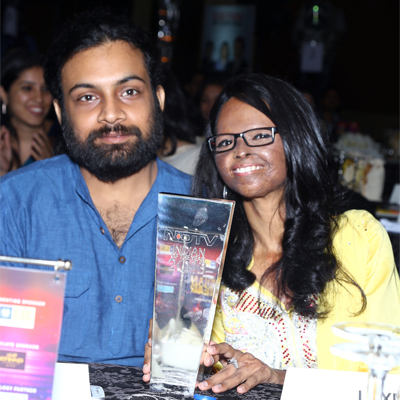
MUMBAI: The NDTV Indian of the Year Awards are held annually to recognise Indians whose contribution to the country have strengthened the foundation of our society and helped build Brand India.
NDTV today announced the winners of their seventh edition of ‘Indian of the Year Awards’ at a grand ceremony held at the Taj Palace Hotel in New Delhi.
The seventh edition of the awards was marked by a set of interesting panel discussions over key issues: Public Service, Elections and Business.
The panelist for the Public Service session included Aamir Khan, Aruna Roy (social activist) and S. Y. Quraishi, former Chief Election Commissioner of India while the panelist for the Business session saw business czars Rahul Bajaj, Chairman of the Indian conglomerate Bajaj Group and a Member of Parliament, Rajiv Bajaj, Managing Director of Bajaj Auto, Shiv Nadar, Founder and Chairman of HCL and the Shiv Nadar Foundation and RoshniNadar, Executive Director and the CEO of HCL Corporation.

The third and final session was the award for the Indian of The Year, presented by Prannoy Roy to the Election Commission of India;represented by 7 former Chief Election Commissioners of India. The discussion with SY Quraishi, MS Gill, BB Tandon, JM Lyngdoh, Naveen Chawla, TS Krisha Murthy and N Gopalaswami was moderated by BarkhaDutt.
Also present at the ceremony were LathaRajnikanth; Soundarya R Ashwin; RanbirKapoor; DeepikaPadukone; Kangana Ranaut among other well known personalities from all walks of life.
The eminent awardees were:
1. Award for Public Service – PRS Legislative Research & Association for Democratic Reform
2. Business Leader of the year – Rajeev Bajaj
3. Young Philanthropist of the year – RoshniNadar
4. LIC Unsung Hero – Laxmi
5. Entertainer of the year – DeepikaPadukone
6. Actor of the year – KanganaRanaut
7. Bollywood youth Icon – RanbirKapoor
8. Technical Innovation in Film – Soundarya R. Ashwin
9. Sportspersons of the year – P V Sindhu
10. Lifetime Achievement Award (Entertainment) – Amjad Ali Khan
11. Lifetime Achievement Award (Arts): SatishGujral
12. INDIAN OF THE YEAR – The Election Commission represented by 7 former Chief Election Commissioners of India.
The evening ended with a special memento being presented by the Chairman of LIC, SK Roy to Aamir Khan.





News Broadcasting
News18 India launches Command Centre war explainer with Arya
New show shifts from debates to decoding global conflicts and impacts
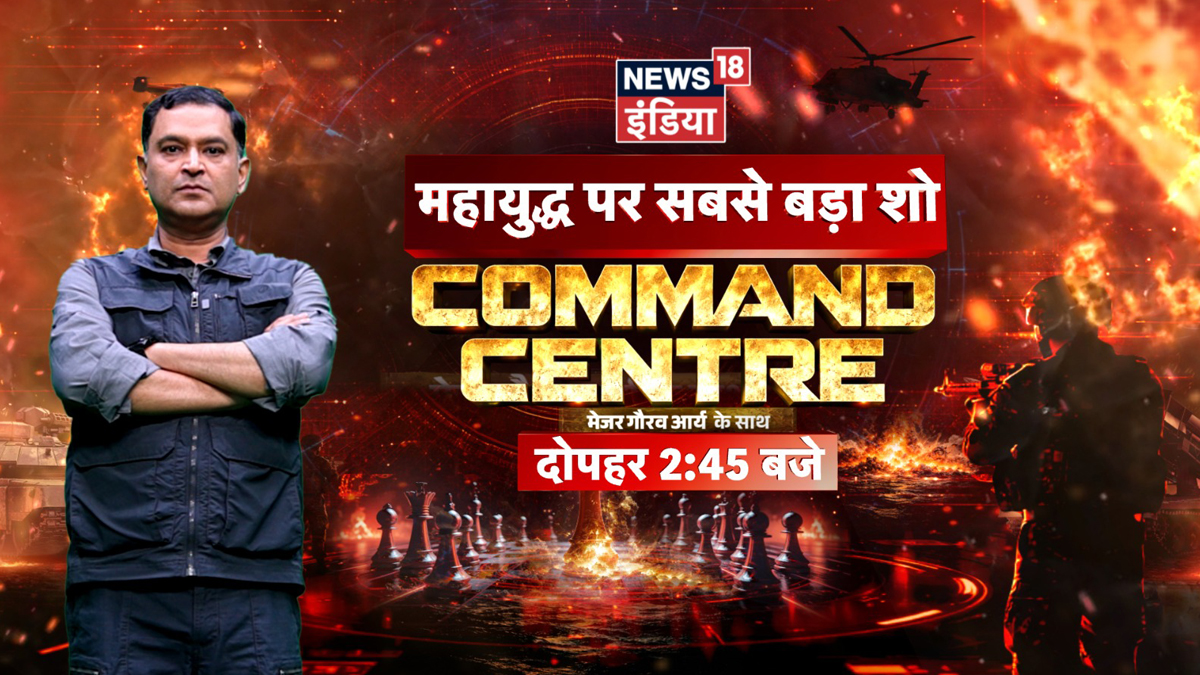
MUMBAI: News18 India has rolled out a new war-focused programme, Command Centre, featuring Gaurav Arya, as it looks to offer viewers a sharper, more grounded take on global conflicts amid rising tensions in West Asia.
Positioned as an “insider war room”, the show moves away from conventional panel debates and instead focuses on explaining military developments, decoding strategy and connecting global events to their everyday impact, from fuel prices to economic shifts.
The format leans heavily on visuals and data. The studio has been designed like a command hub, complete with large LED war maps, real-time graphics and an alert system to track developments as they unfold.
At the centre of it all is Arya, who brings his military background to simplify complex war strategies for viewers. His signature line, “Seedhi baat samjhiye”, anchors the show’s promise of clarity over noise.
News18 India managing editor Jyoti Kamal said, “Command Centre, featuring Major Gaurav Arya is designed to deliver accurate insights and a clear perspective on how evolving conflicts impact everyday life, from household budgets to national security. With expert voices analysing every development in real time, the show goes beyond headlines to decode what’s happening now, what it means, and what could come next.”
Echoing the intent, Gaurav Arya added, “In times of war, confusion is the biggest threat. With News18 India’s Command Centre, we are bringing viewers inside the war room, decoding strategies, tracking every escalation, and explaining, in the simplest terms, what it means for India and for every household. Seedhi baat samjhiye, this is where you understand not just what is happening, but what happens next.”
The weekday show will air in the afternoon slot and will also feature Gaurav Shukla, adding to its editorial depth.
With its mix of analysis, visuals and a clear focus on impact, the show reflects a broader shift in news consumption. Viewers are no longer just watching events unfold, they are looking to understand what those events mean for them.






