Education
List of documents to carry when riding a bike


Drivers of two-wheeler vehicles need to be careful about a number of things, such as their physical safety on roads as well as avoiding trouble with the traffic police. Keeping all your documents updated and on your person, while driving your vehicle is of utmost importance. Routine checks by traffic police may land you into trouble if you do not have all the required documents needed to drive a two-wheeler vehicle. Starting from your driving licence to insurance papers, there are a number of documents that are legally required to drive a two-wheeler.
Here’s a list of documents that you need to carry while riding a bike in India –
● Driving License

Another document that you must carry while travelling is your driving license in India(DL). Without a DL, you are not considered fit for riding a vehicle on Indian roads. Driving licenses are issued by the RTO after an applicant passes a driving test. These licenses are issued for driving vehicles of various categories, you need to ensure which one fits with the vehicle you are driving.
As per Motor Vehicles Act, 1988 you must carry your driving license with you at the time of riding a motorcycle or scooter. You can either carry a physical copy or a digital one in DigiLocker or mParivahan apps.
● Registration Certificate
The Registration Certificate (RC) of the motorcycle or scooter is one of the most important documents that you are required to carry. The RC acts as a proof of ownership. Besides, it helps the authorities know whether the vehicle has or has not been registered with the Regional Transport Office (RTO), which is required under the law. It also helps authorities identify stolen vehicles that may be plying on the road.
● Bike Insurance Policy
Bike insurance is mandatory under Indian laws. You can either get a third party bike insurance or go for a comprehensive bike insurance which includes all the benefits of a bike insurance. You are also required to carry the insurance document with you at the time of driving as per Motor Vehicles Act, 1988.
The policy will have information such as the bike’s registration number, the tenure of the policy, the limit of the coverage, and the name of the insurance company.
● Pollution Under Control (PUC) Certificate
A PUC Certificate is another document that tells the authorities whether your vehicle is fit for driving. A PUC certifies the level of pollution that your bike emits. The registration number of your bike will be mentioned in the PUC and will help in verification. The document confirms whether the amount of carbon monoxide emitted by your vehicle is within permissible limits.
Of late in UTs, especially Delhi, authorities have started asking riders of two wheelers for PUC since the pollution levels in the national capital has deteriorated significantly.
● Fitness Certificate and Medical Certificate
You must also carry a fitness certificate in case your bike is older than 15 years. The fitness certificate needs to be renewed every two years. Additionally, people above 50 years of age are also required to carry a medical certificate to show that they are fit to drive a two-wheeler.
Two-wheeler drivers not carrying the required documents can be penalised with a fine or an e-challan. Driving two-wheelers in general is more dangerous than driving a car, so you must take additional care to evade getting in trouble with traffic police. You need to be prepared with the right documents to avoid finding yourself in such a position. Car Insurance or bike insurance documents and driving license in India are among the most important documents. In case, you don’t have these you might be given an electronic challan, you will also have to monitor your e challan status online on the government portals. Today, with the advent of technology, getting a bike insurance is easier than ever.
Conclusion
Maintaining these documents can help you steer clear of fines imposed by the traffic police. Therefore, you should carry these documents at all times whenever you decide to use a two-wheeler. Bike insurance is a mandatory requirement, and individuals can purchase an insurance plan online on a platform that offers a comprehensive list of such plans. Buyers of bike insurance plans can take advantage of the bike insurance calculator in order to understand what premium they’d be expected to pay.

Education
Abhishek Singh appointed director general of National Testing Agency
Technocrat with deep roots in India’s digital infrastructure push takes charge of the exam body that has faced intense scrutiny
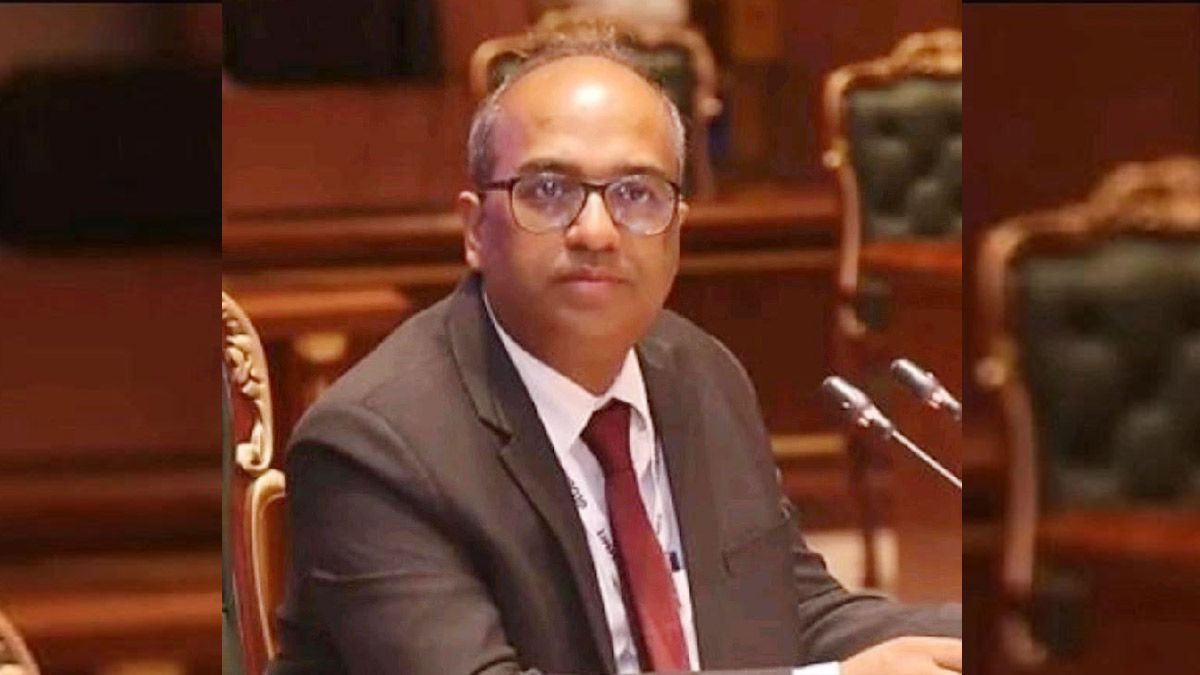
NEW DELHI: India’s beleaguered examination authority has a new boss. Abhishek Singh, currently director general of the National Informatics Centre (NIC), has been appointed director general of the National Testing Agency (NTA), which sits under the Ministry of Education. In a signal of just how seriously the government is treating the role, the post has been temporarily upgraded to the rank and pay of secretary to the government of India.
Singh is not your typical bureaucrat shuffled sideways into a troubled institution. At the NIC, he also held additional charge as additional secretary in the Ministry of Electronics and Information Technology (MeitY), overseeing artificial intelligence, emerging technologies and the Digital India Bhashini division, while simultaneously serving as chief executive of the India AI Mission. That is a formidable technology portfolio by any measure.
His CV reads like a guided tour of India’s digital public infrastructure. He served as president and chief executive of the National e-Governance Division, managing director and chief executive of Digital India Corporation, chief executive of Karmayogi Bharat, and chief executive of MyGov between 2019 and 2024. Before that, from 2014 to 2017, he was executive director at the Food Corporation of India, where he handled information technology, engineering, storage and, additionally, the North Zone operations and the role of chief vigilance officer.
His field credentials are equally robust. Singh has served in both Nagaland and Uttar Pradesh across multiple tenures, navigating law and order, floods, droughts and communal tensions with equal measure. As principal secretary to the chief minister of Nagaland between 2017 and 2019, he also held charge of urban development, personnel and administrative reforms, and, in 2018, home commissioner. At the grassroots, he built roads, irrigation systems, schools and hospitals, and drove welfare programmes focused on poverty alleviation, education and healthcare.
Singh has also worked alongside international agencies including DFID, UNICEF and WHO, contributing to the Child’s Environment Project in Budaun and the Pulse Polio Eradication Programme in Uttar Pradesh. He has conducted elections at the parliamentary, state assembly and local body levels.
Academically, he is no slouch either. Singh holds a master’s degree in public administration from Harvard Kennedy School, where he was a Mason Fellow, and completed his B.Tech and M.Tech from IIT Kanpur.
Meanwhile, the broader bureaucratic reshuffle sees Bihar cadre IAS officer Chanchal Kumar named the new secretary in the Ministry of Information and Broadcasting. Rohit Kansal of the UT cadre moves to the Rural Development Ministry as special secretary, while IAS officer Vikram Yadav has been appointed director general of the Directorate General of Civil Aviation. The outgoing I&B secretary has been reassigned as secretary in the Ministry of Development of North Eastern Region.
The NTA needed someone who could rewire both its credibility and its systems. Singh has spent a career doing exactly that.






