News Broadcasting
LeT behind Herat consulate attack: President Hamid Karzai to Headlines Today

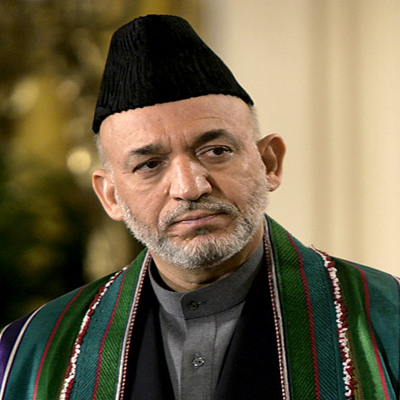
MUMBAI: Banned terrorist group Lashkar-e-Taiba is behind the attack on the Indian Consulate at Herat, Afghanistan’s President Hamid Karzai said today. In an explosive and exclusive interview to Headlines Today Karzai did not mince words saying it is in Pakistan’s interest to uproot the sanctuaries and safe havens terrorists have on their territory.
“According to information given to us by a western intelligence agency, the perpetrators of the Herat attack belonged to the LeT. This was mentioned in writing in the report shared with us,” he said. President Karzai who is in India to participate in Prime Minister Narendra Modi’s swearing in ceremony complimented the Indo-Tibetan Border Police (ITBP) personnel and the Afghan National Security Forces for their prompt response in neutralizing the LeT terrorists.

“Herat was very clearly a terrorist strike on Indian and Afghan interests. Luckily the Indian and Afghan security forces were alert and they prevented major damage to life and property,” he said. In response to a specific query on India and Afghanistan both being victims of Pakistan sponsored terror, President Karzai said: “Both Afghanistan and India hope that relevant authorities in Pakistan will react and uproot the source and sanctuary of terror in Pakistan.”
President Karzai is to meet prime minister Narendra Modi at the Hyderabad House Tuesday morning and is expected to discuss issues confronting both India and Afghanistan. Kabul has in the past also handed over a weapons wish list to India. Responding to a question President karzai said: “India has been a great friend of Afghanistan and has stood by the people of Afghanistan in the past 12 years. We have given a weapons wish list to the government of India, some have been accepted and delivered and we are confident prime minister (Narendra) Modi will consider it favourably.”
The Afghan army has fought Pakistan based and sponsored terrorists and Taliban bravely without ceding ground and President Karzai said he says the 2014 drawdown not as a threat but an opportunity. “2014 for us is an opportunity and a great one to build on our strengths and show to the world that the nation is now self-reliant of course with the help, support and guidance of friends like Indi,” he said.
He discounted fears that post the drawdown Pakistan could once again install a puppet Taliban government in Kabul for strategic depth. “That fear is completely unfounded but all powers in the region need to come together and repel and defeat the forces of terror,” he added.


News Broadcasting
News18 India launches Command Centre war explainer with Arya
New show shifts from debates to decoding global conflicts and impacts
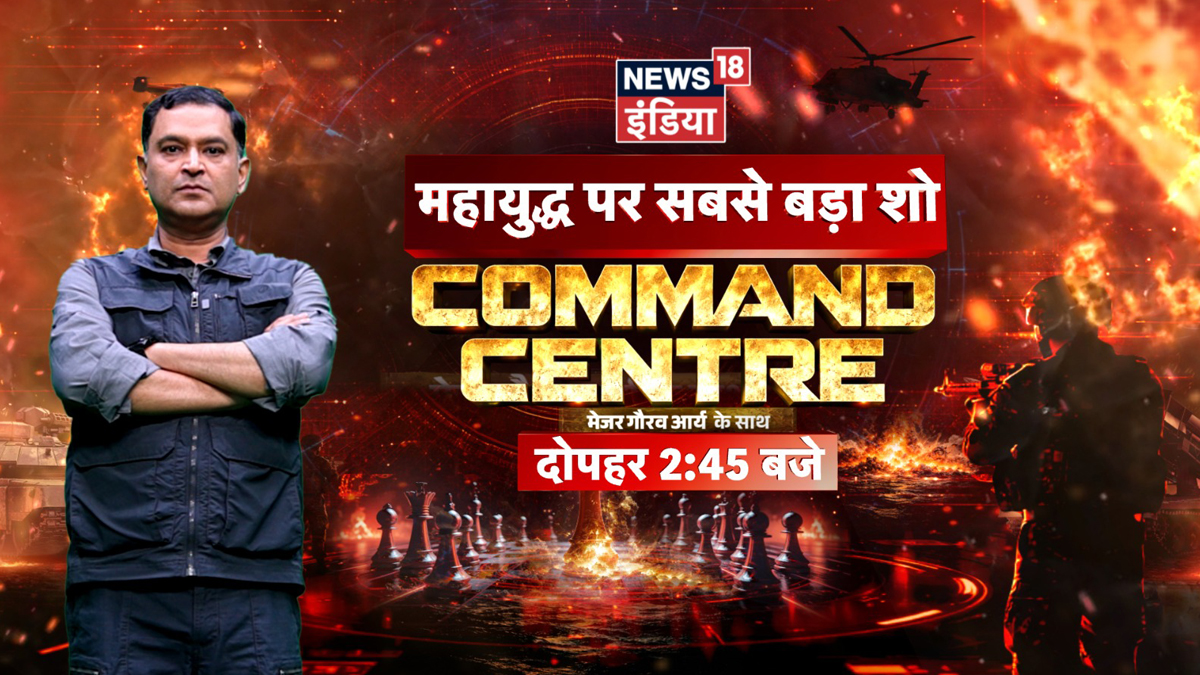
MUMBAI: News18 India has rolled out a new war-focused programme, Command Centre, featuring Gaurav Arya, as it looks to offer viewers a sharper, more grounded take on global conflicts amid rising tensions in West Asia.
Positioned as an “insider war room”, the show moves away from conventional panel debates and instead focuses on explaining military developments, decoding strategy and connecting global events to their everyday impact, from fuel prices to economic shifts.
The format leans heavily on visuals and data. The studio has been designed like a command hub, complete with large LED war maps, real-time graphics and an alert system to track developments as they unfold.
At the centre of it all is Arya, who brings his military background to simplify complex war strategies for viewers. His signature line, “Seedhi baat samjhiye”, anchors the show’s promise of clarity over noise.
News18 India managing editor Jyoti Kamal said, “Command Centre, featuring Major Gaurav Arya is designed to deliver accurate insights and a clear perspective on how evolving conflicts impact everyday life, from household budgets to national security. With expert voices analysing every development in real time, the show goes beyond headlines to decode what’s happening now, what it means, and what could come next.”
Echoing the intent, Gaurav Arya added, “In times of war, confusion is the biggest threat. With News18 India’s Command Centre, we are bringing viewers inside the war room, decoding strategies, tracking every escalation, and explaining, in the simplest terms, what it means for India and for every household. Seedhi baat samjhiye, this is where you understand not just what is happening, but what happens next.”
The weekday show will air in the afternoon slot and will also feature Gaurav Shukla, adding to its editorial depth.
With its mix of analysis, visuals and a clear focus on impact, the show reflects a broader shift in news consumption. Viewers are no longer just watching events unfold, they are looking to understand what those events mean for them.







