Components
InfoComm India grows from strength to strength


MUMBAI: Held from 1-3 September 2015 at Bombay Exhibition Centre, InfoComm India once again received overwhelming positive response. Attracting a record visitor attendance for the third straight year, it generated glowing feedback from exhibitors on its world-class quality and endorsement as the best tradeshow of its kind in India.
InfoComm India 2015 was packed with product debuts, cutting-edge technology demonstrations and visions of smart cities, all of which helped to connect the various stakeholder communities. 6,525 local and international trade and end-user visitors passed through the doors of the exhibition hall. This 16% year-on-year increase in visitor attendance was achieved despite a major disruption in the local public transport system on the first two days of the show which paralysed the city – an indication of visitors’ commitment to attending InfoComm India.

Also attesting to the rapidly-growing standing and vibrancy of the show, there was 33% more exhibitors compared to 2014, bringing the total number of exhibitors to 201 coming from 21 countries. These included names like ZTE, Dexon and Gestton which were among the 40 that participated in InfoComm India for the first time.
The 22% larger show floor and an hour’s extension to opening hours accommodated the increase in visitor numbers and eased traffic flow, allowing exhibitors and visitors the space and time to engage in deeper conversations.
“We are thrilled to be able to produce another record-setting InfoComm India,” said Richard Tan, Executive Director of InfoCommAsia Pte Ltd. “Although this is only the 3rd edition, all the show’s performance metrics, including number of visitors, summit attendance and exhibitors, has surpassed our most optimistic expectations, pointing to a bright future for the development of the pro-AV and ICT industries in India.”
“Visiting InfoComm India was a very useful and rewarding experience for me,” said Neeraj Gupta, VP-Technologies of Accenture. “I came to scout for new products and renew contracts and was able to visit all OEMs and systems integrators under roof. It was a very good platform for networking.”
“The volume of exhibitors passing through our stand was good, comparable to last year,” said Rajesh Patkar, Deputy General Manager of Christie Digital. “The quality of the crowd was also good. We saw visitors from the interior of India like Indore, Madhya Pradesh and Gujarat.”
“This was the first time that we participated in InfoComm India, and we had an excellent response from a wonderful mix of visitors, including CEOs, decision-makers and technical people who came to learn more about our solutions,” said Parminder Singh, Enterprise Business Manager of ZTE. “InfoComm India 2015 has proven to be of international standards and exceeded our expectations 150%. We plan to come again next year.”
Not only were the visitors impressed with the range of exhibitors, the quality of the exhibits and the live demonstrations; they were also enthralled by the rich diversity of seminars at the concurrent 3-day Summit which covered the entire spectrum of pro-AV and ICT solutions.
The Summit’s 1,152 total attendance is a 35% increase from previous year. Average attendance per session also went up by 55%. In particular, the entertainment industry-focused and enterprise IT-focused sessions each drew more than 100 delegates.
“Latest Trends & New Technology in Live Events – Challenges & Opportunities” was presented by Alexander Prill, International Sales Director, LANG AG, Germany. Ramesh Kumar T, General Manager & Head of IT at Mindtree spoke on “AV/ IT Convergence – The Future of IT Integrators”. They were among the roster of distinguished speakers who shared expert insights at the various sessions.
An equally-outstanding line-up of experts served as moderators and panelists during panel discussions that followed keynote sessions. A new feature at this year’s Summit, panel discussions encouraged depth of knowledge-sharing.
“I was pleasantly surprised by the quality of the discussions, and the depth and breadth of the presentations,” said Sandesh Kulkarni, Manager Sales, Innovative Systems & Solutions (P) Ltd. “It was truly an inspiring experience for me. InfoComm India Summit is the right place for an unmatchable learning experience on topics ranging from acoustics to videoconferencing.”
Under the Indian Government Smart Cities Programme, 100 cities across India will be transformed into Smart Cities by harnessing technology for the purpose of accelerating economic development, creating jobs, raising income levels and lifting the quality of life. This ambitious programme will enhance the impetus to drive InfoComm India to greater growth as audiovisual and information communication technologies are the fundamental building blocks for Smart Cities.
“We are very pleased with the strong growth of InfoComm India, the good response of exhibitors and encouraging feedback from visitors and Summit attendees,” said Richard Tan. “Looking ahead, we are very excited about the long-term growth prospects of the audiovisual and information communication technology industries in India, the huge possibilities unleashed by the Smart Cities Programme and its positive impact on InfoComm India.”
InfoComm India will return from 12-14 September 2016 at the Bombay Exhibition Centre.

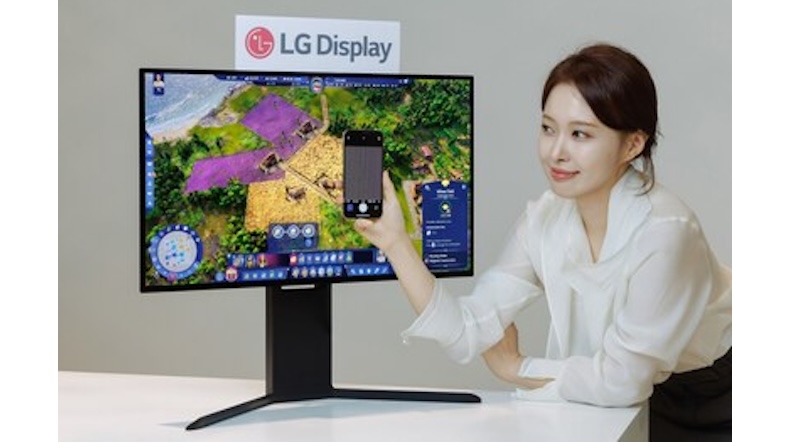
SEOUL: In the eternal battle between gamers demanding lightning-fast refresh rates and professionals craving pixel-perfect clarity, LG Display reckons it has found détente. The South Korean display titan is unveiling the world’s first 27-inch 4K OLED monitor panel that marries an RGB stripe structure with a blistering 240Hz refresh rate—a combination previously thought incompatible, like oil and water or fashion and function.
The breakthrough lies in how the pixels are arranged. RGB stripe structure lines up red, green and blue subpixels in neat rows, banishing the colour bleeding and fringing that plague lesser screens when you park your nose close to the display. It is the difference between reading crisp text and squinting at a rainbow-tinged mess. OLED panels using this method existed before, but they topped out at a sluggish 60Hz—fine for spreadsheets, useless for fragging opponents in first-person shooters.
LG Display’s engineering wizardry changes the game. By cranking the refresh rate to 240Hz whilst maintaining that pristine RGB stripe layout, the company has produced a panel that works equally well for colour-critical design work and twitchy gaming sessions. Better still, the panel incorporates Dynamic Frequency & Resolution technology, letting users toggle between ultra-high-definition at 240Hz and full-HD at a frankly ludicrous 480Hz. That is fast enough to make your eyeballs sweat.
The specs are suitably impressive: 160 pixels per inch for exceptional detail, optimised performance for Windows and font-rendering engines, and colour accuracy that should please the Photoshop brigade. LG Display achieved this by boosting the aperture ratio—the percentage of each pixel that actually emits light—and applying what it coyly describes as “various new technologies.” Translation: years of R&D and probably some sleepless nights.
Existing high-end gaming OLED monitors have relied on RGWB structures (which add a white subpixel) or triangular RGB arrangements. Both work, but neither delivers the sharpness that professionals demand. LG Display’s new stripe pattern is tailored specifically for monitor use, a recognition that staring at a screen from two feet away demands different engineering than watching telly from across the room.
The company is betting big on this technology, targeting the high-end monitor market where it already commands roughly 30 per cent of global OLED panel production. Among gaming OLED panels in mass production, LG Display claims world-leading specs across refresh rate, response time and resolution—a trifecta that sounds like marketing bluster until you check the numbers.
“Technology is the foundation of leadership in the rapidly growing OLED monitor market,” says LG Display head of the large display business unit Lee Hyun-woo. He promises to keep pushing “differentiated technologies compared to competitors”—corporate-speak for staying ahead of Chinese rivals snapping at LG’s heels.
The new panel will debut at CES 2026 in Las Vegas, where LG Display plans to woo customers and expand its lineup. Initial rollout targets high-end gaming and professional monitors, the sweet spot where people actually pay premiums for superior screens rather than settling for whatever came with their laptop.
Whether this technology reshapes the monitor market or remains a niche luxury depends on two things: pricing and production scale. But for now, LG Display has pulled off something rare—a genuine technical leap that solves a real problem. Gamers get their speed, designers get their clarity, and LG gets bragging rights. In the cutthroat world of display tech, that counts as a win.






