News Broadcasting
Industry Honchos Uday Kotak, Rajnish Kumar and Kalpana Morparia come together to identify the winners of IBLA 2019


MUMBAI: CNBC-TV18’s most-awaited marquee property, The India Business Leaders Awards will be conducting a jury meet along with an informative and insightful panel discussion on Today at Trident BKC, Mumbai, 2:30 pm.
The panel discussion will be focused on ‘THE BATTLE FOR GROWTH’, moderated by CNBC-TV18’s Managing Editor Shereen Bhan with prominent industry veterans and jury members Uday Kotak (Jury Chairperson) – Chairman & MD of Kotak Mahindra Bank, Zarin Daruwala – Standard Chartered CEO, Rajnish Kumar – Chairman, SBI, Vani Kola – Managing Director, Kalaari Capital, Nimesh Kampani – Chairman, JM Financial Group, Sanjay Nayar – CEO, KKR India, Kalpana Morparia – CEO, JP Morgan India, Harsh Mariwala – Founder & Chairman, Marico, and Rajiv Memani – Chairman & Regional Managing Partner, E&Y, India.
The winners will be determined based on their outstanding leadership qualities, their path breaking accomplishments and their contribution towards economic growth and establishing profitable, sustainable and socially-conscious businesses in their industry.

Sharing her opinion on the occasion, Shereen Bhan, Managing Editor and Anchor of CNBC-TV18 says, “India Business Leaders Awards is CNBC-TV18’s most prestigious annual property. Every year, our exemplary jury members take up this challenging task of short-listing the winners from an eminent list of nominees. IBLA has recognised business leaders who have created value, shareholder wealth, and created profitable brands. This year too we look forward to honour some outstanding performers and felicitate them at IBLA 2019”.
The awards will be scheduled sometime around January 2019, felicitating true visionaries who have devoted their expertise to the industry leading them to success.






News Broadcasting
CNN-News18 to host Fury in the Gulf conclave on West Asia crisis
Three-hour summit to unpack geopolitical fallout and impact on India
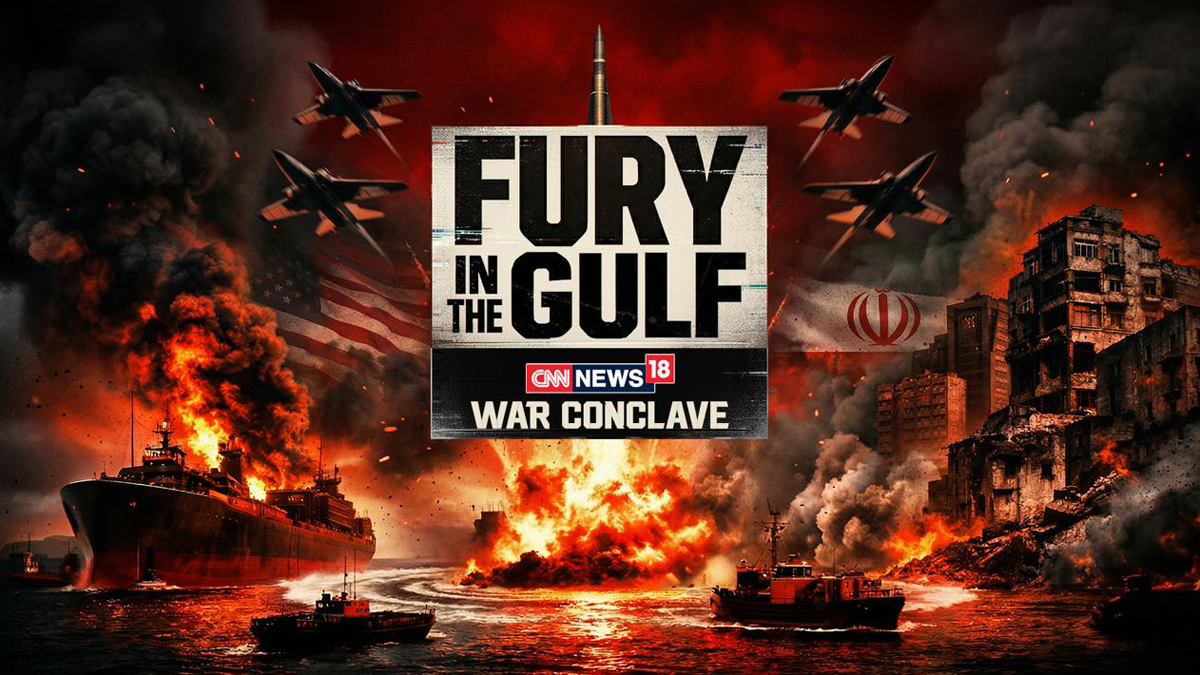
MUMBAI: CNN-News18 is set to host a special three-hour broadcast, Fury in the Gulf – War Conclave, on April 7, aiming to decode the escalating West Asia crisis and its far-reaching implications for India.
Scheduled from 4:00 PM to 7:00 PM, the conclave comes at a time when tensions between Iran and the United States are reshaping global geopolitics and triggering economic uncertainty. With India’s deep energy ties, trade links and large diaspora in the Gulf, the developments carry significant domestic relevance.
Built around the theme ‘Conflict, Consequences, and The Future,’ the programme will feature six curated sessions combining one-on-one interviews and panel discussions. The focus is to cut through the clutter and offer viewers a clearer understanding of the fast-evolving situation.
Key sessions include ‘Diplomacy in Times of War’ featuring Shashi Tharoor, and ‘World After the Iran Conflict’ with voices such as Ram Madhav, Reuven Azar, representatives from the European Union and the Iranian Deputy Envoy. Another session titled ‘Another Dunkirk?’ will bring together K. J. S. Dhillon and Jitin Prasada among others.
CNN-News18 editorial affairs director Rahul Shivshankar said, “In times of war, clarity becomes the most powerful tool. Fury in the Gulf – War Conclave brings together credible voices to address the questions and confusion that arise amid an overwhelming influx of information.”
He added that the initiative is aimed at delivering “facts, perspective, and insight” at a time when misinformation can easily cloud public understanding.
Echoing the sentiment, CNN-News18 CEO– English and business news Smriti Mehra said the conflict marks a defining global moment, with consequences that extend well beyond the region. She noted that the conclave seeks to present the crisis with “depth, nuance and responsibility” so audiences can better grasp its real-world impact.
As geopolitical tensions continue to dominate headlines, the conclave positions itself as an attempt to bring order to the noise, offering viewers a structured, insight-led look at a complex and rapidly shifting global situation.






