ces
India’s startup gets J&J support for maiden device


LAS VEGAS: Ray IoT is creating a non-contact wellness and sleep tracker for babies for which it has received support by Johnson & Johnson and HAX. Ray IoT will be introducing its product at the Consumer Electronics Show (CES) in Las Vegas 5-8 January. This is the first time a startup from India has been given the support of J&J to create a baby product.
Ray IoT’s maiden product is a device to monitor sleeping babies. It lets parents know on their cell phones if their baby is sleeping well, if it’s breathing normally or it has rolled over. Unlike other baby monitors, Raybaby, as it’s called, doesn’t touch the baby, so it’s non-intrusive.
Bangalore-based Ray IoT, creators of the first non-contact sleep and wellness tracker for babies, announced the support extended by Johnson & Johnson and HAX as part of the Joint Consumer Health Device Accelerator Program. Ray IoT is the first Indian company to be supported by Johnson & Johnson Innovation as part of this initiative.

Famous for its baby products, J&J invests US$8 billion annually on research and development and is now keen to look to outside sources to keep its technology fresh.
According to Ray IoT VP for External Innovation and New Business Models John Bell: “What we are learning is that doing everything on your own is no longer possible. We have found out the hard way every now and then that if you try to do everything, it doesn’t work.” Announcing the program launch, Bell added “We are really focused on working together with the external world to co-create new products.”
Ray IoT co-founder and CEO Ranjana Nair said, “Johnson & Johnson is a household name in India. The first gift you think of buying for a new born baby in India is the Johnson & Johnson baby hamper. We at Ray are excited to be the first Indian company to be a part of this initiative.”
Ray IoT will also participate in the demo day by HAX in San Francisco on 10 January, and launch its campaign on Kickstarter on 31 January to collect pre-orders.
Ray IoT has also benefitted from being in China’s Silicon Valley of hardware, Shenzhen.






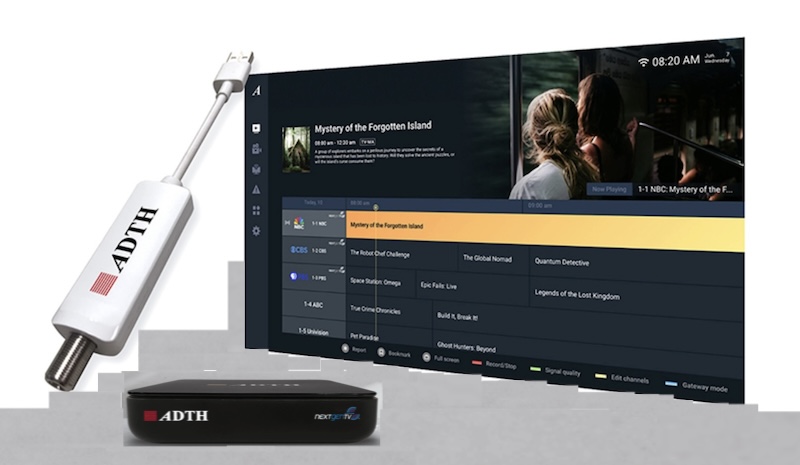
MUMBAI: There is a lot of excitement in the US about NextGen TV or TV broadcasts based on the ATSC 3.0 standard. With 76 per cent of U.S. households now able to receive the signals, America’s local TV broadcasters are hailing the introduction of new ATSC 3.0 receivers that will first be shown at next week’s Consumer Electronics Show (CES) in Las Vegas. The affordable options will add to consumer choice, from high-end NextGen TV sets to affordable accessories that can transform Android and Fire TV devices already in consumer homes.
“We are very excited about the expanded offerings from accessory device manufacturers for NextGen TV. The new low-cost Atlanta DTH (ADTH) USB receiver, powered by Tolka, is built for existing Android and Fire TV televisions and will, at a very affordable price, expand the reach of NextGen TV into homes who already have those sets. ADTH is also about to introduce a new model that works without an internet connection and will be doing a software update for deployed ADTH devices to give them the same functionality. In addition, Zinwell is adding pause functionality to their accessory device, with an add-on hard disc drive. In 2025, RCA is also coming to market with two new NextGen TV sets that will join TV options already available from Panasonic, Sony, Samsung, Hisense, and TCL,” said Pearl TV managing director Anne Schelle. “We congratulate all of the manufacturers who are selling thousands of receivers each day to consumers looking for the best possible video and audio quality from local stations.”
Pearl TV is a business organisation of US broadcast companies with a shared interest in exploring forward-looking broadcasting opportunities, including innovative ways of promoting local broadcast TV content and developing digital media and wireless platforms for the broadcast industry. Pearl’s membership, comprising more than 820 TV stations, includes eight of the largest broadcast companies in America: Cox Media group, Graham Media group, Gray Television, Hearst Television, Nexstar Media group, Sinclair Broadcast group, the E.W. Scripps, and Tegna.
Broadcasters are loading up new services with new features for NextGen TV viewers, including interactive gaming options that will be launched by GameLoop.
GameLoop TV launches next week in Las Vegas on local NextGen TV channel 3.2 and will bring gaming directly to viewers with no additional hardware or subscriptions required. At the heart of GameLoop’s innovation is the channel’s exciting “play now” feature, which allows NextGen TV viewers to instantly play games showcased on the channel simply using their TV remote or mobile phone.
“We also salute TV broadcasters Gray and Sinclair, who are working to bring fun, interactive gaming to the living room through GameLoop – a service that utilises NextGen TV for web-based family fun that will work seamlessly with millions of installed NextGen TV sets. Easy interactivity is literally going to be a game-changer for viewers,” Schelle predicted.
High Dynamic Range (HDR) functionality is now live on more than 200 local NextGen TV services throughout the US , with more being added to enhance viewing of key sports games and other spectacles. Broadcasters are promoting the advantages of NextGen TV this sports season on stations throughout the country and plan to continue these promotions as they continue to rollout HDR and Dolby Atmos services nationwide.
A holiday promotion effort in NextGen TV markets that began before December continues through early February, with broadcasters now indicating onscreen to viewers when local NextGen TV programming is available in HDR.
“We’re very excited to announce that broadcast stations throughout the country are adding HDR10+ capability in their NextGen TV broadcast services to accommodate a broad array of TV manufacturers. With other flavors of HDR that also may be present in the service, this allows every receiver to present the best picture possible, showing that local television just keeps getting better and better, which is exactly what we promised with the rollout of NextGen TV services,” Schelle said. In addition to providing better video quality through HDR, many markets are adding Dolby Atmos audio coding, which delivers immersive audio capability.
“HDR began for sports with the Kentucky Derby last spring. It really made the Olympic Games pop with brilliant video. We know that sports is a big driver for buying new TV sets as well as for enjoying broadcast services — your favorite games look even better in High Dynamic Range,” Schelle said.
Throughout the country, local stations not already broadcast on over-the-air ATSC 3.0 transmissions are gaining access to NextGen TV viewers through the innovative addition of more channels through broadcast internet protocol – or broadcast IP. These additional channels are available as NextGen TV channels and have added more choices for viewers in a range of markets, from public to commercial broadcasters who now have their programming available for NextGen TV viewers.
Consumers can easily find details of what NextGen TV services are available in their markets by visiting WatchNextGenTV.com, a resource maintained by Pearl that lists individual services by market and a full range of more than 90 NextGen TV receivers and antenna products certified to work seamlessly with the new services.