News Broadcasting
India Today Group clinches the top spot across digital platforms


MUMBAI: India Today Group has become the no. 1 General News group in the digital domain, well ahead of all its rivals.
With over 600 Million internet users, and a closing gap between traditional media and online journalism, India is set to witness a boom in the digital domain. If any news platform wishes to stay relevant, they need to maintain a keen eye on the ever changing audience and their preferences.
Here’s how India Today Group has stayed on top of this change, among all verticals of the digital segment:

Desktop
India Today Group has attained the top spot in the Desktop segment. With 10.2 Million Unique Visitors on Desktop, it has become the go-to news source across the country, providing the most relevant and topical news with well-researched opinions and polls. (Comscore MMX – General News, Unique Visitors, May 2019, India)
Mobile
Whether it is video segments or written pieces, India Today Group has engaged its viewers through both. It now holds the No.1 position on Mobile, with 119.5 Million Unique Visitors, surging ahead of other newsgroups. Daily consumers of news prefer their mobile devices, as they can get their news fix on-the-go, whether it be short snippets of topical information, or through, long-form content or even video. (Comscore Mobile Metrix – General News, Unique Visitors (Mobile Web & App), May 2019, India)
Video
With 2.86 Million Unique Video Viewers in a month, India Today Group holds the title of No. 1 News Video Publisher on Comscore. India Today Group’s viewers particularly enjoy consuming news through their video platforms, through news segments and original programming on YouTube, Facebook etc. These avenues are more engaging than written content, and generate more attention as well. (Comscore Video Metrix – General News, Unique Viewers, May 2019, India)
In May’19 India Today Group channels got 1 Billion video views on YouTube (Source: Socialblade) and 617 Million on Facebook (Source: Crowdtangle)
Social Media
With 45 Million Social Media Interactions and a collective Social Fan base of 120 million, India Today has become the voice of the people and is the No.1 News Group on Social Media






News Broadcasting
News18 India launches Command Centre war explainer with Arya
New show shifts from debates to decoding global conflicts and impacts
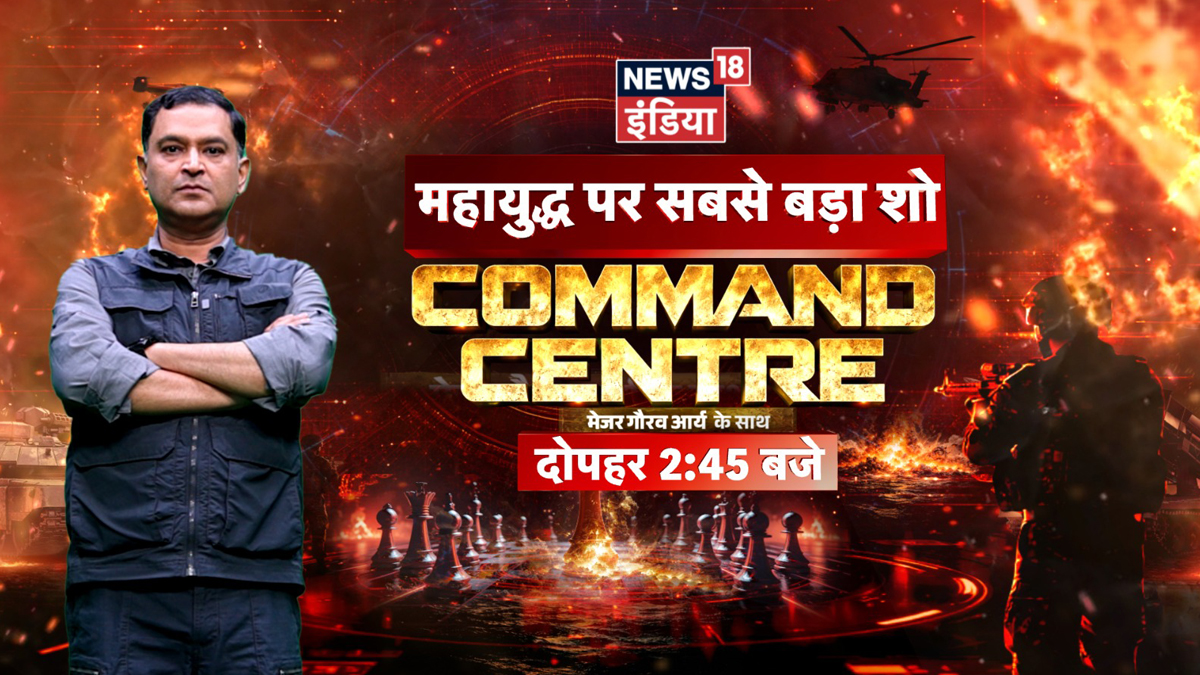
MUMBAI: News18 India has rolled out a new war-focused programme, Command Centre, featuring Gaurav Arya, as it looks to offer viewers a sharper, more grounded take on global conflicts amid rising tensions in West Asia.
Positioned as an “insider war room”, the show moves away from conventional panel debates and instead focuses on explaining military developments, decoding strategy and connecting global events to their everyday impact, from fuel prices to economic shifts.
The format leans heavily on visuals and data. The studio has been designed like a command hub, complete with large LED war maps, real-time graphics and an alert system to track developments as they unfold.
At the centre of it all is Arya, who brings his military background to simplify complex war strategies for viewers. His signature line, “Seedhi baat samjhiye”, anchors the show’s promise of clarity over noise.
News18 India managing editor Jyoti Kamal said, “Command Centre, featuring Major Gaurav Arya is designed to deliver accurate insights and a clear perspective on how evolving conflicts impact everyday life, from household budgets to national security. With expert voices analysing every development in real time, the show goes beyond headlines to decode what’s happening now, what it means, and what could come next.”
Echoing the intent, Gaurav Arya added, “In times of war, confusion is the biggest threat. With News18 India’s Command Centre, we are bringing viewers inside the war room, decoding strategies, tracking every escalation, and explaining, in the simplest terms, what it means for India and for every household. Seedhi baat samjhiye, this is where you understand not just what is happening, but what happens next.”
The weekday show will air in the afternoon slot and will also feature Gaurav Shukla, adding to its editorial depth.
With its mix of analysis, visuals and a clear focus on impact, the show reflects a broader shift in news consumption. Viewers are no longer just watching events unfold, they are looking to understand what those events mean for them.






