International
India hosts first edition of ‘Japan Film Festival India’

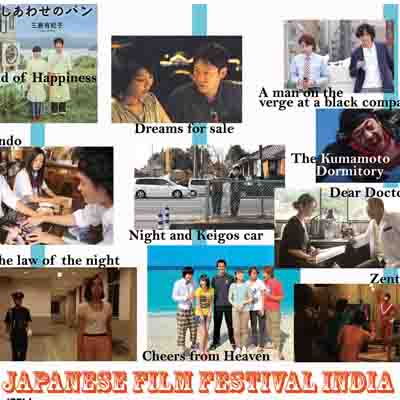
MUMBAI: Contributing to build up an ever-lasting relationship between India and Japan through art and culture, K HOUSE Inc, the restaurant giant of Japan with a growing market presence in India, announces the inaugural edition of ‘Japan Film Festival India (JFFI) 2014’ in Mumbai. The Festival will be hosted from 12th to 14th December 2014 at Inorbit Mall Malad, Mumbai featuring 10 masterpiece Japanese films along with a variety of Japanese cultural activities and programs. This whole endeavour by K house, Japan and supported by the Government of Japan (J-LOP) is to further enhance the cultural bonds between the two great nations of Asia.
At the Festival, the audience will not only have the opportunity to enjoy award-winning Japanese classics, but also will be able to experience unseen attractive Japanese art & cultural activities including Taiko (Japanese drum perform), Karate (Japanese traditional martial arts), Origami and Sado (Japanese Tea Lessons for traditional side). To make the festival an unforgettable experience, introductions of Japanese enterprises, brands and other production will be available along with stage content, experience-based activities, booths exhibition and a lottery chance provided by K House.

Talking about the importance of the event, Takeshi Kogahara, Chairman K House INC said, “India and Japan share close resemblance in terms of rich culture, food, clothing, art or social practices. Cinema depicts all dimensions of a nation’s culture and to enhance the bonding between these two prolific nations, we have conceptualised the Japan Film Festival India. The festival is an effort to share Japanese art and culture with Asia’s most youthful nation, India and reach out to the masses, inviting them all for exploring business opportunities and tourism. Through our endeavour of JFFI would like to open up opportunities for greater film exchange and co-production opportunities between India and Japan.”
“JFFI as an annual event will be the platform for exposing the best of Japanese films in India. We will keep on providing Japanese culture and brand experience to the people of India in the future as well. We are also contemplating to host an exclusive Indian Film Festival of similar format in Japan in the near future,” he added.
Mahesh Bhatt said, “Cinema is the glue that binds diverse cultures together. The Japanese Film Festival will open up a new chapter in the Indo/Japanese story.”
Palash Banerjee, MD, K House India said, “I am that Indian who has spent 20 years of his youth in Japan. I have inculcated the Japanese culture in me and yet could never give up my Indian roots. In these long years that I spent in Japan I realised how close our cultures are… How similar our family bonds, social functions and ways of expressing emotions are. So it was never too difficult to adopt the Japanese culture. Yet I saw very little mingling between the Nationals of these two Asian nations. Honestly speaking what I missed the most in Japan was our Indian Films. Since then it was my dream to see the exchange of films between the two nations. Rajnikant films spelt great success in Japan and he has a cult following there. In more recent times films like English Hinglish, three Idiots and others have done extremely well. This was the time when we thought it was time we should have an exclusive Japanese film festival in India so that the Indian audience are exposed to these great films created in Japan and more importantly the Japanese culture.”
The festival conceptualized by K HOUSE Inc creates a platform for the film fraternities of both the nations for mutual business benefits, promoting Japan as a great destination for shooting Indian films and establishing greater cultural bonds between both the nations.



International
Moskino and Bollywood: Moscow Film Cluster and Film City Mumbai signed a cooperation agreement
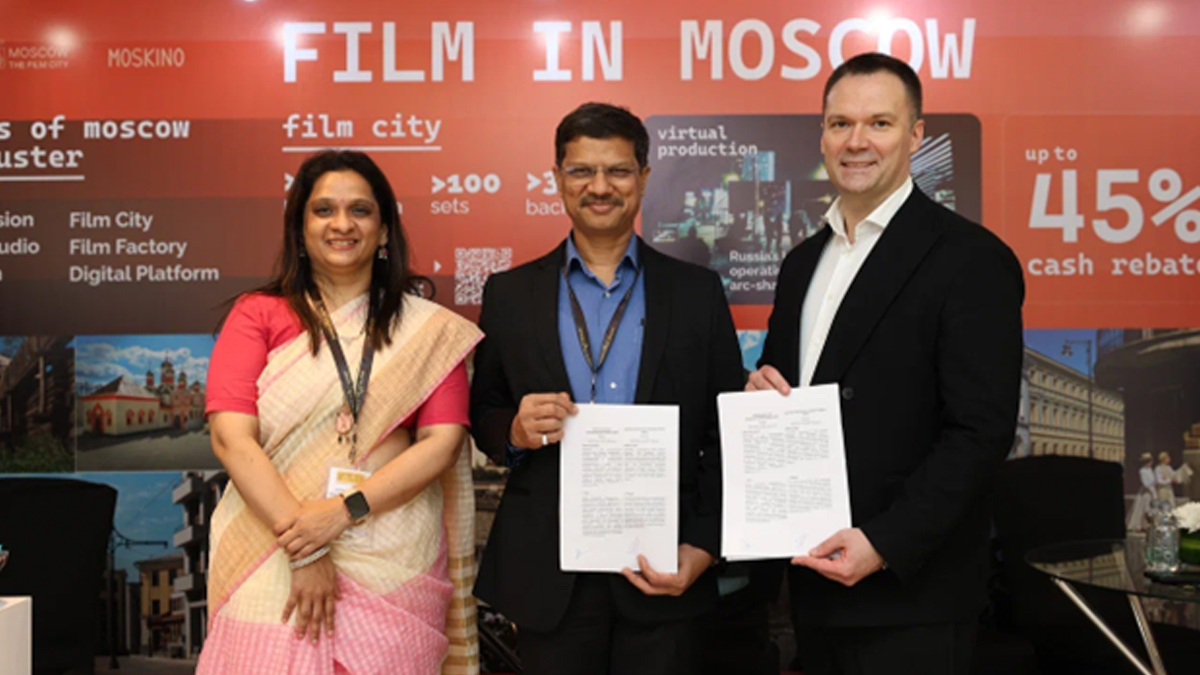
Moscow Film Cluster has signed a cooperation agreement with Film City Mumbai. The parties agreed to cooperate in developing the film industry, promoting shooting locations and supporting filmmakers.
The memorandum was signed on the sidelines of the India International Film Tourism (IIFTC) Conclave in Mumbai. At this forum, the Moscow Film Cluster presented Moscow’s opportunities for film shooting, including infrastructure projects such as Film City Moskino and Film Factory. Special attention was paid to the Moscow rebate system – up to 45% – and the co-production development.
Memorandum of Understanding between the Film City and Moscow Film Cluster provides for the establishment and development of mutually beneficial cooperation in the film industry development, including joint promotion of shooting locations, support for filmmakers, implementation of marketing and industry events, development of incentive support measures and strengthening of economic and cultural interaction between India and Moscow.
The parties also intend to promote the development of the audiovisual sector through the exchange of experience, joint initiatives and the search for opportunities to create new industry partnerships and clusters.
Moscow Film Cluster is a major city initiative led by Moscow Mayor Sergei Sobyanin to develop the capital into a global cinema hub. It brings together key production infrastructure – such as the Moskino Film Сity, Film Factory and Gorky Film Studio – along with the Film Commission, digital platform and cinema chain to streamline shooting, support productions and attract international filmmaking to Moscow.
Also, Moscow offers a rebate of up to 45%: 30% as direct production cost compensation, up to 15% for visa and accommodation support. The Moscow Image Grant provides up to $255,000 for films showcasing iconic city views.
The Moscow Film Cluster booth attracted considerable attention from Indian producers and studios. Over 80 business meetings were held, including those with major Indian companies.
One of the booth guests was the famous Indian actress Khushboo Sundar, known to Soviet and Russian audiences for her role in My Soul and considered the leading star of Tamil cinema, in whose honor one of the local temples was even built. Prithul Kumar, representative of the Indian Ministry of Information and Broadcasting and one of the officials responsible for regulating the film industry in the country, also expressed interest in the development of the Moscow Film Cluster.
One of the highlights of the India International Film Tourism Conclave was the awarding of The Greatest of All Time in the For Cinematic Excellence category. The movie was shot in Moscow. The jury members noted the project’s contribution to the development of tourism.
The shooting of The Greatest of All Time AGS by Entertainment was organized with the assistance of the Moscow Film Cluster and the Moscow Film Commission and took place in April 2024 on the streets of Moscow. The scenes were shot in such famous locations as Patriarch Bridge, Teatralnaya Square, Manezhnaya Square, Kazarmenny Lane, Podsosensky Lane, Nikolskaya Street and one of the festival venues of Moscow Seasons.
The Greatest of All Time became a landmark event in Indian box office history. It ranked fourth in box office earnings among all movies released in India in 2024 and is one of the most successful Tamil-language movies in history.
At the same time, the shooting of another joint Russian-Indian movie started at the Moskino Film City in Moscow. A film project dedicated to badminton became one of the first participants in the Moscow rebate program.
A project by Smena & WISH Media (Russia) and Kartina Entertainment And Sports Private Limited (India) will tell the story of a badminton player who travels to India with the Russian national team to compete in a tournament. Russian viewers will see for the first time the scale of sporting competitions in Asia, where badminton is a cult sport and draws packed stands of fans.
The agreement on the joint production of the Smash movie was signed st the Moscow International Film Week in August 2025. And as Moscow Mayor Sergei Sobyanin said, a rebate application was also submitted at that time to reimburse part of the costs incurred during the shooting process in the Russian capital.







