News Broadcasting
Hungama Artist Aloud and Khazana announce the 3rd edition of Khazana Artist Aloud Talent Hunt; #StayAtHome #StayEntertained returns with a Ghazal edition

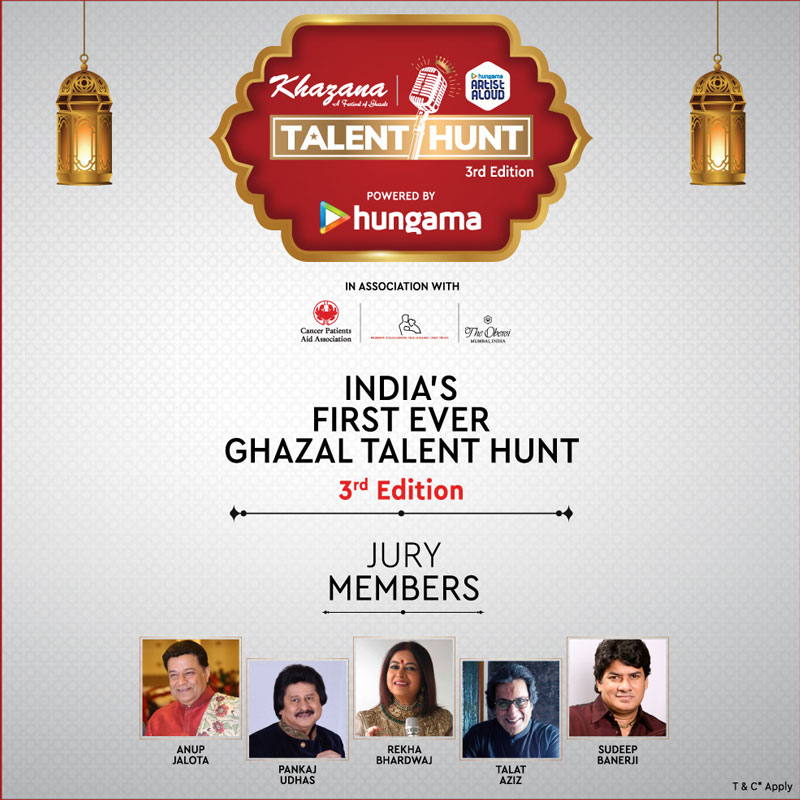
Hungama Artist Aloud, a platform that supports and promotes independent content, and Khazana – an annual concert that celebrates the art of ghazals, today announced the third edition of Khazana Artist Aloud Talent Hunt, India’s first and only talent hunt for Ghazal singers, powered by Hungama. The talent hunt will welcome entries from participants across various countries and will see ghazal maestros, Pankaj Udhas, Anup Jalota, Talat Aziz, Rekha Bhardwaj and Sudeep Banerji reprise their roles as judges. Two winners will get a chance to perform at ‘Khazana – A Festival of Ghazals’ later this year, alongside some of the most prolific Ghazal singers in India. Due to the pandemic and in order to ensure the safety of all artists, musicians, technicians and guests, this year Khazana will be a digital concert, available to stream across Hungama’s platforms.
In order to participate, aspiring singers will need to upload videos of them singing ghazals of their choice on www.artistaloud.com/khazana2020 before 12th July 2020. Following a jury meet, 20 shortlisted candidates will be asked to upload fresh audition videos by 3rd August 2020, with the final 2 winners being announced by the jury on 17th August 2020.
Hungama Artist Aloud is also bringing back its hit property, #StayAtHome #StayEntertained for a Ghazal edition. Beginning 30th June 2020, viewers will be able to watch Ghazal singers perform live every day on Hungama Music and Hungama Artist Aloud’s Facebook page at 6 PM and 7 PM, Monday to Friday. The property will feature live performances from renowned singers like Pankaj Udhas, Sudeep Banerji, Pooja Gaitonde, Priyanka Barve, Gayatri Asokan, Runa Rizvi Sivamani, Abhas & Shreyas, Pratibha Singh Baghel, Prithvi Gandharv, and more. Besides this, winners of Khazana Artist Aloud Talent Hunt 1st and 2nd edition will also perform live in the series.

Speaking about the talent hunt and #StayAtHome #StayEntertained – Ghazal Edition, Soumini Sridhara Paul, Vice President, Hungama Artist Aloud said, “We are delighted to associate with Khazana for the 3rd edition of Khazana Artist Aloud Talent Hunt. Since its inception, the talent hunt has celebrated the brilliance of Ghazals and given a huge platforms to aspiring singers. In the last 2 years, we have received a phenomenal response with more than 10,000 participants from over 175 cities worldwide. We are certain that our 3rd consecutive edition will be a resounding success as well. We are also glad to launch the Ghazal edition of #StayAtHome #StayEntertained and are certain that the performances of such gifted Ghazal singers will inspire more people to participate.”
Talking about the talent hunt, Pankaj Udhas said, “I am elated to be a part of Khazana Artist Aloud Talent Hunt for its 3rd edition. As India’s first and only talent hunt for Ghazal singers, it gives me immense pride to see the legacy of this exclusive platform grow. With the association of Khazana and Hungama Artist Aloud, we want to inspire young talent from all over the world to come forward and show their love for Ghazals.”
Khazana – A Festival of Ghazals was founded by legendary Ghazal singer and President, Parents Association Thalassemic Unit Trust, Pankaj Udhas along with Y.K. Sapru, Chairman and CEO, Founder Director, Cancer Patients Aid Association (CPAA) with the support of ghazal maestros Talat Aziz and Anup Jalota. Currently in its 19th year, Khazana has excelled in preserving and promoting the exquisite art of Ghazal singing by giving a platform to both, new and established Ghazal singers. All proceeds from the festival go to the Parents Association Thalassemic Unit Trust (PATUT) and Cancer Patients Aid Association (CPAA).


News Broadcasting
CNN-News18 to host Fury in the Gulf conclave on West Asia crisis
Three-hour summit to unpack geopolitical fallout and impact on India
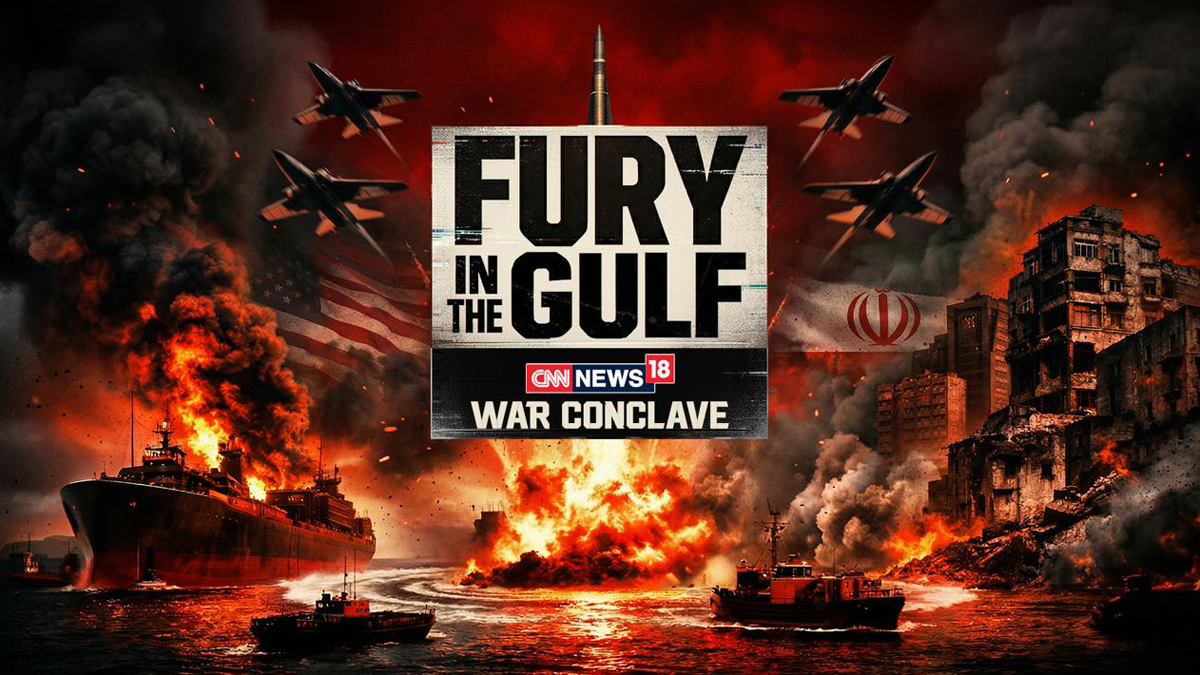
MUMBAI: CNN-News18 is set to host a special three-hour broadcast, Fury in the Gulf – War Conclave, on April 7, aiming to decode the escalating West Asia crisis and its far-reaching implications for India.
Scheduled from 4:00 PM to 7:00 PM, the conclave comes at a time when tensions between Iran and the United States are reshaping global geopolitics and triggering economic uncertainty. With India’s deep energy ties, trade links and large diaspora in the Gulf, the developments carry significant domestic relevance.
Built around the theme ‘Conflict, Consequences, and The Future,’ the programme will feature six curated sessions combining one-on-one interviews and panel discussions. The focus is to cut through the clutter and offer viewers a clearer understanding of the fast-evolving situation.
Key sessions include ‘Diplomacy in Times of War’ featuring Shashi Tharoor, and ‘World After the Iran Conflict’ with voices such as Ram Madhav, Reuven Azar, representatives from the European Union and the Iranian Deputy Envoy. Another session titled ‘Another Dunkirk?’ will bring together K. J. S. Dhillon and Jitin Prasada among others.
CNN-News18 editorial affairs director Rahul Shivshankar said, “In times of war, clarity becomes the most powerful tool. Fury in the Gulf – War Conclave brings together credible voices to address the questions and confusion that arise amid an overwhelming influx of information.”
He added that the initiative is aimed at delivering “facts, perspective, and insight” at a time when misinformation can easily cloud public understanding.
Echoing the sentiment, CNN-News18 CEO– English and business news Smriti Mehra said the conflict marks a defining global moment, with consequences that extend well beyond the region. She noted that the conclave seeks to present the crisis with “depth, nuance and responsibility” so audiences can better grasp its real-world impact.
As geopolitical tensions continue to dominate headlines, the conclave positions itself as an attempt to bring order to the noise, offering viewers a structured, insight-led look at a complex and rapidly shifting global situation.






