Press Release
Haim Saban to Headline NAB Show Opening

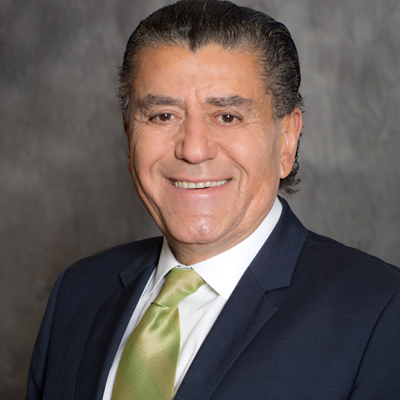
MUMBAI: Haim Saban, chairman of Univision Communications Inc., founder of Saban Capital Group and the Saban Center for Middle East Policy at the Brookings Institution, will headline the 2014 NAB Show Opening. NAB Show is the world’s leading convention for professionals who create, manage and distribute entertainment across all media platforms. The question-and-answer session, led by NAB President and CEO Gordon Smith, will take place Monday, April 7 in Las Vegas following Smith’s “State of the Broadcast Industry” address. The event is sponsored by Blackmagic Design.
In 2007, Saban teamed with a group of investors to acquire Univision Communications Inc. (UCI). Under the consortium’s ownership, UCI has further grown as the leading media company serving Hispanic America. Assets include Univision Network, which is one of the top five networks, regardless of language, and the most-watched Spanish-language broadcast television network in the country, reaching 96 percent of U.S. Hispanic households; UniMás, also a Spanish-language broadcast television network, reaching 89 percent of U.S. Hispanic households; Univision Cable Networks, which includes Galavisión, Univision Deportes Network, Univision tlnovelas, ForoTV, and an additional suite of six cable offerings – De Película, De Película Clásico, Bandamax, Ritmoson, Telehit and Distrito Comedia; Univision Television Group, which owns and/or operates 62 television stations in major U.S. Hispanic markets and Puerto Rico; Univision Radio, the leading Hispanic radio group in the U.S., which owns and/or operates 69 stations in 16 of the top 25 U.S. Hispanic markets and Puerto Rico; Uforia, the leading Hispanic digital music service; UVideos, the first bilingual digital video network; an interactive network of online and mobile apps and products including Univision.com; Flama, the digital home for discovering and sharing original and curated video and other English-language content made by, for and with Hispanic Millennials; Univision Partner Group, a specialized advertising and publisher network; a joint venture with Disney/ABC Television Network for Fusion; and lastly, a minority stake in the El Rey Network, a new general interest network from maverick filmmaker Robert Rodriguez.
“Haim Saban is a true pioneer in the broadcast and entertainment industry who continually finds innovative ways to create and deliver entertainment to international audiences,” said NAB President and CEO Gordon Smith. “I look forward to discussing the future of the global media business with Mr. Saban during our conversation at NAB Show.”

In addition to its ownership in UCI, Saban Capital Group (SCG), which was formed in 2001, also maintains a controlling stake in Partner Communications, the leading telecommunications operator in Israel; Celestial Tiger Entertainment, a venture with Lionsgate and Astro, Malaysia’s largest pay TV platform, to launch and operate new branded pay television channels across Asia; Taomee, China’s leading children’s online entertainment company; MNC, Indonesia’s largest and only vertically-integrated media company; and Sky Vision, Indonesia’s largest pay-TV platform. SCG also owns Saban Brands, which currently holds the rights to Power Rangers and Paul Frank Industries, Julius Jr., Digimon Fusion, VORTEXX, Zui, The Playforge, Zombie Farm and Popples. Earlier in his career, Saban created Saban Entertainment, an international television production, distribution and merchandising company, which produced hits such as The X-Men and Mighty Morphin Power Rangers. In 1995, Saban Entertainment merged with Rupert Murdoch’s Fox Kids Network and was restructured under the Fox Family Worldwide banner. Fox Family was eventually sold to The Walt Disney Company in 2001.
Mr. Saban and his wife, Cheryl, Ph.D. established the Saban Family Foundation in 1999 to support medical, children’s and education programs. These include: The Saban Free Clinic in Los Angeles, Children’s Hospital of Los Angeles, The Saban Pediatric Medical Center at Soroka Hospital in Israel, The Saban Birth & Maternity Center at Soroka Hospital, the John Wayne Cancer Institute, the Motion Picture and Television Fund, the Friends of the Israel Defense Forces, American Israel Education Foundation, William Jefferson Clinton Foundation, and the United Friends of the Children. The Sabans are considered among the most generous philanthropists in the U.S. and Israel.





Bali is full of memorable moments, and some of them involve animals. Temple monkeys tug at bags, beach dogs nap near sunbeds, and cats wander into cafés like they own the place. Most interactions are harmless, but a bite or scratch can change the day quickly, because you may need immediate medical care and follow-up treatment. This is where Bali travel insurance becomes more than a box to tick.
In this article, you will explore whether animal bite treatment is insured, the exclusions, and the steps to claim easily in Bali.
Why Animal Bites in Bali Need Special Attention
Bites are not only about the visible wound. Insurers and doctors both treat them as medical events that can pose an infection risk, especially when the bite breaks the skin.
A scratch that looks small in the moment can still lead to:
● A doctor’s examination and wound cleaning
● Medicines and dressings
● Follow-up consultations if the doctor advises observation or further care
From an insurance perspective, this matters because claims are usually assessed on medical necessity and documentation, not on how dramatic the injury appears in a photo.
How International Travel Insurance Looks at an Animal Bite
Most travel policies are built around emergency medical expenses for unexpected illness or accidental injury abroad. A bite or scratch usually fits the accidental injury bucket, but coverage is rarely blanket.
In many plans, the following may be considered if a doctor prescribes them and bills and medical notes support them:
● Consultation and outpatient treatment
● Emergency care and procedures, such as wound dressing or stitches, if clinically required
● Prescribed medicines and investigations
● Hospitalisation if the treating doctor confirms it is needed
Common Reasons Claims Get Reduced or Rejected
This is the part travellers often miss. Insurers usually do not deny claims because an animal was involved. Claims become difficult when the event looks avoidable, the reporting is delayed, or the paperwork is weak.
Avoidable-Risk Situations Insurers Scrutinise
Policies commonly exclude or limit claims linked to unsafe conduct or preventable exposure. For animal bites, scrutiny may increase if the incident appears connected to:
● Provoking, feeding, or trying to handle wild animals
● Ignoring warning signs at tourist spots
● Being intoxicated at the time of the incident
● Activities that a policy lists as excluded or restricted
The takeaway is simple: if your own description sounds like a risky choice rather than a sudden accident, the insurer may challenge it.
Delays, Missing Papers, and Policy Conditions
Even when your incident is genuinely accidental, claims can still stall due to basics such as:
● Not informing the insurer or assistance partner within the required time
● Missing itemised bills, prescriptions, or clinical notes
● No proof of travel dates or passport entry details when requested
● Submitting only pharmacy slips without a doctor’s consultation record
International travel insurance is paperwork-driven. If you document it well, you reduce the chance of avoidable back-and-forth.
What to Do If You Are Bitten or Scratched in Bali
Your health comes first, always. But a few sensible steps can protect your recovery and keep your insurance file clean.
Medical Steps That Help You and Your Claim
Act fast, stay calm, and get proper care before worrying about bills.
● Clean the wound promptly and seek medical care, even if it seems minor
● Follow the doctor’s advice, including follow-ups if recommended
● Avoid self-medicating in place of a clinical assessment, because insurers often ask for a doctor’s report
Claim Notes and Documents to Collect
Keep these handy; they’ll save time and avoid follow-up questions later.
● Doctor’s notes that mention the nature of injury, treatment given, and advised next steps
● Prescriptions and pharmacy invoices
● Itemised hospital or clinic bills
● A brief written note of where and when it happened, while it is still fresh in your mind
Final Word
Animal bites in Bali are not rare, and they are not always dramatic, which is exactly why travellers underestimate them. Many travel policies can cover bite-related medical treatment when it is accidental and medically necessary, but the outcome depends on your policy terms and the quality of your documentation. If you buy cover thoughtfully, keep the assistance number handy, and respond sensibly if an incident happens, you give yourself the best chance of both good medical care and a smoother claim experience.






