News Broadcasting
Green Tree ropes in cowi India as structural designer


Green Tree Homes & Ventures Pvt. Ltd., one of the leading real estate developers in the state, today announced a strategic alliance with COWI India Private Ltd., an ISO 9001 : 2008 certificated company providing engineering services in the fields of Roads & Airports, Railways, Tunnels & Bridges, Marine Engineering and Buildings. COWI India will be the Structural designer for Green Tree’s 101, 1001 and 201 projects.
Green 101, comprises of 3 BHK houses spread over 2 acres at Korattur in Chennai and Green 201 is spread across 3.81 acres comprising of 2BHK and 3 BHK, ranging from 1040 sq.ft to 1367 sq.ft.

Speaking on the occasion, Mr. Pon Ravichandran, Director, Green Tree Homes & Ventures Pvt. Ltd. said, “At Green Tree, it will be our constant endeavour to provide quality in every aspect of residential real estate development – material, technology, design, timelines, delivery and after sale services…our ultimate ambition being to create lasting impressions in customers’ mind. With advanced construction practices, procedures in quality control, time management and unique style, we aim to bring about ‘value for money’ for our resident buyers. We found COWI to be the apt partner to take up these challenging project’s which involves designing mechanical and electrical installations from scratch and transforming greenfield land into a modern, functional community.”
COWI India will be responsible for the structural designing for all the houses and for all external services such as street lights, water supply, sewerage and drainage systems for all the three projects.
Says Mr. Nicolai Opolzer, Head of Department – Buidlings, COWI India Private Ltd., “We want to offer our clients excellent services to realise the full potential of their projects. Through this strategic partnership we are dedicated to offer a set of high quality, focused services that will change the benchmark in the consultancy services sector in India. Together with Green Tree, we are confident that we have the best expertise working on the projects. We look forward to a very rewarding long term relationship for both the companies.”
Life at Green Tree projects promises to be a blend of convenience and luxury, with several popular brands of restaurants, shopping centres, hospitals and prestigious educational institutions being within or in close proximity to all the projects. Residents can enjoy numerous amenities including back-up power for individual houses, convenience store, multipurpose hall, STP, clinic, ATM, landscaped park and storm water drainage.





News Broadcasting
TV9 to host What India Thinks Today Summit 2026 in Delhi
PM Narendra Modi to keynote two day forum on India and the world
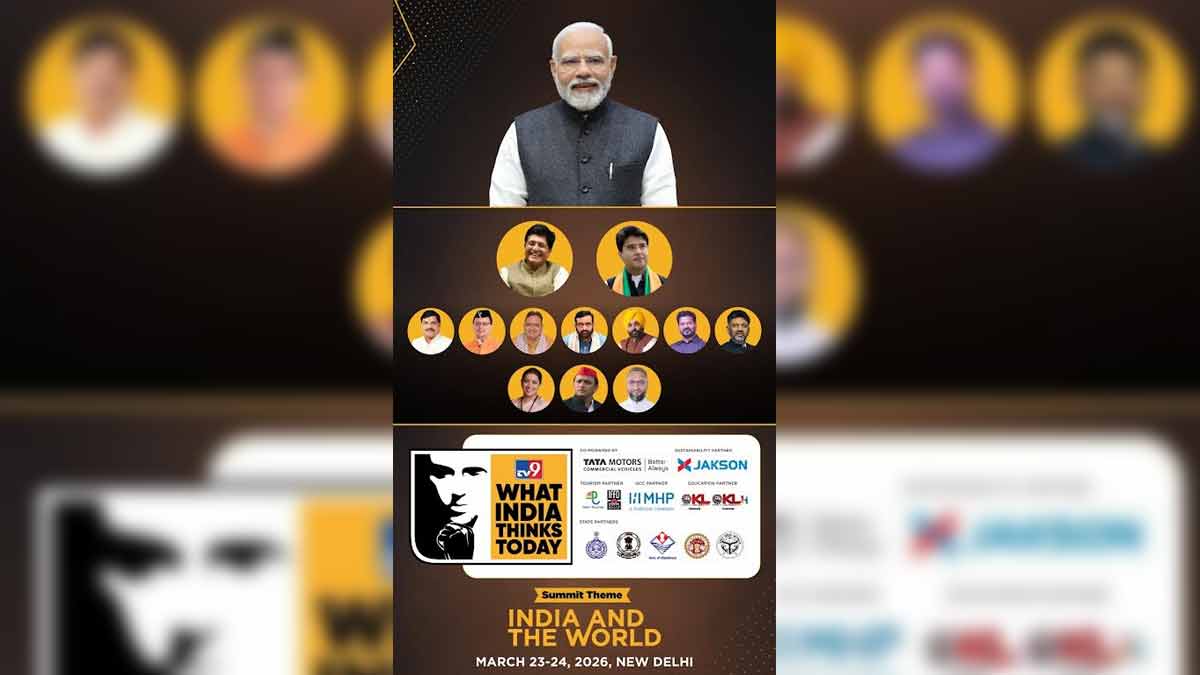
NEW DELHI: TV9 Network is gearing up to host the fourth edition of its flagship What India Thinks Today Summit 2026 on March 23 and 24 in the national capital, bringing together a wide spectrum of voices to debate India’s place in a shifting global order.
The summit will open with a keynote address by Narendra Modi, setting the tone for this year’s theme, “India and the world”, as the country positions itself at the crossroads of economic growth, geopolitical shifts and technological change.
From cabinet ministers to chief ministers, business leaders to cultural figures, the event promises a crowded stage and a lively exchange of ideas. Union ministers such as Piyush Goyal and Jyotiraditya Scindia are expected to attend, alongside state leaders including Mohan Yadav, Pushkar Singh Dhami, Bhajan Lal Sharma, Nayab Singh Saini and Bhagwant Mann.
Political voices from across the aisle, including Smriti Irani, Akhilesh Yadav and Asaduddin Owaisi, will also join the conversation, ensuring that the debates are as diverse as they are dynamic.
Adding a cultural and sporting touch, personalities such as yoga guru Swami Ramdev, poet Kumar Vishwas and cricketing names like Sourav Ganguly, Axar Patel and Arshdeep Singh are set to share the stage. Global business leaders and diplomats will further widen the lens, reflecting the summit’s international outlook.
Speaking ahead of the event, TV9 Network managing director and chief executive officer Barun Das, said India stands at a unique moment in history, combining demographic strength, technological capability and entrepreneurial energy. He noted that in uncertain times, honest conversations and bold ideas will shape the country’s trajectory.
The summit will explore themes ranging from economic growth and governance to innovation, sustainability and culture, positioning itself as a platform for dialogue at a time when the world is in flux.
With a packed agenda and a high-profile guest list, What India Thinks Today Summit 2026 aims to do more than just talk. It seeks to capture a moment where India is not only part of the global conversation, but increasingly helping lead it.








