Documentary
Game of Change: A New Cinematic Blueprint for Education, Leadership & Social Impact

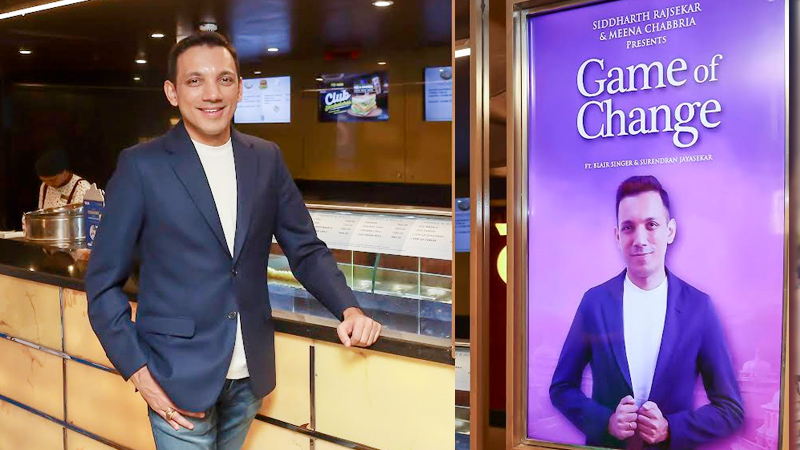
In a media landscape dominated by fiction and celebrity, Game of Change is flipping the script. Premiered across Mumbai, Hyderabad, and Chennai, this new-age docufilm series brings real stories, real people, and real transformation to the big screen. But this isn’t just a movie — it’s the beginning of a movement.
Helmed by Siddharth Rajsekar, digital coach and founder of the Internet Lifestyle Hub, Game of Change blends documentary realism with cinematic storytelling to deliver what mainstream cinema rarely attempts: authenticity. The first installment, featuring eight powerful stories of personal and community-based transformation, is already being hailed as a genre-defining moment in Indian content creation.
“We’re not here to entertain alone,” said Siddharth Rajsekar at his annual online event Reboot 2025, where he unveiled a video with his long-term vision for Game of Change. “We’re here to remind India how to learn — by returning to purpose, community, and inner alignment.”

Rewriting the Script of Education
At the heart of Game of Change lies a critique — and a call to action. The current education system, digital reformer Siddharth Rajsekar argues, is a colonial relic that trains compliance, not creativity. In contrast, the film series draws on India’s ancient learning heritage — from Nalanda, Takshashila, Kanchipuram, Madurai, Nabadwip to Udupi — where knowledge was passed down through community interaction, mentorship, and lived experience.
The docufilm envisions a modern-day gurukul for the digital age: a hybrid model that fuses storytelling with technology, personal growth with AI-powered scalability.
From Documentary to Docu-Movement
The cinematic format of Game of Change is deliberately unconventional. It features real-life individuals — not actors — who’ve risen above circumstances to lead, serve, and inspire. These are stories of educators, entrepreneurs, and community leaders who’ve become modern role models in an age of celebrity saturation.
“Gen Z and Gen Alpha don’t just want to be entertained. They want to see themselves in the story,” said Siddharth Rajsekar. “They’re not looking for fantasy. They’re looking for alignment.”
Strategic Rollout, Cultural Relevance
The decision to premiere the film in three major metros wasn’t just for visibility — it was part of a place-based strategy to ignite community-led action. Each screening was followed by emotional applause and discussions, underscoring the film’s power to spark real dialogue and introspection.
With versions already dubbed in Hindi, Tamil, Telugu, and English — and others like Kannada underway — the creators are preparing for a nationwide theatrical rollout and a subsequent OTT release.
Cinema Meets Community
Perhaps the most striking aspect of Game of Change is how it turns viewers into participants. Through its growing online ecosystem — including webinars, learning journeys, and coaching communities — the film invites its audience to move beyond passive consumption.
“We’re not building fans,” Siddharth noted. “We’re building a family of change-makers.”
This model aligns with current trends in participatory media, where communities around content become more valuable than the content itself. It also reflects a shift in youth media engagement — from binge-watching to belonging.
What’s Next: Scaling the Movement
Building on the momentum, the team announced plans for the next installment of Game of Change — a full-length feature film currently in production. While the current version serves as a pilot with a modest budget of 1.5 CR, the upcoming film will expand on its core themes in a 90–120 minute cinematic journey.
Looking ahead, Game of Change plans to integrate AI and emerging tech into future installments — not for spectacle, but to explore how technology and ancient wisdom can co-exist. This narrative isn’t about resisting innovation; it’s about humanizing it.
With this vision, Game of Change enters the rare space where storytelling becomes system-building — offering not just inspiration but infrastructure for social transformation.




Documentary
Netflix and Warner Music ink landmark documentary deal
The streaming giant has just unlocked one of the richest vaults in music history. Its rivals should be worried
CALIFORNIA AND NEW YORK: Netflix and Warner Music Group have signed an exclusive multi-year deal to produce documentary series and films drawn from the label’s storied artist roster, the companies announced on Friday — a move that hands the streaming platform access to one of the most formidable catalogues in music history.
Warner Music Group represents legends including David Bowie, Cher, Fleetwood Mac, Aretha Franklin and Joni Mitchell, alongside contemporary superstars such as Charli XCX, Coldplay and Bruno Mars. That is a staggering breadth of material for a platform hungry for prestige content and subscriber growth to match.
Under the agreement, Warner Music will work with Unigram, the production company aligned with the label, which will serve as the studio for its long-form projects. Each title will be developed in collaboration with the artists themselves or their estates, ensuring the kind of intimate access that turns a documentary into an event.
The deal reflects an intensifying race between music-rights owners and streaming platforms eager to turn deep catalogues into premium visual content. Music documentaries have become a vehicle for fan-driven, culturally resonant programming — a trend underscored by Taylor Swift’s “Eras Tour” film, which grossed over $260 million globally and reminded every platform chief just how lucrative the genre can be.
Netflix already boasts formidable credentials in music storytelling, with “Homecoming: A Film by Beyoncé” and “Quincy” among its highest-profile releases. The Warner deal sharpens that edge considerably. Rival platforms have not been idle: Disney+ has released “The Beach Boys”, while Max has drawn attention with “Stax: Soulsville U.S.A.” Apple Music, meanwhile, has pushed into original content through its Apple Music Live series, producing documentaries and livestreamed concerts featuring Harry Styles and Billie Eilish.
The battle for music’s visual soul, then, is well and truly on. Netflix has just made its boldest move yet.






