Education
Forget 4K! HDR Is The New Buzzword

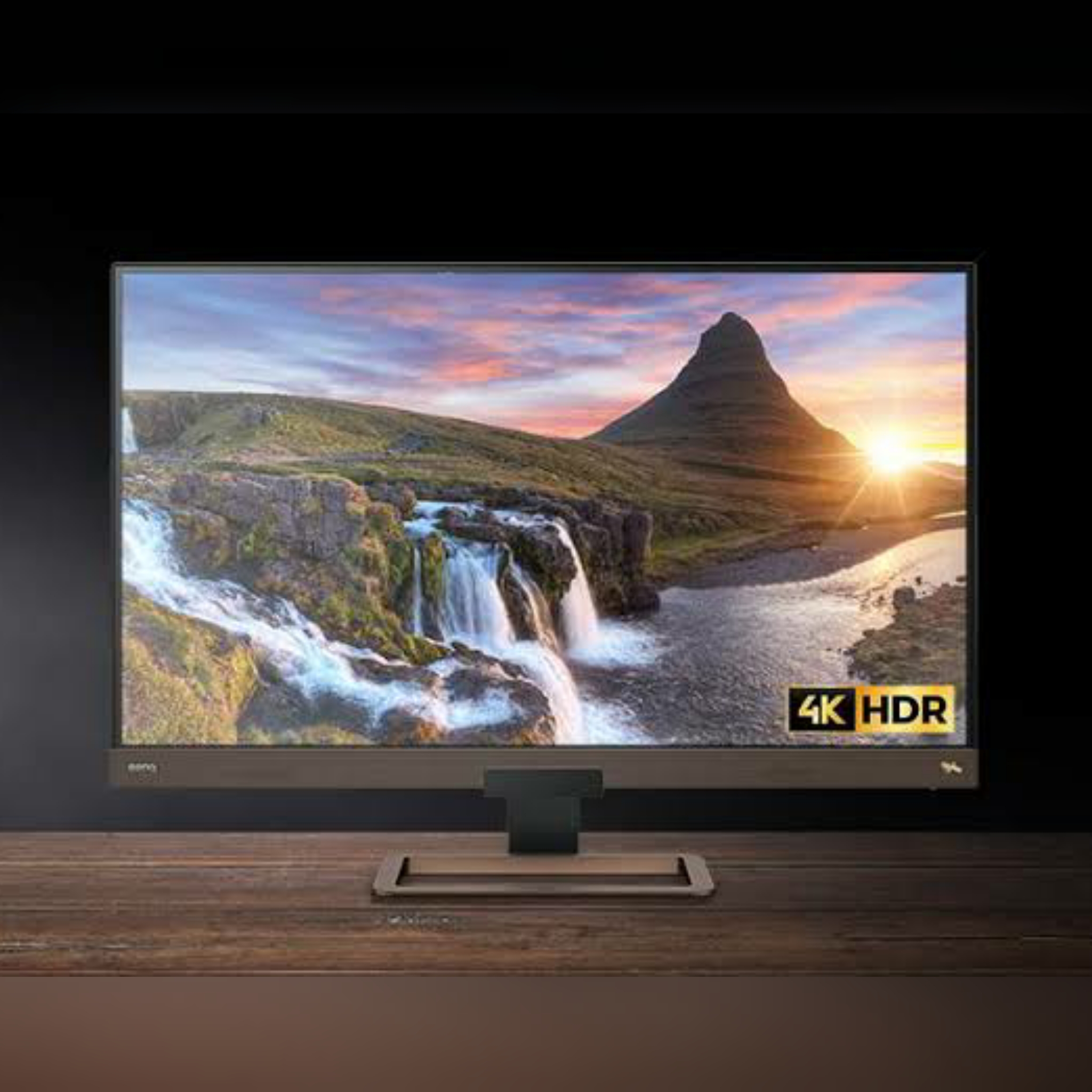
There was a time when TVs used to sell solely based on resolution. We started with 480px, then went on to HD Ready, Full HD, 4K and now we even have 8K TVs available in the market. So, does looking at resolution alone help you buy the best television with outstanding visuals? Not exactly. If resolution is all about the quantity of pixels, HDR is about the quality. And as with everything else, quality is more important than quantity!
What is HDR?
Dynamic Range essentially refers to the range of contrast and colour palette that the TV is capable of displaying. In HDR TV this dynamic range is more and hence each pixel can display a wider colour range of varying brightness, which in turns reflects a higher contrast ratio.

A 4K TV with HDR has vivid, bright and colourful visuals that are close to real life. As it has a better contrast ratio, blacks appear darker and whites appear lighter and the various gradients of colours are clearly visible. This ensures even minute details are clear and not lost. Combine this with the local dimming technology available in higher end TVs and you get outstanding clarity even in dark scenes.
In order to enjoy outstandingly vivid and colourful visuals, your TV should be HDR compatible and so should the content you see. Videos available on Netflix, Prime, YouTube, Hotstar and such VOD apps are HDR compatible. But the cable TV content is not.
HDR TV Formats
When you buy a 4K TV, don’t choose one just because it is HDR compatible. More importantly, look at the HDR formats it support. HDR 10 is the base standard, while Dolby Vision is the gold standard available predominantly in high-end TVs from LG, Sony, TCL, Hisense etc. Samsung supports HDR10+ content- a format it developed in collaboration with other companies. In their attempt to promote HDR10+, even high end 4K TVs from Samsung don’t support Dolby Vision.
Now, let us take a look at the different HDR formats in detail.
HDR 10- As mentioned, it is the base standard. A TV that is HDR 10 compatible will be able to display 1 billion colours and has a maximum brightness of 1000 nits and colour depth of 10 bits. It is an open format and hence it is not enforced by anyone. So, if a manufacturer says his TV is HDR 10 compatible, you have to take his word for it.
HDR 10 contents are static. This means, the color calibration is set for a movie or a show. But in Dolby Vision, this is set per frame.
Dolby Vision- As this format is licensed by Dolby, you can rest assured that if a TV’s specifications say Dolby Vision compatible, it will be so in actuality. As mentioned earlier, the calibration in terms of colour, contrast and brightness can be set frame by frame.
Dolby Vision content can be mastered to display 68 billion colours and peak brightness of 10,000 nits. But at present, the displays are not capable of showing such bright content.
As it can support such a wide palette of colours, what you see on TV will be exactly as what the director of the show or movie intended.
HDR 10+ content has a peak brightness of 4000 nits. It was developed by a consortium of Samsung, Panasonic and 20th Century Fox. It is definitely better than HDR10, but not quite there when compared with Dolby Vision.
HLG is HDR for cable TV. Unfortunately, in India, we don’t get HLG content from our broadcasters.
What To Buy?
If you are a videophile who enjoys crisp, clear and vivid visuals, and if your budget permits, buy a 4K TV that is Dolby Vision compatible. Or else, at least opt for a Samsung TV that is HDR10+ compatible.
But if you are someone who can’t really distinguish between HD ready, Full HD and 4K content visually, then, you needn’t give much focus on these aspects and would be better off buying a budget friendly Full HD or 4K TV of desired size.

Education
Abhishek Singh appointed director general of National Testing Agency
Technocrat with deep roots in India’s digital infrastructure push takes charge of the exam body that has faced intense scrutiny
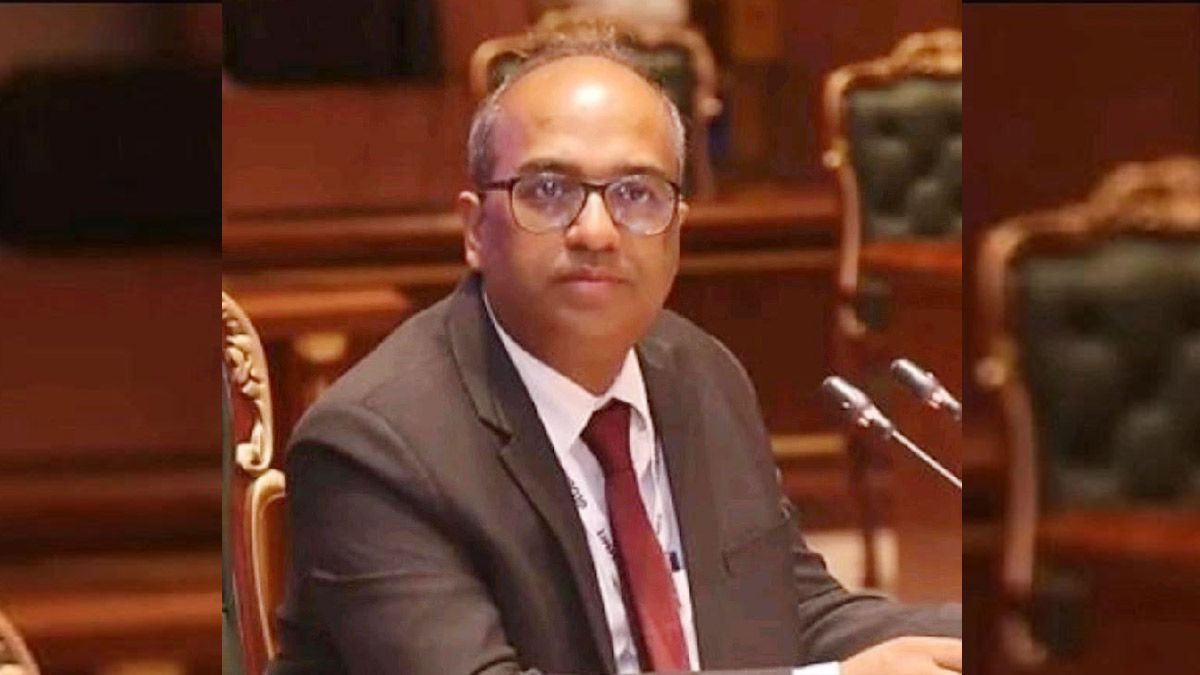
NEW DELHI: India’s beleaguered examination authority has a new boss. Abhishek Singh, currently director general of the National Informatics Centre (NIC), has been appointed director general of the National Testing Agency (NTA), which sits under the Ministry of Education. In a signal of just how seriously the government is treating the role, the post has been temporarily upgraded to the rank and pay of secretary to the government of India.
Singh is not your typical bureaucrat shuffled sideways into a troubled institution. At the NIC, he also held additional charge as additional secretary in the Ministry of Electronics and Information Technology (MeitY), overseeing artificial intelligence, emerging technologies and the Digital India Bhashini division, while simultaneously serving as chief executive of the India AI Mission. That is a formidable technology portfolio by any measure.
His CV reads like a guided tour of India’s digital public infrastructure. He served as president and chief executive of the National e-Governance Division, managing director and chief executive of Digital India Corporation, chief executive of Karmayogi Bharat, and chief executive of MyGov between 2019 and 2024. Before that, from 2014 to 2017, he was executive director at the Food Corporation of India, where he handled information technology, engineering, storage and, additionally, the North Zone operations and the role of chief vigilance officer.
His field credentials are equally robust. Singh has served in both Nagaland and Uttar Pradesh across multiple tenures, navigating law and order, floods, droughts and communal tensions with equal measure. As principal secretary to the chief minister of Nagaland between 2017 and 2019, he also held charge of urban development, personnel and administrative reforms, and, in 2018, home commissioner. At the grassroots, he built roads, irrigation systems, schools and hospitals, and drove welfare programmes focused on poverty alleviation, education and healthcare.
Singh has also worked alongside international agencies including DFID, UNICEF and WHO, contributing to the Child’s Environment Project in Budaun and the Pulse Polio Eradication Programme in Uttar Pradesh. He has conducted elections at the parliamentary, state assembly and local body levels.
Academically, he is no slouch either. Singh holds a master’s degree in public administration from Harvard Kennedy School, where he was a Mason Fellow, and completed his B.Tech and M.Tech from IIT Kanpur.
Meanwhile, the broader bureaucratic reshuffle sees Bihar cadre IAS officer Chanchal Kumar named the new secretary in the Ministry of Information and Broadcasting. Rohit Kansal of the UT cadre moves to the Rural Development Ministry as special secretary, while IAS officer Vikram Yadav has been appointed director general of the Directorate General of Civil Aviation. The outgoing I&B secretary has been reassigned as secretary in the Ministry of Development of North Eastern Region.
The NTA needed someone who could rewire both its credibility and its systems. Singh has spent a career doing exactly that.






