Education
Factors that Contribute to Business Loan Application Rejection


One of the many things that businesses don’t want to confront is rejection, whether it’s for a new project or business financing. However, financial institutions are extra cautious when conducting credit appraisals. They consider a number of factors before approving your loan application.
As a result, if you don’t want to find yourself in a loan refusal situation, keep the following points in mind.
1. Poor credit report

One of the primary reasons for business loan rejection is poor credit history. Financial institutions first assess your credit report when you apply for a loan. They look at how many existing debts you have and how much you are paying in EMIs. They also verify if any previous EMIs have been missed. In case of any negative recordings on your report, the lender will reject your application.
However, there are several circumstances in which a bad credit record is not your fault. For example, sometimes financial institutions forget to send the loan closure report to the credit bureaus. In such circumstances, your best solution is to contact your lender and request that the disparity is resolved. You can also send the credit bureau a rectification mail along with supporting papers like a no-objection certificate (NOC)
2. Poor cash flow
Cash flow is a measure of your company’s liquidity. It informs lenders about the amount of cash you have on hand and in the bank. One of the numerous issues that lenders cannot ignore is a lack of liquidity. Assume you require funds in the range of Rs 25 lakhs. Your company’s financials indicate a healthy profit, but your cash flow displays a negative amount. In this case, it is assumed that either your business expenses are excessive or you are wasting money on things that aren’t necessary.
To improve the cash flow in your company, you can consider taking the following measures.
● Sell off any assets that are no longer relevant to your business.
● Instead of purchasing new machinery or office space, consider leasing.
● Launching new products will help you increase your revenue.
● Revise the price of your existing products.
3. Lack of business plan
Financial institutions ask you to present a well-detailed business plan when you apply for a business loan. They want to know about your projected sales, expansion plans, and revenue projections for the next five years, among other things. Some financial institutions also ask for financial statements. Thus, try to get your balance sheet and profit and loss statement audited by a chartered accountant if possible.
You may also seek guidance from business advisors or have a documented company plan reviewed by them to make the application process move more smoothly.
4. Multiple loan applications
The requirements for funds in business might arise at any time. And if you don’t plan ahead of time, you can miss out on a fantastic opportunity. However, to obtain funds quickly, one of the most common mistakes made by businesses is to apply for a loan with many lenders at the same time without waiting for any lender to approve or disapprove.
Submitting multiple applications at the same time gives the lender an impression that you are a desperate borrower. Thus, resulting in a loan application rejection.
5. Start-ups
Financial institutions are hesitant to lend to start-up companies. The reason is that such businesses have no prior business credit history. They also lack financial information that would allow a lender to assess their company’s viability. As such, if you have just started your business, you are left with a handful of financing options, of which a few are listed below.
● You may raise funds from private equity firms, venture capitalists, or angel investors.
● If you want to start a business in addition to your full-time employment, the best option is to apply for a personal loan.
● You can also choose from a variety of government loan programmes on the market.
● If nothing else works out, consider utilising your savings or enlisting the assistance of your friends or relatives. You may also want to explore forming a partnership firm, as your business partner may be willing to invest a significant amount of money in your company.
6. High risks business
There are various businesses whose performance relies upon the country’s economic conditions, government policies, etc. There are also a few businesses that boom only in a specific season. Financial institutions consider such businesses risky and do not grant loans to them.
Assume when there is a complete lockdown in the country and gyms and other public amenities were closed. In such situations, do you think the lender will approve you for a loan? The answer is a big NO. And if they do, they will charge a hefty business loan interest rate to mitigate the potential risks.
To conclude:
Now that you are aware of the factors that influence the approval of your business loan, you can proceed with your application. Remember, avoiding the above blunders can help you get funds at an affordable business loan interest rate.



Education
Abhishek Singh appointed director general of National Testing Agency
Technocrat with deep roots in India’s digital infrastructure push takes charge of the exam body that has faced intense scrutiny
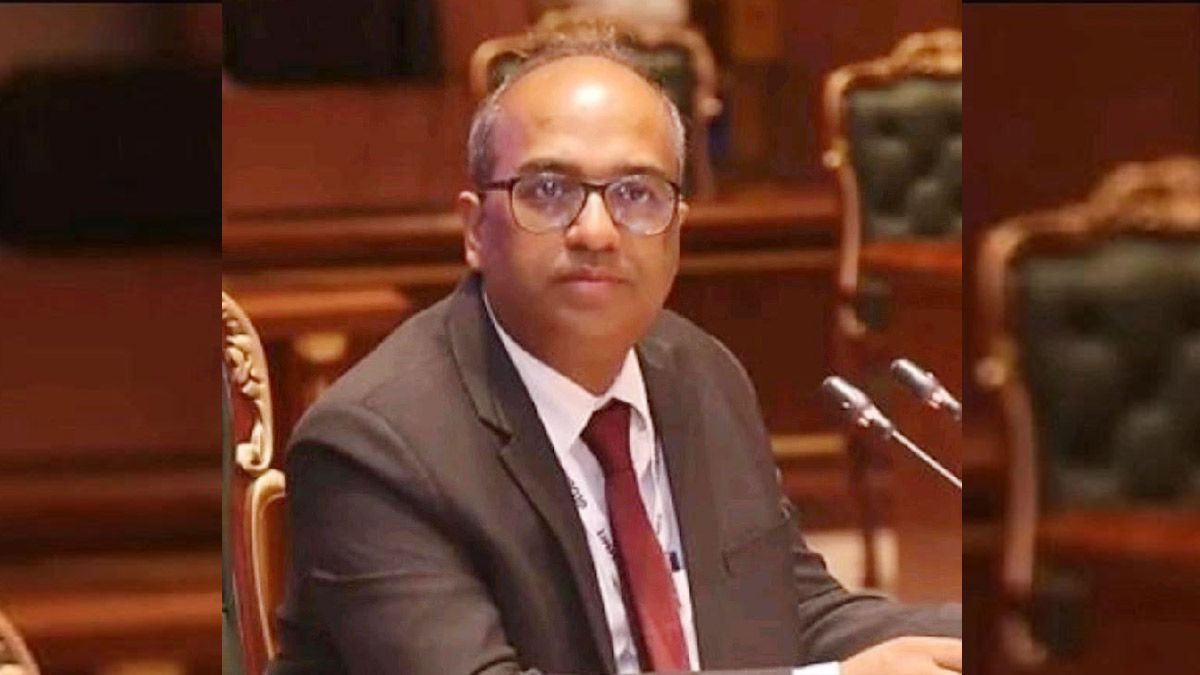
NEW DELHI: India’s beleaguered examination authority has a new boss. Abhishek Singh, currently director general of the National Informatics Centre (NIC), has been appointed director general of the National Testing Agency (NTA), which sits under the Ministry of Education. In a signal of just how seriously the government is treating the role, the post has been temporarily upgraded to the rank and pay of secretary to the government of India.
Singh is not your typical bureaucrat shuffled sideways into a troubled institution. At the NIC, he also held additional charge as additional secretary in the Ministry of Electronics and Information Technology (MeitY), overseeing artificial intelligence, emerging technologies and the Digital India Bhashini division, while simultaneously serving as chief executive of the India AI Mission. That is a formidable technology portfolio by any measure.
His CV reads like a guided tour of India’s digital public infrastructure. He served as president and chief executive of the National e-Governance Division, managing director and chief executive of Digital India Corporation, chief executive of Karmayogi Bharat, and chief executive of MyGov between 2019 and 2024. Before that, from 2014 to 2017, he was executive director at the Food Corporation of India, where he handled information technology, engineering, storage and, additionally, the North Zone operations and the role of chief vigilance officer.
His field credentials are equally robust. Singh has served in both Nagaland and Uttar Pradesh across multiple tenures, navigating law and order, floods, droughts and communal tensions with equal measure. As principal secretary to the chief minister of Nagaland between 2017 and 2019, he also held charge of urban development, personnel and administrative reforms, and, in 2018, home commissioner. At the grassroots, he built roads, irrigation systems, schools and hospitals, and drove welfare programmes focused on poverty alleviation, education and healthcare.
Singh has also worked alongside international agencies including DFID, UNICEF and WHO, contributing to the Child’s Environment Project in Budaun and the Pulse Polio Eradication Programme in Uttar Pradesh. He has conducted elections at the parliamentary, state assembly and local body levels.
Academically, he is no slouch either. Singh holds a master’s degree in public administration from Harvard Kennedy School, where he was a Mason Fellow, and completed his B.Tech and M.Tech from IIT Kanpur.
Meanwhile, the broader bureaucratic reshuffle sees Bihar cadre IAS officer Chanchal Kumar named the new secretary in the Ministry of Information and Broadcasting. Rohit Kansal of the UT cadre moves to the Rural Development Ministry as special secretary, while IAS officer Vikram Yadav has been appointed director general of the Directorate General of Civil Aviation. The outgoing I&B secretary has been reassigned as secretary in the Ministry of Development of North Eastern Region.
The NTA needed someone who could rewire both its credibility and its systems. Singh has spent a career doing exactly that.






