Cable TV
Delay in Phase III monetisation likely to disturb profitability of MSOs: ICRA


MUMBAI: In the cable TV space, in the current fiscal the revenue growth of multiple system operators (MSOs) will remain sensitive to regulatory changes, says ICRA. While lifting of stay orders and consequent discontinuation of analog signals in Phase III markets will remain a key subscription revenue growth driver, any extension with respect to Phase IV deadline (beyond December 31, 2016) will impact the activation revenues.
With an estimated population of over 60 million households in Phase IV markets, cable TV players do not anticipate any extension in Phase IV deadline. However, the implementation is expected to be along the experience of Phase III, with analog signals being discontinued in a phased manner. Of the analog population in Phase III and Phase IV markets, residual analog subscriber base amongst the top three MSOs stood at ~9.5 million subscribers only (as on March 31, 2016), against a total analog population of over 6 0 million in the country, indicating healthy growth opportunities for DTH operators and regional MSOs. In this direction, DTH operators have introduced lower priced vanilla STBs and channel packages to tap the opportunity in Phase IV markets; however, DD Free Dish is also expected to emerge as a key player in Phase IV, given the price sensitive nature of subscribers.
“Over the last few years, market leaders in the cable TV space have adopted an inorganic growth strategy for entering new geographies and increasing their subscriber universe, consolidation in the cable TV space is expected to continue as MSOs look at further strengthening their market position in their respective geographies,” says ICRA Ratings SR GVP Subrata Ray.

While the overall placement revenues are expected to remain buoyant, driven by new channel launches and the inclusion of tier II and tier III markets in audience measurement metrics; some correction on account of the change in the nature of content deals (net of placement revenues) with larger broadcasting networks is anticipated. While the subject of discontinuation of analog signals in Phase III markets remains under litigation, monetisation of the Phase III markets is expected to get deferred by nearly a year before the benefits of the healthy STB seeding, achieved in Phase III markets, start percolating.
“In view of the potential delays in Phase III monetisation, ability of the MSOs to improve cost efficiencies and ARPUs from Phase I and Phase II markets remains crucial to support the profitability metrics in the current fiscal,” says Ray.
During this transition phase, the cash accruals of MSOs are expected to improve gradually as incremental capex requirements are likely to remain low.
“The capex outlay of MSOs over the medium term will be driven towards achieving higher broadband penetration in identified markets; investments in LCO management and improving penetration of value-added services such as HD channels and Video-on-Demand in digitised markets. In addition, replacement capex for STBs seeded in Phase I and Phase II markets will also drive the investment requirements of MSOs over the medium term,” adds Ray.





Cable TV
Hathway Cable appoints Gurjeev Singh Kapoor as CEO
Leadership change comes as cable TV faces shrinking subscriber base and modest earnings pressure
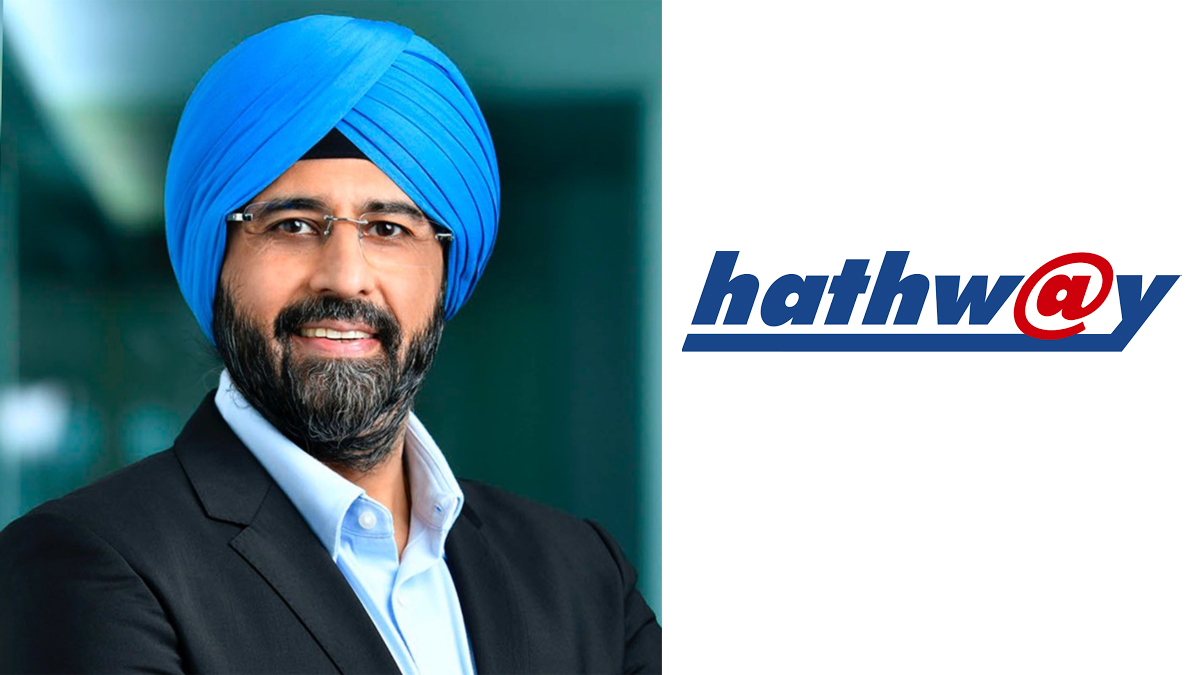
MUMBAI: Hathway Cable and Datacom has tapped industry veteran Gurjeev Singh Kapoor as chief executive officer, marking a leadership pivot at a time when India’s cable television business is under mounting strain.
Kapoor will take over from Tavinderjit Singh Panesar, who is set to retire in August after a long innings with the company. Panesar, chief executive since 2023, has held multiple leadership roles at Hathway, including his latest stint beginning in 2022.
Kapoor brings more than three decades of experience in media and entertainment. He most recently led distribution at The Walt Disney Company’s Star India business, now part of JioStar. His career spans television distribution and affiliate partnerships, with stints at Sony Pictures Networks India, Discovery Communications and Zee Entertainment.
Panesar, with over three decades in the industry, has worked across strategic planning, distribution and business development in media, broadcasting and manufacturing. His past associations include ESPN Star Sports, Star India, Apollo Tyres and JK Industries.
The transition lands as the cable sector grapples with structural disruption. Traditional operators are losing ground to streaming platforms, while telecom and broadband players tighten the squeeze with bundled offerings.
An EY report estimates India’s pay-TV base could shrink by a further 30 to 40 million households by 2030, taking the total down to 71 to 81 million. The slide follows a loss of nearly 40 million homes between 2018 and 2024, a contraction that has already wiped out more than 37,000 jobs in the local cable operator ecosystem.
Hathway’s numbers reflect the strain. The company reported a consolidated net profit of Rs 93 crore for FY25, down from Rs 99 crore a year earlier. Revenue inched up to Rs 2,040 crore from Rs 1,981 crore. As of December 2025, it had about 4.7 million cable TV subscribers and roughly 1.02 million broadband users.
Kapoor steps in with a familiar brief but a shrinking playbook. In a market where viewers are cutting cords faster than companies can reinvent them, the new chief executive inherits a business fighting to stay plugged in.







