Hardware
CommunicAsia2016, EnterpriseIT2016 and BroadcastAsia2016 to unveil solutions from innovations for smart homes and cities

MUMBAI: Digital transformation has given rise to smart technologies, disrupting the way we work, live and play. Bringing to life new innovations, this year’s CommunicAsia2016, EnterpriseIT2016 and BroadcastAsia2016 returns to Marina Bay Sands Singapore from 31 May – 3 June 2016.
“From sensors, wearables to intelligent ecosystems, Asia Pacific will see 8.6 billion connected devices by 2020[1]. Hyper-connectivity heightened automation and opened new possibilities for enhanced productivity with innovations including artificial intelligence, robotics and more. CommunicAsia2016, EnterpriseIT2016 and BroadcastAsia2016 continue to deliver value through insights and exhibitions of new Internet of Things (IoT) manifestations, unveiling thought leadership and best of breed innovations at the region’s leading technology event,” said Singapore Exhibition Services project director of communications events Victor Wong.
“We are very eager for visitors to see what we have in store, especially at the new and improved NXT@CommunicAsia on Level 3, which will focus on IoT and Smart City innovations,” he further added.

Highlighting the importance of smart technologies by companies in Singapore and beyond, Singapore Manufacturing Federation Secretary General Lam Joon Khoi added, “BroadcastAsia, CommunicAsia and NXT will see the convergence of multiple establishments showcasing their latest innovative technologies. We encourage all visitors and exhibitors to visit the Singapore Pavilion and network among the frontrunners of the industry. Trade shows like these are excellent platforms for collaborative partnerships to take flight, not only within the domestic market but international markets as well.”
New technologies to drive Smart Cities
Gartner highlighted the emergence of the ‘robo’ trend fueled by artificial intelligence and smart technologies driving changes in the way businesses and cities operate. The Asia Pacific region has seen adoption of robotics from food delivery to logistics management, as businesses look to new ways of working. Giving attendees a flavor of what they can expect, here are a couple of exhibitors that will be featured at this year’s event:
• Air quality monitoring for cities and home: Singapore company MobiQuest will launch an environment monitoring platform, iSenseair, to help cities, businesses and consumers track air quality to enhance quality of life. With increasing environmental and health concerns from the region’s haze and smog concerns, solutions like this showcase how Big Data can enable better city and environmental maintenance for sustainable and liveable cities building.
• Enhancing communications with robotics: OTSAW Digital Inc. will be showcasing the new ground-breaking teleconferencing robot, Double, which can be remotely controlled by a mobile teleconferencing system. Remotely controlled by a mobile teleconferencing system, this device enables employees with faster and more engaging interactions, wherever they are at the time of their choice.
From Kitchen to Security: Bringing Smart Homes to Life
How would consumers envision smart homes of the future? This year’s event showcases the manifestations of Smart Home technologies from the kitchen to enhancing lifestyles of today’s connected consumer. The following innovations showcase automation in today’s urban home spaces:
• Kitchen of the future: SousChef is founded by four Singapore University of Technology and Design (SUTD) students. It is a unique multi-functional kitchen-top device that is equipped with an inbuilt memory for recipe storage allowing users to create pre-entered recipes for ingredient dispensing and automated cooking of their favorite dishes.
• Home security at your fingertips: Device Electronics will showcase a first of its kind App-controlled surveillance robot for home use. Targeted at families with young children or elderly parents, the device provides consumers with the ability to remotely manoeuvre robots for easy home monitoring.
Creating new content experiences to engage today’s consumers
New, on-demand content and delivery have changed the broadcasting and production industry. Brands need to create engaging and innovative content to capture today’s multi-screen audience. The event also unveils latest innovations including:
• Redefining content experience 360 degrees: Expandore Electronics brings to the region the new KODAK PIXPRO, enabling today’s content creators to film 360 degree virtual reality videos, bringing images and video viewing experiences to the next level.
• Capturing moments with fast deploying drones: Singapore company, Cathay Photo, in partnership with Taiwan-based Cheng Seng Group, will be launching the adaptable and ready-to-fly system drone, the Freefly ALTA 6 Camera Drone which can unpack and be ready to shoot in less than 5 minutes
All the solutions from innovations for smart homes and cities will be showcased at CommunicAsia2016, EnterpriseIT2016 and BroadcastAsia2016, Asia’s largest and most integrated ICT and broadcasting industry event.


Hardware
India clears Rs 1.6 lakh crore semiconductor projects under Semicon India
Ten projects cleared as production begins and design ecosystem gathers pace
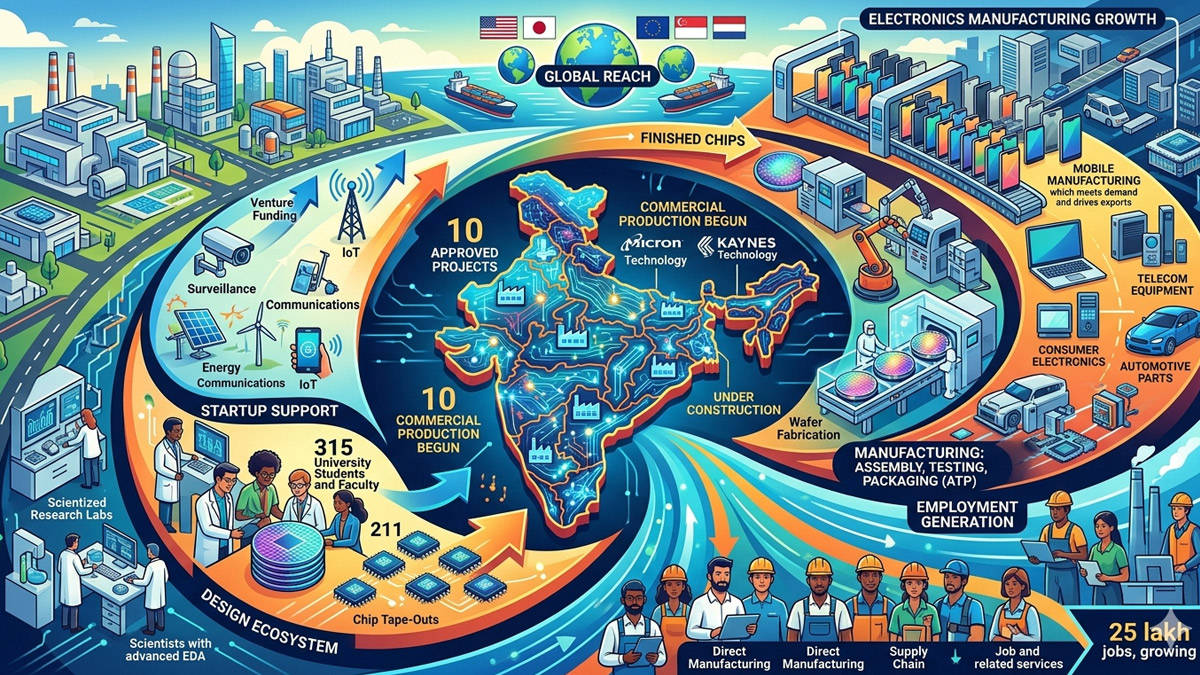
NEW DELHI: India’s push to become a global electronics powerhouse is gaining momentum, with the Semicon India Programme driving the creation of a full-fledged semiconductor ecosystem from design to manufacturing.
Launched in 2022, the programme aims to build capabilities across the entire value chain, including chip design, fabrication, assembly, testing and packaging. In just four years, the government has approved 10 semiconductor projects with a combined investment commitment of around Rs 1.6 lakh crore.
Two of these facilities have already begun commercial production, including units led by Micron Technology Inc. and Kaynes Technology India Limited. Two more plants are expected to go live later this year, signalling that India’s chip ambitions are moving from blueprint to factory floor.
The broader electronics manufacturing story has also seen sharp growth over the past decade. Production has jumped from roughly Rs 1.9 lakh crore in 2014-15 to about Rs 12 lakh crore in 2024-25, while exports have surged nearly eightfold. Mobile phone manufacturing, once heavily import-dependent, now meets almost all domestic demand and has become a major export driver.
Alongside manufacturing, the government is investing heavily in design capabilities. Through access to advanced chip design tools provided free to 315 universities, students and researchers have clocked over 200 lakh hours of usage. This effort has already resulted in 211 chip tape-outs from 75 institutions.
Support for startups is also picking up pace. Twenty-four chip design projects have been approved, targeting sectors such as surveillance, energy, communications and IoT. Of these, 14 companies have collectively raised over Rs 650 crore in venture funding, while several designs have progressed to fabrication, including at advanced nodes.
To strengthen supply chains, India has also signed semiconductor cooperation agreements with countries including the United States, Japan, the European Union, Singapore and the Netherlands. These partnerships aim to reduce global dependencies while boosting domestic capabilities.
The employment impact is equally significant. The electronics sector now supports an estimated 25 lakh jobs, with mobile manufacturing alone accounting for nearly half. As more semiconductor units come online under the India Semiconductor Mission, indirect job creation across supply chains is expected to rise further.
Sharing these updates in Parliament, Ministry of Electronics and Information Technology minister of state Jitin Prasada underscored the government’s focus on building a resilient, end-to-end semiconductor ecosystem.
With factories taking shape, designs moving to silicon and investments flowing in, India’s semiconductor story is steadily shifting gears from ambition to execution.






