News Broadcasting
CNBC-TV18’s innovative shows for Budget 2006


*CNBC-TV18’s new and innovative shows for Budget 2006*
***Will the Budget 2006 make or break the Indian dream?*
**
*
Budget 2006 Line-Up for the Consumer from Awaaz
Awaaz will ask the all important question: “Is Budget 2006 a Consumer
Budget?”
*
* *

* *
CNBC-TV18, India’s leading business medium, has lined up an interesting, informative and innovative budget line up for the Union Budget 2006. The current year’s theme will be centered on the great Indian dream and will address the question: *Will Budget 2006 make or break the Indian dream?*
**
India’s First Dedicated Consumer Channel – Awaaz has lined up a first-ever budget-programming which questions the relevance of the budget for the Indian consumer for the upcoming budget this February 2006. Awaaz will make a revelatory trip criss-crossing the country and voicing the opinions of Indian consumers on their expectations of Budget 2006. Budget expectations and its impact has unfolded through a series of special programmes queued up on Awaaz beginning February 10, 2006.
*Pre budget programming*
CNBC-TV18, the acknowledged leader and trendsetter, has kick started its budget programming with 3 on-ground events in Mumbai, Delhi and Bangalore – with industry leaders defining their expectations from this year’s Union Budget 2006. Telecast on the channel as a half hour show each, the wish list of the industry leaders, the likely Budget policy declarations and their possible ramifications will be some of the highlights which will be aired on channel.
Besides this the channel will telecast the budget demands of various sectors on various segments as part of *Budget Q&A and Bulletins*.
As part of the pre budget programming, CNBC-TV18 will also travel to the heartland of India feeling the pulse of India and understanding their budget aspirations. *Budget Caravan *will have the* * CNBC-TV18 team will travel across the country from February 15 – 25, 2006, stopping at metros, mini metros, small towns, etc. to hold special one-on-ones and small group discussions with the local community. The expectations of individuals and the nation will be voiced on the channel in the form of three to four minute segments which will be aired in key Bulletins on the channel.
To add to this CNBC-TV18 will also be conducting polls for the common
man *(Common Man poll)* and the CEO *(CEO poll)* which will highlight the budget aspirations of the day to day life and of India Inc.
Another new segment to the run up to the budget will be *”What the World Thinks” *where* *global leaders will express their opinions on what the budget has in store for them.
*Railway budget* will be covered live and exclusive on the channel with
exhaustive analysis of the implications and final predications from experts
on what lies ahead.
Budget eve will also have a one hour special on the *Economic Survey* giving an intelligent and comprehensive overview of the booming Indian economy.
This year, *Awaaz Budget programming* will capture the Dreams, Expectations and Aspirations of the Indian consumer and will also analyze and provide them with timely information in a simplistic language which will finally gauge how much the long awaited budget will impact their lives.
The Awaaz Budget will more specifically focus on innovative programme
concepts which have been translated into programmes segregated into three categories:
1. *Budget Yatra*
2. *Ghar Ghar Ki Kahani*
3. *Budget Panchayat*
* *
*1. **BUDGET YATRA*
The Awaaz team will travel across the country from February 15 – 25, 2006, stopping at metros, mini metros, small towns, etc. to hold special
one-on-ones and small group discussions with the local community in the
country. The expectations of individuals and the nation will be voiced on
the channel in the form of three to four minute segments which will be aired
in key Bulletins like ‘Aaj ka Karobaar’ and ‘Awaaz Samachar’.
* *
*2. GHAR GHAR KI KAHANI*
As India prepares for the Budget, Awaaz will visit Indian families from 12
different cities to analyze their expectations and understand how the budget is likely to affect them. Post the budget verdict, the Awaaz team will revisit these families to gauge their reactions to the verdict. Starting
10th February, this 2-3 minute special will air one story everyday running
across the channel during the entire budget predicament.
* *
*3. BUDGET PANCHAYAT*
Budget Panchayat will be a series of 4 half hour specials on AWAAZ which will feature leading experts, analysts and industry leaders who will provide both macro as well as the Micro view of what to expect from the budget and the implications of the budget on various aspects of every Indians life, like Tax, Personal Finance, Stocks & Shares and Macro Economic issues.
Post the declaration of the budget, six focused one hour on-air
*Panchayats*will discuss the policy implications of the budget and the
way forward while focusing on the Share Market, Personal Finance, Tax, Sasta Mehenga (Housewives), Traders and Overall budget and the Impact of Macro economic issues on consumers.
* *
To add spice to the innovative budget programming, Awaaz will also
present *’Extreme Budget’* – a spoof on the budget desires and wishes of the corporate bigwigs from February 16, 2006, played 8 times a day in 3 different versions. Shot in a typical newsroom environment, *Extreme Budget* will provide viewers a hilarious outlook on budget expectations.
Special segments on Awaaz Samachar will air the budget expectations of the common man (Common Man Poll) and India Inc (CEO Poll) conducted by Synovate.
Other interesting pre-budget specials lined up on Awaaz are:
– *Mera Budget*, a 30 second segment playing throughout the day on
Awaaz, will speak to personalities like Rahul Bajaj, Priyanka Chopra as
well as the common man on the street, revealing their expectations of the
budget.
– *Economic Survey, *a 30 minute show on the eve of the Budget will
analyze each sector extensively and present a list of expectations and
recommendations for each sector with a special focus on the wish list of
the consumer from these sectors.
* *
– *Factoids on The Budget, *a 30 second graphic segment will play
throughout the day on Awaaz, gauging the expectations from the budget in
2006.**
* *
– *THE SME Focus – *Awaaz will also run two pre-Budget half hour
discussions on the SME expectations and concerns and their ability to
create a significant impact on the economic development of the country. **
* *
– *The Railway Budget *will be a 30 minute Panchayat* *during prime
time on the Railway Budget, the policy implications and the reactions of
the various related parties.
* *
*Budget Day Programming*
Live panel discussions will be the order of the day with panel discussion
from the CNBC-TV18 studio, FICCI and CII. The channel will telecast the LIVE uninterrupted coverage of the FM’s Budget speech with analysis from experts and detailing of the implications. Budget Analysis and Wrap Ups will also follow the exclusive interview with the FM on the Budget day.
* *
The *India** Business hour Budget Special*- will have an entire show
dedicated to the budget wherein CEOs from across industries, bureaucrats and politicians will air their reactions to the Union Budget 2006.
On* Budget Day, *Awaaz will air LIVE uninterrupted coverage of the Finance Minister’s Speech simultaneously translated to Hindi. An analysis with details on the implications and Impact on various constituencies throughout the day will also feature through –
• Regular news bulletins
• Awaaz Samachar
• Segments with consumer and CEOs
• Discussions with political leaders
• Tax impact analysis with tax experts
• Consumer speak
* *
*
*
*Post Budget Programming*
Back to the on ground events, CNBC-TV18 will discuss tax related aspects and recommendations presented in the finance bill post the budget,
simultaneously in three cities – Mumbai, New Delhi and Bangalore. These will attempt to touch base with reality and get a feel of the impact the budget has made to the common man.
To add this element, CNBC-TV18 will speak with the youth in an on ground and highly successful initiative conceptualised last year in association with MTV. Called *CNBC-TV18 and MTV budget fundas*, the initiative will touch base with the youth of the country and how it has affected their lives.
CNBC-TV18’s unparalleled budget programming for the Union Budget 2006 will be led by India’s best known business anchors, with analysis by India’s most respected economic experts. Views & reactions from India’s most powerful industry captains, in-depth discussions with India’s best known finance faces and high profile forums with India’s most knowledgeable, will complete CNBC-TV18’s budget programming, giving its viewers an all round perspective of the Union Budget 2006.
**
* *
**
Post the Budget, *Talking Tax *– two Half hour shows on March 1, 06, will decipher what the budget means for the consumer, featuring tax experts who will discuss the implications of the direct and indirect tax recommendations of Budget 2006 in a simple and easy to understand language.
* *






News Broadcasting
Induction cooktop demand spikes 30× amid LPG supply concerns
Supply worries linked to West Asia tensions push households and restaurants to turn to electric cooking alternatives
MUMBAI: As geopolitical tensions in West Asia ripple through global energy supply chains, the familiar blue flame in Indian kitchens is facing an unexpected challenger: electricity.
What began as concerns over the availability of liquefied petroleum gas (LPG) has quickly evolved into a technology-driven shift in cooking habits. Households across India are increasingly turning to induction cooktops and other electric appliances, initially as a backup but now, for many, a necessity.
A sudden surge in demand
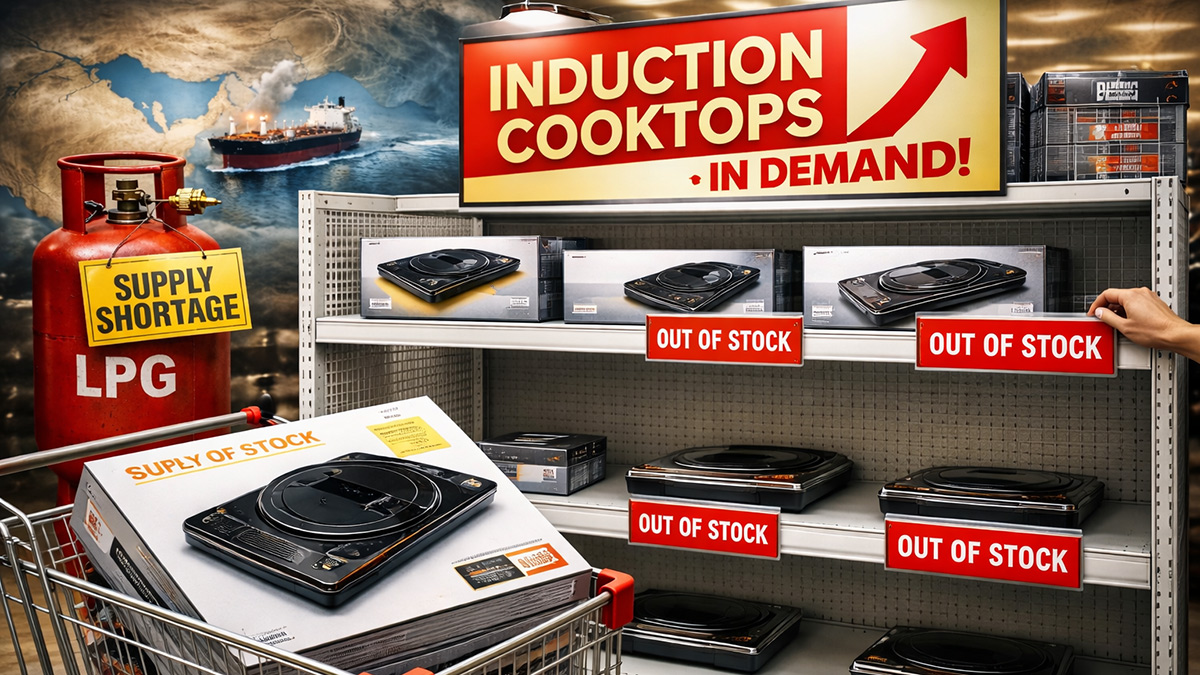
Recent data from quick-commerce and grocery platform BigBasket highlights the scale of the shift. According to Seshu Kumar Tirumala, the company’s chief buying and merchandising officer, demand for induction cooktops has risen dramatically.
“Induction cooktops have seen a significant surge in demand, recording a fivefold jump on 10 March and a thirtyfold spike on 11 March,” Tirumala said.
The increase stands out sharply when compared with broader kitchen appliance trends. Most appliance categories are growing within 10 per cent of their typical demand levels, while induction cooktops have witnessed explosive growth as households rush to secure an alternative cooking option.
Major e-commerce platforms including Amazon and Flipkart have reported rising searches and orders for induction stoves. Quick-commerce apps such as Blinkit and Zepto have also witnessed stock shortages in major metropolitan areas including Delhi, Mumbai and Bengaluru.
What was once considered a convenient appliance for hostels, small kitchens or occasional use has suddenly become an essential addition in many homes.
A crisis thousands of miles away
The trigger for this shift lies far beyond India’s kitchens.
Escalating conflict in the Middle East has disrupted shipping routes through the Strait of Hormuz, one of the world’s most critical energy corridors. Nearly 85 to 90 per cent of India’s LPG imports pass through this narrow waterway, making the country particularly vulnerable to supply disruptions.
The ripple effects have been swift.
India currently meets roughly 60 per cent of its LPG demand through imports, and tightening global supply has already begun to affect domestic availability and prices.
Earlier this month, the price of domestic LPG cylinders increased by Rs 60, while commercial cylinders rose by more than Rs 114.
To discourage panic buying and hoarding, the government has also extended the mandatory waiting period between domestic refill bookings from 21 days to 25 days.
Restaurants feel the pressure
The strain is not limited to households. Restaurants, hotels and roadside eateries are also grappling with supply constraints as commercial LPG availability tightens under restrictions imposed through the Essential Commodities Act.
In cities such as Bengaluru and Chennai, restaurant associations report that commercial LPG availability has dropped by as much as 75 per cent, forcing many establishments to rethink their kitchen operations.
Some restaurants have reduced menu offerings, while others are rapidly installing high-efficiency induction systems, creating hybrid kitchens where electricity now shares the workload with gas.
For smaller eateries and roadside dhabas, the shift is less about sustainability and more about survival.
A potential structural shift
The government has maintained that there is no nationwide LPG crisis and has directed refineries to increase production to stabilise supply.
Nevertheless, the developments of March 2026 may already be triggering a longer-term behavioural shift.
For decades, LPG has been the backbone of cooking in Indian households. However, recent disruptions have highlighted the risks of relying on a single fuel source.
Increasingly, households appear to be hedging against uncertainty by adopting electric cooking options to guard against price volatility and delivery delays.
If the current trend continues, the induction cooktop, once viewed as a niche appliance, could emerge as a quiet symbol of India’s evolving kitchen economy.