News Broadcasting
CNBC-TV18 hosts riveting knowledge sharing sessions with industry leaders on the FM’s Rs. 20 lac crore economic package announcements, on its special series – ‘The Reset’

As the world grapples with the dire consequences of the pandemic; giving hope to the nation, PM Narendra Modi announced the biggest economic stimulus package of INR 20 lakh crore on 12th May. Following the same, FM Nirmala Sitharaman has addressed multiple press conferences announcing several relief measures for various sectors and promoting the idea of Atmanirbhar Bharat (Self-reliant India). With an aim to present a complete overview of the entire situation to its audience, CNBC-TV18, India’s leading English business news channel, invites several industry experts on its special series ‘The Reset’.
Through a series of riveting knowledge sharing and analysis sessions, the channel evaluates, reviews and discusses the impact of all the five tranches of relief measures announced by the FM, on the lives of the working-class people and businesses at large. There were also several measures announced for the MSMEs, the migrant workers, NBFCs and MFIs. By inviting some of the greatest minds from across industries to provide insightful analysis on several aspects of the announcements, the series intends to help the audience understand the relief measures in a better manner.
Offering their insights on the announcements are eminent industry experts that included Krishnamurthy Subramanian, Chief Economic Advisor to the Govt. of India; Amitabh Kant, CEO, NITI Aayog; Deepak Parekh, Chairman, HDFC; Rajiv Kumar, VP, NITI Aayog; TV Narendran, Vice President, CII; Subhash Chandra Garg, Former Finance Secretary; Sunil Mehta, IBA Chief; N. Venkatram, Managing Partner and CEO, Deloitte India; Dr. Sangita Reddy, President, FICCI, Joint Managing Director, Apollo Hospitals Group; Anil Bhardwaj, Secretary General, Federation of Indian Micro and Small & Medium Enterprises (FISME); Sharad Kumar Saraf, President, FIEO; Keki Mistry, Vice Chairman & CEO, HDFC; Dr Haseeb Drabu, Former Finance Minister of J&K and Economist; Harish Damodaran, National Editor, Rural Affairs and Agriculture, Indian Express; VG Kannan, Former Chief Executive, IBA; Jayant Sinha, Member of Parliament, BJP; Rashesh Shah, Chairman & CEO, Edelweiss; RK Bansal, MD, Edelweiss ARC; Soumya Kanti Ghosh, Group Chief Economic Advisor, State Bank of India; Upasna Bhardwaj, Sr. Economist, Kotak Mahindra Bank; Amit Agarwal, Sr. VP & Country Manager, Amazon India; Dr. CL Dadhich, Secretary, Indian Society of Agriculture Economics, Former SGM, NIDD and Former Director of Rural Economics, RBI; Nilesh Shah, MD & CEO Capital Envision; L Viswanathan, Chair, Finance & Insolvency, Cyril Amarchand Mangaldas.

Asserting its commitment to the audience, the channel testifies on its dedication to provide valuable, and knowledgeable insights in these testing times as well.
Catch the show The Reset on CNBC-TV18 and CNBCTV18.com
Follow Tellychakkar for the consumer facing news & entertainment






News Broadcasting
CNN-News18 to host Fury in the Gulf conclave on West Asia crisis
Three-hour summit to unpack geopolitical fallout and impact on India
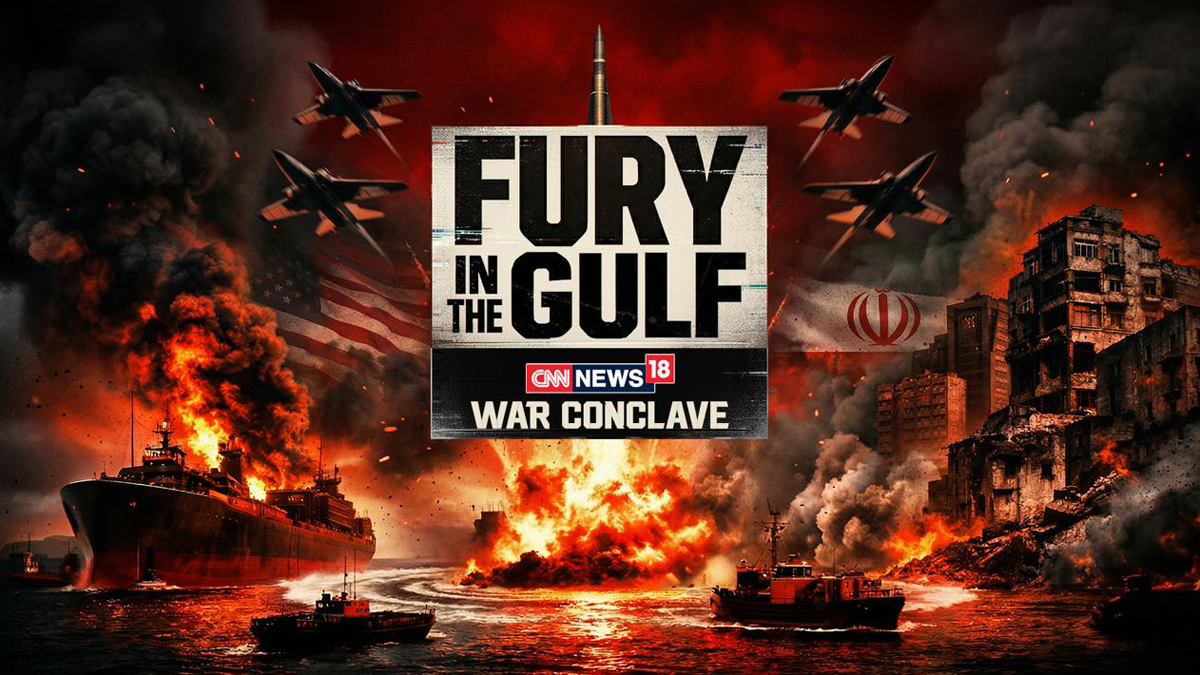
MUMBAI: CNN-News18 is set to host a special three-hour broadcast, Fury in the Gulf – War Conclave, on April 7, aiming to decode the escalating West Asia crisis and its far-reaching implications for India.
Scheduled from 4:00 PM to 7:00 PM, the conclave comes at a time when tensions between Iran and the United States are reshaping global geopolitics and triggering economic uncertainty. With India’s deep energy ties, trade links and large diaspora in the Gulf, the developments carry significant domestic relevance.
Built around the theme ‘Conflict, Consequences, and The Future,’ the programme will feature six curated sessions combining one-on-one interviews and panel discussions. The focus is to cut through the clutter and offer viewers a clearer understanding of the fast-evolving situation.
Key sessions include ‘Diplomacy in Times of War’ featuring Shashi Tharoor, and ‘World After the Iran Conflict’ with voices such as Ram Madhav, Reuven Azar, representatives from the European Union and the Iranian Deputy Envoy. Another session titled ‘Another Dunkirk?’ will bring together K. J. S. Dhillon and Jitin Prasada among others.
CNN-News18 editorial affairs director Rahul Shivshankar said, “In times of war, clarity becomes the most powerful tool. Fury in the Gulf – War Conclave brings together credible voices to address the questions and confusion that arise amid an overwhelming influx of information.”
He added that the initiative is aimed at delivering “facts, perspective, and insight” at a time when misinformation can easily cloud public understanding.
Echoing the sentiment, CNN-News18 CEO– English and business news Smriti Mehra said the conflict marks a defining global moment, with consequences that extend well beyond the region. She noted that the conclave seeks to present the crisis with “depth, nuance and responsibility” so audiences can better grasp its real-world impact.
As geopolitical tensions continue to dominate headlines, the conclave positions itself as an attempt to bring order to the noise, offering viewers a structured, insight-led look at a complex and rapidly shifting global situation.






