News Broadcasting
CNBC-TV18 celebrates 20th anniversary


MUMBAI: CNBC-TV18 is set to mark a milestone by completing 20 years as an overarching business news specialist in the country. In the past two decades, the brand has been at the forefront consistently by delivering incisive, and accurate information of the business and financial sector. Since its inception, the brand has led the transformation of the business-news media landscape through an amalgamation of the highest standards of journalism, cutting-edge technology and design.
In a bid to stay relevant, contemporary, and strike-a-chord with the ever-evolving audience, CNBC-TV18 has announced a stellar programming line-up under the helm of its anniversary celebration theme #Season20.
Drawing a parallel with the current pop-culture, CNBC-TV18’s #Season20 programming promises to be inspiring, thought-provoking and engaging. Broadly categorized into three major aspects namely India Inc., Markets, and Gen Next; the special programming line-up aims to bring to fore India’s growth story by putting the spotlight on the disruptors, icons, and game-changers of the Indian economy. Through the youth-oriented programming, #Season20 seeks to target a specific set of audience who are the drivers of the new economy.

The programming leg India Inc. will feature a slew of shows such as India Business Icons, Corporate Thrones, Disruptors, Brands that Built India with some of India’s biggest business icons, disruptors, entrepreneurs & brands that have left a mark and contributed towards the country’s success story.
The programming leg Markets, through shows such as Wizards of Dalal Street, Fund Anatomy, House of Policy, 20 Big Little Stocks will showcase the success patterns, strategies, investment philosophies and viewpoints of India’s biggest investment analysts in addition to charting the hits and misses of policies in India. Gen Next aims to advocate financial literacy amongst the youth of the country via contextual and relevant shows such as Investing @20, Youth Dialouges, Breaking Myths.
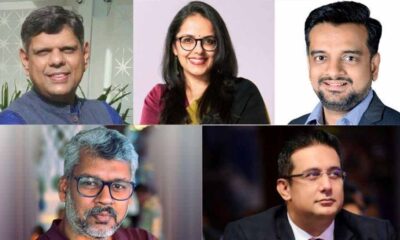
CNBC-TV18,Managing Editor, Shereen Bhan, Commenting on this announcement said, “Since the inception of CNBC-TV18, India and the global economy has gone through significant transformations. Over the past two decades, we have witnessed the opening up of the Indian economy, the rise of India’s private sector and the capital markets. We have seen technology disrupt legacy businesses and create new markets. We have chronicled the benefits of globalization and the rising threat of protectionism. Through the span of time, we have remained constant in our dedication towards providing comprehensive, and in-depth analysis of the business and financial sector. Of politics and policy. We have made it our business to provide credible, accurate, actionable insights. As we mark this crucial milestone, we continue to be the leader in business news and today also cater to the needs of the English news market, establishing ourselves as one of the most-watched English News channels.”
Network18,CEO-English & Business News Cluster Basant Dhawan said, “We are delighted to celebrate CNBC-TV18’s two decades in imparting news, trends, and data that has aided in advocating actionable awareness to our audiences. Through our league of well-seasoned and unparalleled experts, global investors, research analysts, and market experts we have succeeded to become the ‘voice of influence’ for business across sectors in India. We have been spearheading the creation of genre-changing and award-winning programming for our audiences that goes beyond formats and mediums. It is with great pride that we look back at our achievements and contribution towards fostering India’s growth story by providing our viewers with actionable, accurate insights and help them with critical decision making through our expertise.”
Unfolding the beginning of the special programming line-up with House of Policy, the audience witnessed Latha Venkatesh interview Chakravarthi Rangarajan, former RBI governor. The episode spoke about how CNBC-TV18 has constantly covered the growth-story of the Indian economy, the changes that occurred in the performance of the government & the rapid growth of the banking sector.




News Broadcasting
TV9 to host What India Thinks Today Summit 2026 in Delhi
PM Narendra Modi to keynote two day forum on India and the world
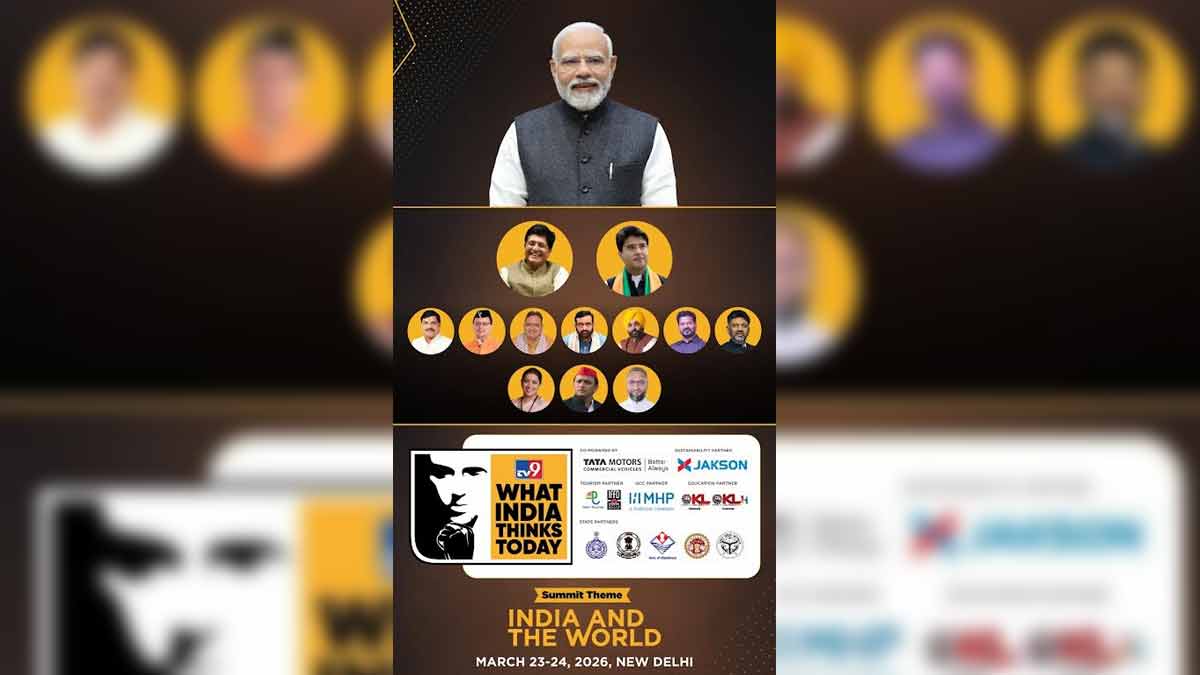
NEW DELHI: TV9 Network is gearing up to host the fourth edition of its flagship What India Thinks Today Summit 2026 on March 23 and 24 in the national capital, bringing together a wide spectrum of voices to debate India’s place in a shifting global order.
The summit will open with a keynote address by Narendra Modi, setting the tone for this year’s theme, “India and the world”, as the country positions itself at the crossroads of economic growth, geopolitical shifts and technological change.
From cabinet ministers to chief ministers, business leaders to cultural figures, the event promises a crowded stage and a lively exchange of ideas. Union ministers such as Piyush Goyal and Jyotiraditya Scindia are expected to attend, alongside state leaders including Mohan Yadav, Pushkar Singh Dhami, Bhajan Lal Sharma, Nayab Singh Saini and Bhagwant Mann.
Political voices from across the aisle, including Smriti Irani, Akhilesh Yadav and Asaduddin Owaisi, will also join the conversation, ensuring that the debates are as diverse as they are dynamic.
Adding a cultural and sporting touch, personalities such as yoga guru Swami Ramdev, poet Kumar Vishwas and cricketing names like Sourav Ganguly, Axar Patel and Arshdeep Singh are set to share the stage. Global business leaders and diplomats will further widen the lens, reflecting the summit’s international outlook.
Speaking ahead of the event, TV9 Network managing director and chief executive officer Barun Das, said India stands at a unique moment in history, combining demographic strength, technological capability and entrepreneurial energy. He noted that in uncertain times, honest conversations and bold ideas will shape the country’s trajectory.
The summit will explore themes ranging from economic growth and governance to innovation, sustainability and culture, positioning itself as a platform for dialogue at a time when the world is in flux.
With a packed agenda and a high-profile guest list, What India Thinks Today Summit 2026 aims to do more than just talk. It seeks to capture a moment where India is not only part of the global conversation, but increasingly helping lead it.








