News Broadcasting
CNBC-TV18 and Microsoft launch SMB UTSAV to recognize and reward unsung SMB heroes of the Indian economy

Small and Medium Businesses have been the backbone of the Indian economy. While Covid-19 did hinder their streamlined work, it also made them appreciate the role of modern technology plays in growth and prosperity in this digital age, and how it can help them step into the future. Driving this similar thought ahead and aiming to help SMBs in this long run – CNBC-TV18, Indian leading English business news channel has joined hands with Microsoft to launch ‘SMB Utsav’. This contest is an opportunity of recognition for all the unsung heroes of the Indian economy to get business and technology offerings worth upto ₹ 15 lakhs and bolster their growth in the new paradigm.
Started from 7th December 2020, this is a 4 month-long event, which will identify and award the best SMB for their business/organizational resilience every month. The aim is to provide a game-changing environment for small businesses that will enable flexibility, operational efficiencies, and increased productivity. This in turn will help the winning SMB to drive innovation and unlock opportunities. With the help of Investment Information and Credit Rating Agency of India(ICRA) analytics – the knowledge partners, CNBC-TV18 will shortlist businesses from the received entries and assess their mettle that helped tide over the recent adversities. The winner will be awarded benefits of worth 18 lakh which will include technology benefits, business benefits by Microsoft and country wide promotion on the CNBC-TV18 platforms.
The CNBC-TV18 editorial panel along with ICRA will conduct a 3-phase methodology(Judging process), which will be a deliberate procedure designed on a combination of various criteria, including online submission, shortlisting, and at the final stage, the jury meet.

Commenting on the same, Smriti Mehra, CEO at CNBC-TV18 said, “Considering the situation of the current time, we have realized that implementation of technology is a must for every business. With more and more innovations coming into the picture, it is only practical that SMBs adapt to them and take their businesses to the next step. Using the expertise of Microsoft, we want to help businesses realize their potential and give them a boost towards their growth with digital transformation and help uplift the economy of our country.”
To know more about the event or nominate yourselves, you can visit the given
link: https://www.cnbctv18.com/ms/smbutsav/







News Broadcasting
Network18 channels lead YouTube news viewership in March 2026
CNN-News18, News18 India and CNBC channels top categories with record views
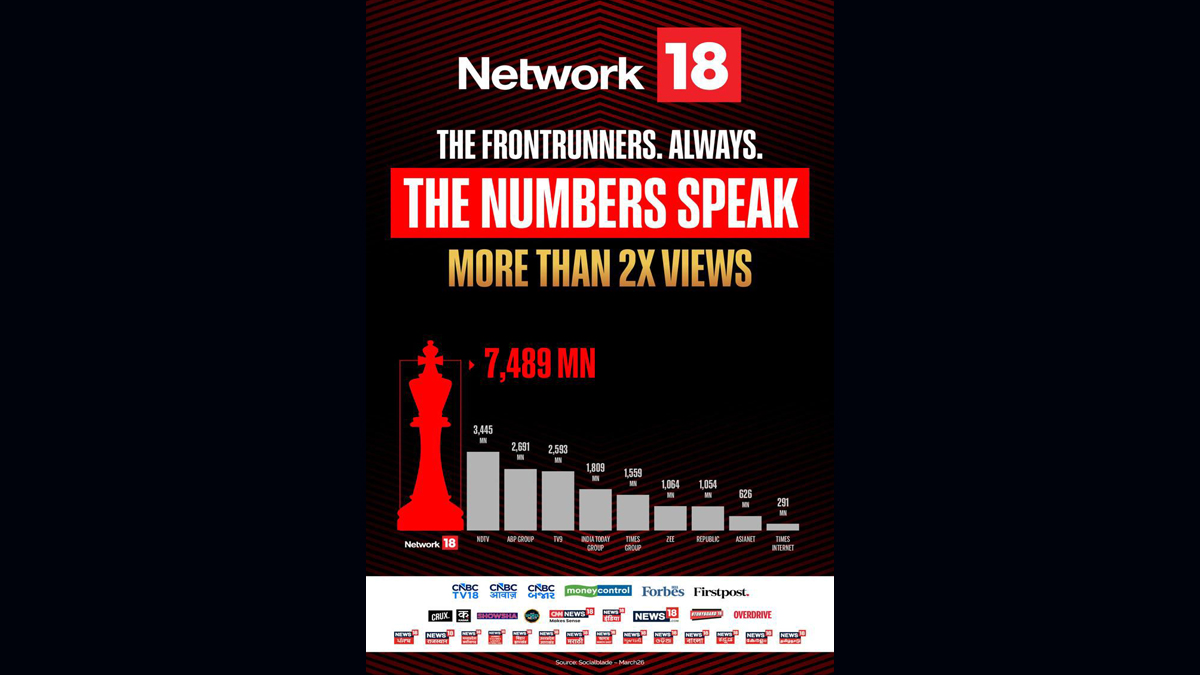
MUMBAI: When the world hit refresh on breaking news, Network18’s channels were already streaming ahead. As geopolitical tensions and war-driven headlines fuelled a surge in global news consumption, the network’s digital playbook delivered big clocking record Youtube viewership across English, Hindi and business news categories in March 2026.
At the forefront was CNN-News18, which emerged as the clear leader in the English news segment with 130 million live and video-on-demand views. The channel edged past competitors such as Times of India (126.5 million), Times Now (101.1 million), India Today (88.2 million) and NDTV (77.5 million), according to Databeings data for March.
In the Hindi news arena, News18 India delivered a commanding performance, racking up a staggering 3,297 million views on YouTube. The channel comfortably outpaced NDTV India, which recorded 3,119 million views, underlining its deep reach and consistent engagement with mass audiences, as per Playboard data.
The network’s dominance wasn’t confined to general news. In the Hindi business segment, CNBC Awaaz topped the charts with 92 million views, narrowly ahead of Zee Business (90 million) and well ahead of ET Now Swadesh (57 million). Meanwhile, its English counterpart CNBC-TV18 posted a strong 58 million views, reinforcing the network’s cross-category strength.
The spike in viewership reflects a broader shift in audience behaviour, with viewers increasingly turning to digital platforms particularly Youtube for real-time updates and in-depth coverage during high-intensity news cycles. For Network18, the numbers signal more than just scale; they underline the effectiveness of a multi-platform strategy that blends speed, credibility and continuous coverage.
In a month where the news never paused, it seems viewers chose to stay tuned where the stream never stopped.






