News Broadcasting
BES Expo 2006 concludes; good response from participants

New Delhi February 12, 2006: BES Expo 2006, the 12th International Conference & Exhibition on Terrestrial and Satellite Broadcasting, organized by the Broadcast Engineering Society (India) at Hotel Taj Palace, New Delhi, concluded today. The Expo witnessed overwhelming response from delegates, exhibitors, and visitors. This year’s edition of BES Expo registered over 6,000 visitors, which represents a 20 percent growth as compared to the last year. More than 1,000 delegates from India and abroad participated in the exhibition and conference, representing a growth of 25 percent as compared to the last year. A total of 65 companies representing 300 broadcast equipment manufacturers and solution providers from 25 countries across the globe exhibited at BES Expo this year.
The Conference Proceedings for the concluding day were spread over three sessions. The highlight of the first session was Future Satellite Technologies. Mr. A Bhaskarnarayana, Director SCP, ISRO, chaired the session. The speakers included Mr. D Venugopal of ASTS; Mr. Sanjay Jasola of IGNOU; Dr. PC Jain of STMicroelectronics; and Mr. ND Acharya of Infinium.
Elaborating on the techniques for overcoming blockage and multi-path effects for satellite communications and broadcasting in mobile environment, Mr. D Venugopal said, “Recently, there has been a lot of interest in providing satellite broadcast services to cars fitted with omni directional antennae.
As these services are one-way services without return acknowledgement, special techniques need to be used to overcome multi-path fading and short signal blockage due to foliage and buildings.’’

The focus of the second session was Digital Radio: Present & Future. The merits of various digital radio broadcast standards vis-?-vis their counterparts have been dwelled upon in this session, presided over by Mr.
Philip Laven, Director (TD), EBU, Geneva. The speakers in this session included Mr. Nick Banks of Radioscape, UK; Mr. Roger Johansson of Factum, Sweden; Mr. Jeff Astle of World DAB, UK; and Mr. Lindsay Cornell of BBC Research, UK. Commenting on the critical factors for planning digital radio rollout by broadcasters, Mr. Jeff Astle said, “The main consumer benefit of DAB is much more choice, as also better sound quality, reception improvements, and ease of use of digital receivers.”
The last session of Conference Proceedings for BES Expo 2006 broached on Content Protection and Broadcast Rights. It was chaired by Mr. KS Sarma, CEO, Prasar Bharati. The major concerns before the broadcast industry remains maintaining integrity of the broadcast content once it is broadcast.
The speakers including Mr. Andy Nobbs of Teletrax, UK; Mr. Philip Laven of EBU, Geneva; Mr. Paul Cheesbrough of BBC, UK; and Mr. R Vardarajan of Silicon Image, USA; provided an insight into the use of Digital Rights Management (DRM) systems to prevent users from copying or redistributing protected content.
India has seen phenomenal growth of news channels and FM radio channels, and there still remains potential for further growth. Display of technologies encompassing news automation, satellite broadcasting, and radio broadcasting will help the Indian broadcasters in adopting one that suits them the most. For the first time ever in India, BES Expo 2006 provided a platform for Live Demos on Mobile Broadcasting and Digital Multimedia Broadcasting. The ball has been set rolling for the next year’s edition – BES Expo 2007, which will highlight the theme “Multifaceted Broadcasting”.
Issued for favor of publications, broadcast and telecast.
DK Gupta
Hon. Secretary,
Broadcast Engineering Society

News Broadcasting
WITT Summit 2026 concludes in New Delhi
Babar Azam’s comical diving attempt goes viral as league introduces anti-dew measures.
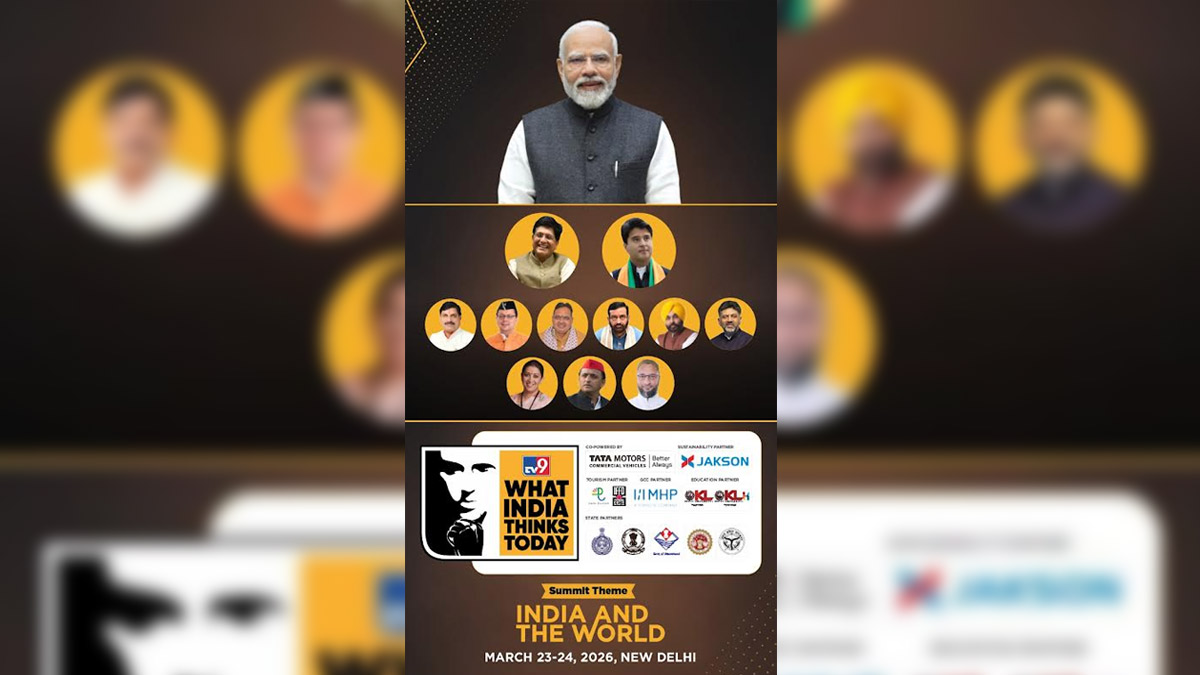
MUMBAI: The WITT Summit just wrapped up with enough big ideas to fill a policy playbook because when India’s leaders, thinkers and icons gather under one roof, even the conversations hit sixes. The eighth edition of TV9 Network’s flagship What India Thinks Today (WITT) Summit 2026 concluded on Saturday after two days of dynamic discussions at its New Delhi venue. India’s largest multi-domain public policy and culture summit brought together political leaders, policymakers, sports icons, artists and technology innovators to examine the forces shaping contemporary India and its global standing.
Prime minister Narendra Modi delivered the keynote address on the theme “India and the World” for the third consecutive year. In a wide-ranging speech, he addressed the ongoing conflict in West Asia, calling for restraint and compassion while highlighting India’s continued development trajectory despite global turmoil.
The summit featured candid conversations with state leaders. Telangana Chief Minister A. Revanth Reddy articulated a people-first governance model and contrasted it with other development approaches. Madhya Pradesh Chief Minister Mohan Yadav declared that Left-wing extremism had been effectively eliminated in his state and highlighted preparations for the upcoming Kumbh Mela. Punjab Chief Minister Bhagwant Mann defended his government’s record, citing the closure of 19 toll plazas and creation of the Sadak Suraksha Force. Karnataka Deputy Chief Minister D.K. Shivakumar expressed confidence in Congress prospects in Assam and addressed recent allegations against him.
On geopolitics and national security, Union Minister Jyotiraditya Scindia outlined India’s ambition to become a builder of trusted digital infrastructure for the world, citing the rapid 5G rollout and village-level 4G connectivity.
Cricket received significant attention. Former India captain Sourav Ganguly praised player freedom and trust as hallmarks of great leadership and named MS Dhoni as the greatest captain due to his World Cup successes. India women’s team bowling coach Aavishkar Salvi credited the BCCI and Women’s Premier League for building a pipeline of world-class talent behind the team’s recent ODI World Cup triumph.
The summit also hosted the inaugural AI² Awards 2026, celebrating the convergence of human creativity and machine intelligence in storytelling and content creation. Poet and kathavachak Kumar Vishwas delivered a nuanced take on India’s concept of Dharma and criticised the recent arrest of an 80-year-old Shankaracharya. Veteran lyricist Sameer Anjaan and storyteller Neelesh Misra reflected on changing music trends and artistic responsibility in the wake of a recent controversy involving Nora Fatehi.
In a country where conversations often run as deep as the Ganges, the WITT Summit proved once again that when leaders, thinkers and storytellers come together, the real winner is public discourse lively, layered and refreshingly unafraid to tackle the big questions shaping India’s tomorrow.








