News Broadcasting
BBC World Service to showcase series on World War I


MUMBAI: This autumn the BBC World Service will broadcast specially commissioned programmes exploring how the First World War changed the subcontinent. India made an unparalleled contribution to the British War effort. There will be two one-hour radio documentaries, and a debate open to the public focussed on India and Imperialism recorded in Delhi. The season will explore the experiences and stories of those involved in WW1, many of which have remained largely untold in India today.
Steve Titherington, Senior Commissioning Editor, BBC World Service says: “The war that changed the world touched every country. Over a million men from the dub continent fought with the British and others. Hundreds of thousands were killed or wounded or captured. We will examine their stories, and just as importantly debate what the effect was on the struggle for independence and the life of the region still. We have debated the war in St Petersburg, Istanbul, Germany and London. Delhi is next and it’s vital to our understanding of the legacy of this global conflict.”

In a special debate from Delhi, the BBC’s Razia Iqbal will be joined by historians Prof Mridula Muckherjee and Dr Srinath Raghavan and a public audience to explore the impact of the First World War on Imperialism. Shashi Tharoor will also discuss Imperialism and independence in a specially commissioned essay performed at the event at the India International Centre, in partnership with the British Council.
The War That Changed The World: India and Imperialism
Saturday 8th November 1900-2000 GMT
To mark the centenary of World War One, the BBC World Service and the British Council are hosting a series of ten debates around the world to explore the war’s lasting global legacy. Having already visited Bosnia, Germany, UK, Turkey and Russia the sixth edition of The War That Changed The World comes from India.
The Indian army was key to the British military effort in the First World War. More than one million men served, many departed from Bombay in October and arrived on the Western Front within weeks. There were far more Indian soldiers defending the Empire than there were British men in the field. Some were moved by a genuine desire to come the Britain’s aid at its time of need and many believed that by fighting they would help the cause of India’s Home Rule. Home Rule was not granted, discontent grew and the war and its aftermath had a huge effect on Indian nationalism and the fate of the Empire.
In this special debate from Delhi, the BBC’s Razia Iqbal will be joined by historians Prof Mridula Muckherjee and Dr Srinath Raghavan and a public audience to explore the impact of the First World War on Imperialism.
Shashi Tharoor will also discuss Imperialism and independence in a specially commissioned essay performed at the event at the India International Centre, in partnership with the British Council.
The Documentary: India’s Forgotten War
Wednesday 29th October, 2000-2100 GMT
As part of the WW1 centenary programming on the BBC World Service Anita Rani travels to India to discover how the war affected the country and its people. In the capital Delhi stands India Gate, the largest memorial to the war for which 1.5 million Indian men were recruited, but Anita discovers that The First World War is something of a forgotten memory there today, mostly seen as part of its colonial history. In this programme she sets out to uncover some of the forgotten stories.
The Documentary: Ghostly Voices of World War One
Saturday 8th November 2000-2100 GMT
Hidden away in the backrooms at Humbolt University and the Ethnological Museum in Germany are some of the most remarkable sound recordings ever made. They date back to the First World War, and provide a unique archive capturing the voices of some of the ordinary men who fought in what was known as ‘the war to end all wars’. They were recorded by German academics who realised they didn’t have to go abroad to research some of the world’s many different languages. Instead, they were able to focus on captured soldiers from the furthest reaches of the British Empire who were being held at prisoner of war camps all over Germany. Among them were a group of Hindus, Sikhs and Indian soldiers imprisoned at camps on the outskirts of Berlin. They performed poems, songs and stories which were recorded using Thomas Eddison’s latest invention. How these men lived out the rest of their lives has, up until now, been cloaked in obscurity. On a quest to discover what happened to them and how they died, and armed with the recordings, Priyath Liyanage travels from Germany across the world to some of the villages in Northern India where these men lived.


News Broadcasting
CNN-News18 to host Fury in the Gulf conclave on West Asia crisis
Three-hour summit to unpack geopolitical fallout and impact on India
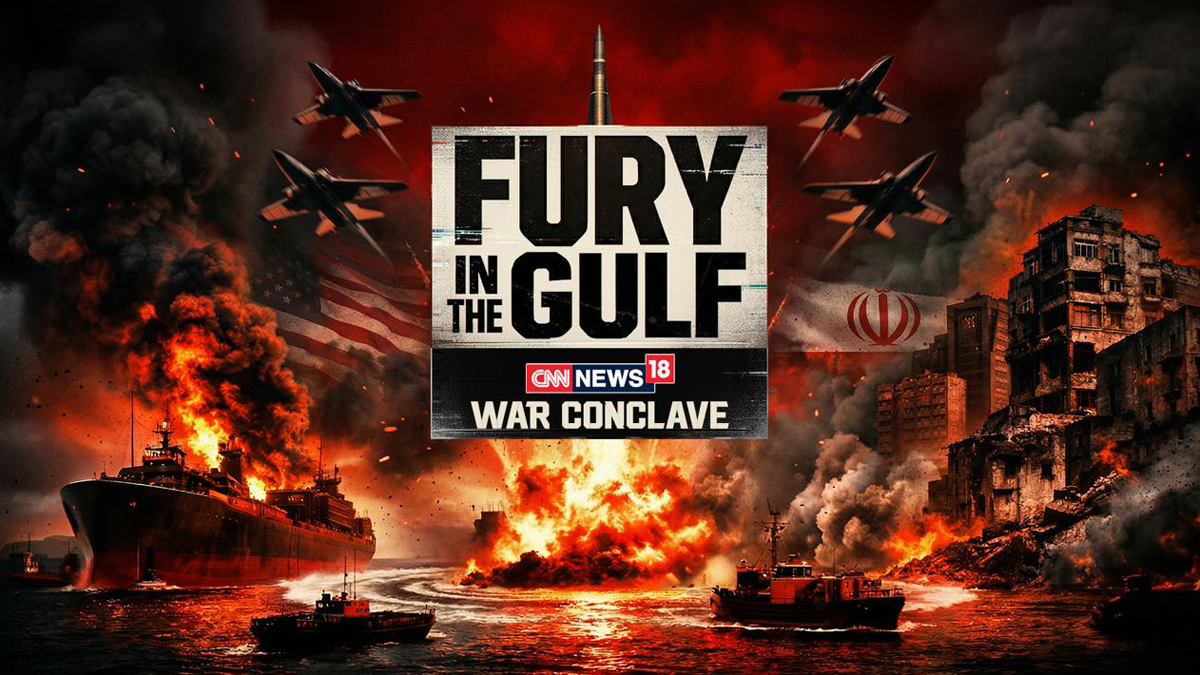
MUMBAI: CNN-News18 is set to host a special three-hour broadcast, Fury in the Gulf – War Conclave, on April 7, aiming to decode the escalating West Asia crisis and its far-reaching implications for India.
Scheduled from 4:00 PM to 7:00 PM, the conclave comes at a time when tensions between Iran and the United States are reshaping global geopolitics and triggering economic uncertainty. With India’s deep energy ties, trade links and large diaspora in the Gulf, the developments carry significant domestic relevance.
Built around the theme ‘Conflict, Consequences, and The Future,’ the programme will feature six curated sessions combining one-on-one interviews and panel discussions. The focus is to cut through the clutter and offer viewers a clearer understanding of the fast-evolving situation.
Key sessions include ‘Diplomacy in Times of War’ featuring Shashi Tharoor, and ‘World After the Iran Conflict’ with voices such as Ram Madhav, Reuven Azar, representatives from the European Union and the Iranian Deputy Envoy. Another session titled ‘Another Dunkirk?’ will bring together K. J. S. Dhillon and Jitin Prasada among others.
CNN-News18 editorial affairs director Rahul Shivshankar said, “In times of war, clarity becomes the most powerful tool. Fury in the Gulf – War Conclave brings together credible voices to address the questions and confusion that arise amid an overwhelming influx of information.”
He added that the initiative is aimed at delivering “facts, perspective, and insight” at a time when misinformation can easily cloud public understanding.
Echoing the sentiment, CNN-News18 CEO– English and business news Smriti Mehra said the conflict marks a defining global moment, with consequences that extend well beyond the region. She noted that the conclave seeks to present the crisis with “depth, nuance and responsibility” so audiences can better grasp its real-world impact.
As geopolitical tensions continue to dominate headlines, the conclave positions itself as an attempt to bring order to the noise, offering viewers a structured, insight-led look at a complex and rapidly shifting global situation.






