News Broadcasting
BBC World News commissions major new Cybercrime series


MUMBAI: BBC World News has commissioned a major new six- part series, presented by technologist Ben Hammersley, exploring a global threat that could impact us all. Cybercrimes with Ben Hammersley, produced in partnership with The Open University by Tern TV, delves into the dark world of hacking, now home to a new generation of highly organised cybercriminals running complex commercial enterprises, involving leaders, planners, engineers, infantry and hired money mules.
Journeying into a murky online world, Ben investigates the scam emails that fill up your inbox, why our credit card details are under threat, how drugs and guns can be bought anonymously on the darknet and discovers that governments have the ability to spy on their citizens or launch cyber war fare at the push of a button.

Ben Hammersley said: “Cybercrime affects each and every one of us. Every aspect of our lives is vulnerable to the criminal abuse of our networked world – not just by hackers and criminals, but by governments and foreign enemies. In this series, we tell the jaw-dropping stories of some of the biggest cybercrimes of our time and what’s being done to try and thwart the criminals.”
Cybercrimes with Ben Hammersley is majority funded by the Open University, series produced and directed by Will Aspinall and executive produced by Harry Bell for Tern TV. It was commissioned for The Open University by Caroline Ogilvie.
Series information:
Episode 1
DARKNETS
1 November 7.30am and 9.00pm
2 November 3.00pm
The Silk Road was a billion dollar drugs marketplace on the darknet, run by a mastermind called Dread Pirate Roberts. Then, in October 2013, the site was closed down by the FBI and its alleged founder arrested in San Francisco. Ben Hammersley explores whether the young man who now awaits trial -Ross Ulbricht- really is Dread Pirate Roberts, and finds out what impact alter egos, darknets and cryptocurrencies like Bitcoin have on the modern world.
Episode 2
HEISTS
8 November 7.00am and 9.00pm
9 November 3.00pm
2013 was a very bad year for big business. In February $45m was stolen from ATMs around the world after cyber criminals hacked credit cards and gave them unlimited withdrawal limits. Then, in November, 40 million credit card numbers were removed from the point-of-sale terminals of US retailer Target. Ben Hammersley travels to New York and Washington DC to look at how crime has evolved, forensically examining the many ranks and roles of a modern criminal organisation. He also asks whether the vast fruits of cybercrime are responsible for the fall in violent crime in the West.
Episode 3
SCAMS
15 November 7.00am and 9.00pm
16 November 3.00pm
It has been estimated that almost 70% of all email traffic is spam. And, in the online world, it is Nigeria that is often seen as the biggest culprit. Ben Hammersley travels to Lagos to meet online scammers and the police tasked with tracking them down. He also tells the incredible story of how, in the mid-90s, Nigerian scammers stole nearly a quarter of a billion dollars from Brazilian bank Noroeste. But in a diverse country of 168 million and the largest economy in Africa, Ben asks if labelling Nigeria as the worst offender is just another lazy stereotype.
Episode 4
PIRACY
17 November 7.00am and 9.00pm
18 November 3.00pm
The Pirate Bay is one of the largest file sharing sites in the world, founded in Sweden in 2003 by Gottfrid Svartholm, Fredrik Neij and Peter Sunde. Faced with extreme pressure from the US-led entertainment industry, the founders were tried for copyright infringement in 2009. Ben Hammersley visits Stockholm to tell the story of the internet trial of the century and looks at how it affected our relationship with Big Media, copyright, and the notion of ownership online.
Episode 5
CYBER WAR
29 November 7.00am and 9.00pm
30 November 3.00pm
It has been described as the Hiroshima of cyber war, the moment where the fevered imaginations of science fiction finally came true. A computer worm called Stuxnet disrupted what the west claimed to be Iran’s top-secret plans to build a nuclear bomb. Ben Hammersley travels to LA, Berlin and London to find out what impact Stuxnet has had on the future of warfare.
Episode 6
SURVEILLANCE
6 December 7.00am and 9.00pm
7 December 3.00pm
In 2013 Edward Snowden revealed to the world the systematic surveillance of global internet traffic by the US and the UK. What he revealed was simply spectacular. Ben Hammersley travels to Washington DC, New York, London and Berlin to examine the ramifications of Snowden’s NSA files. Do our governments need these powers to protect us from terrorism, paedophilia and cyber criminality? Or should we fight for the right to privacy online?


News Broadcasting
CNN-News18 to host Fury in the Gulf conclave on West Asia crisis
Three-hour summit to unpack geopolitical fallout and impact on India
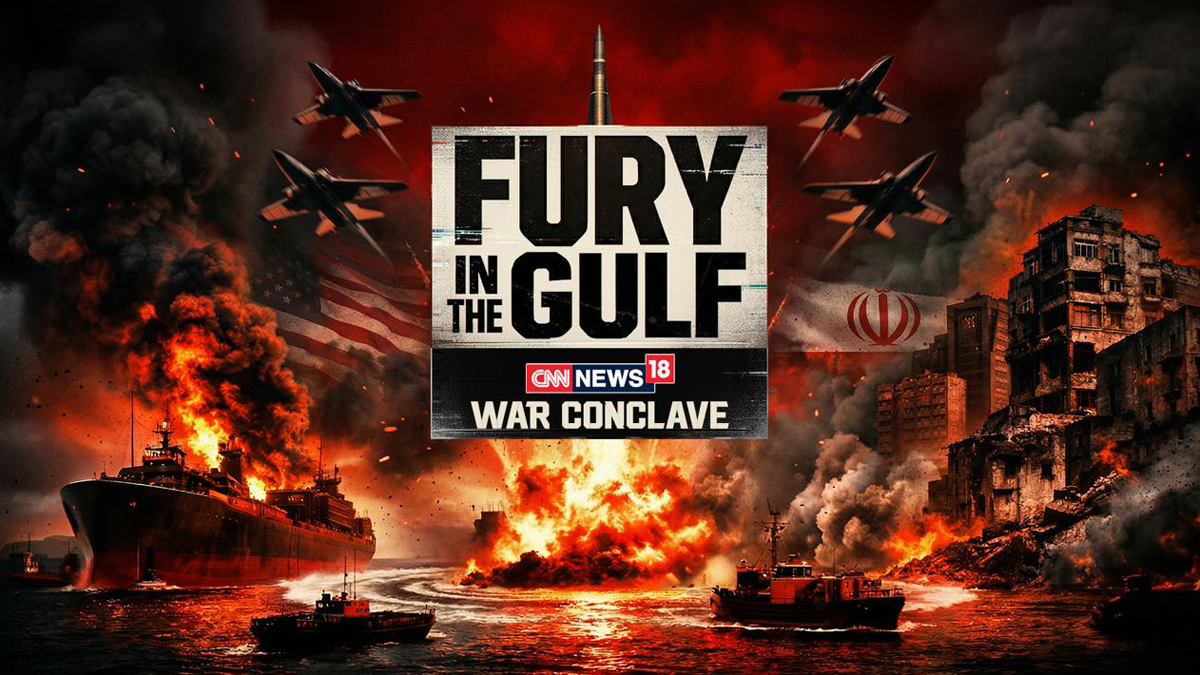
MUMBAI: CNN-News18 is set to host a special three-hour broadcast, Fury in the Gulf – War Conclave, on April 7, aiming to decode the escalating West Asia crisis and its far-reaching implications for India.
Scheduled from 4:00 PM to 7:00 PM, the conclave comes at a time when tensions between Iran and the United States are reshaping global geopolitics and triggering economic uncertainty. With India’s deep energy ties, trade links and large diaspora in the Gulf, the developments carry significant domestic relevance.
Built around the theme ‘Conflict, Consequences, and The Future,’ the programme will feature six curated sessions combining one-on-one interviews and panel discussions. The focus is to cut through the clutter and offer viewers a clearer understanding of the fast-evolving situation.
Key sessions include ‘Diplomacy in Times of War’ featuring Shashi Tharoor, and ‘World After the Iran Conflict’ with voices such as Ram Madhav, Reuven Azar, representatives from the European Union and the Iranian Deputy Envoy. Another session titled ‘Another Dunkirk?’ will bring together K. J. S. Dhillon and Jitin Prasada among others.
CNN-News18 editorial affairs director Rahul Shivshankar said, “In times of war, clarity becomes the most powerful tool. Fury in the Gulf – War Conclave brings together credible voices to address the questions and confusion that arise amid an overwhelming influx of information.”
He added that the initiative is aimed at delivering “facts, perspective, and insight” at a time when misinformation can easily cloud public understanding.
Echoing the sentiment, CNN-News18 CEO– English and business news Smriti Mehra said the conflict marks a defining global moment, with consequences that extend well beyond the region. She noted that the conclave seeks to present the crisis with “depth, nuance and responsibility” so audiences can better grasp its real-world impact.
As geopolitical tensions continue to dominate headlines, the conclave positions itself as an attempt to bring order to the noise, offering viewers a structured, insight-led look at a complex and rapidly shifting global situation.






