News Broadcasting
BBC Reith Lectures with renowned surgeon and writer Atul Gawande


MUMBAI: In his lecture series, ‘The Future of Medicine’, Atul Gawande will undertake a global examination of the nature of modern medicine: Both it’s progress and it’s failures. Medicine is defined he says by “the messy intersection of science and human fallibility.” The lectures will take place in India, the USA and UK.
Known for both his clear analysis and vivid storytelling, he will explore the growing importance of systems in medicine and argue that the future role of the medical profession in our lives should be bigger than simply assuring health and survival.

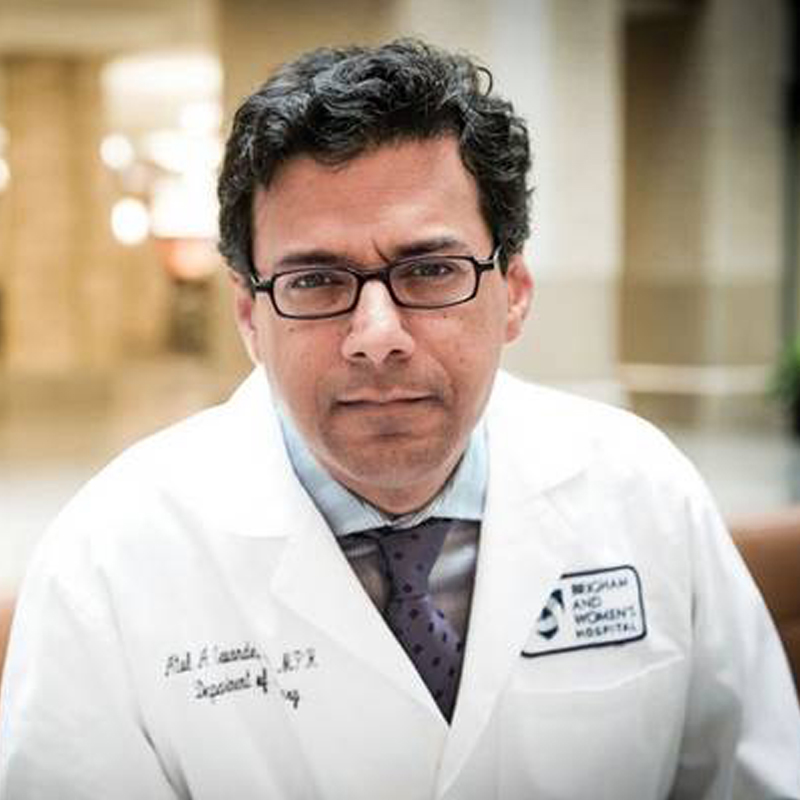
Atul Gawande, MD, MPH is a practicing surgeon at Brigham and Women’s Hospital in Boston and Professor at both the Harvard School of Public Health and Harvard Medical School. He’s become best known for his writing on medicine, including three widely acclaimed books, and his research on medical error and performance. Amongst his other roles, he is Director of Ariadne Labs, a joint center for health systems innovation, and Chairman of Lifebox, a global charity reducing unsafe surgery.
The first lecture, Why do Doctors Fail?, will explore the nature of imperfection in medicine. In particular, Gawande will examine how much of failure in medicine remains due to ignorance (lack of knowledge) and how much is due to ineptitude (failure to use existing knowledge) and what that means for where medical progress will come from in the future.
In the second lecture, The Century of the System, Gawande will focus on the impact that the development of systems has had – and should have in the future – on medicine and overcoming failures of ineptitude. He will dissect systems of all kinds, from simple checklists to complex mechanisms of many parts. And he will argue for how they can be better designed to transform care from the richest parts of the world to the poorest.
The third lecture, The Problem of Hubris, will examine the great unfixable problems in life and healthcare – aging and death. Gawande will argue that the reluctance of society and medical institutions to recognise the limits of what professionals can do is producing widespread suffering. But research is revealing how this can change.
The fourth and final lecture, The Idea of Wellbeing, will argue that medicine must shift from a focus on health and survival to a focus on wellbeing – on protecting, insofar as possible, people’s abilities to pursue their highest priorities in life. And, as he will suggest from the story of his father’s life and death from cancer, those priorities are nearly always more complex than simply to live longer.
Atul Gawande said: “I am flattered and grateful to have the chance to give this year’s Reith Lectures. After almost two decades of writing and research on medicine, I hope to use to the Lectures to bring together my thinking on how medicine is changing and must change globally.”
Atul Gawande will deliver his Reith Lectures in front of live audiences this autumn. The first lecture will be recorded in Boston, followed by lectures at the Wellcome Collection in London, the Royal Society of Edinburgh and in Delhi.
The lectures will be broadcast on both BBC Radio 4 and the BBC World Service from November.


News Broadcasting
Senior media executive Madhu Soman exits Zee Media
Former Reuters and Bloomberg leader says he leaves with “no regrets” after brief stint at WION and Zee Business

NOIDA: Madhu Soman, a veteran of global newsrooms and media sales floors, has stepped away from Zee Media Corporation after a short stint steering business strategy for WION and Zee Business.
In a reflective LinkedIn note marking his departure, Soman said his time within the network’s corridors was always likely to be brief. “Some chapters close faster than expected,” he wrote, signalling the end of a nearly two-year spell in which he oversaw both editorial partnerships and commercial strategy.
Soman joined Zee Media in 2022 after more than a decade abroad with Reuters and Bloomberg, returning to India to take on the role of chief business officer for WION and Zee Business. His mandate was ambitious: bridge the newsroom and the revenue desk while expanding digital and broadcast reach.
During the stint, Zee Business reached break-even for the first time since its launch in 2005, while WION refreshed programming and strengthened its digital footprint across platforms such as YouTube and Facebook.
But Soman suggested the cultural fit proved uneasy. Describing himself as a “cultural misfit”, he hinted at deeper tensions between editorial instincts shaped in global newsrooms and the realities of India’s television news ecosystem.
Before joining Zee, Soman spent more than seven years at Bloomberg in Hong Kong as head of broadcast sales for Asia-Pacific, expanding the company’s news syndication business across several markets. Earlier, he held senior editorial roles at Reuters, overseeing online strategy in India and managing Reuters Video Services from London.
His career began in television and wire reporting, including a stint with ANI during the 1999 Kargil conflict, before moving into digital publishing as India’s internet media landscape took shape.
Now, after nearly three decades in broadcast and digital media, Soman is leaving Delhi NCR and returning to his hometown, Trivandrum.
Exhausted, he admits. But unbowed. And with one quiet line that sums up the journey: he didn’t sell his soul — because some things, after all, are not for sale.