News Broadcasting
BBC News and Current Affairs to explore the stories of Syria’s War with two days of special coverage

MUMBAI: After more than three years of war, the battles inside Syria continue to rage and the people of Syria continue to suffer. The special coverage, called Syria’s War, will see journalists who have been at the forefront of the BBC’s reporting of the conflict presenting and filing stories from Syria, Turkey, Lebanon and Jordan. Across TV, radio, online and social media – in the UK and internationally on BBC World News and the BBC World Service – coverage will feature eye witness reporting and analysis examining the impact of Syria’s war and exploring the stories of those caught in the midst of it all.
Jonathan Munro, the BBC’s Head of Newsgathering, says: “Almost four years after what began as peaceful protests, millions have been forced to flee their homes, large swathes of the country lie in ruin and the consequences of the conflict are being felt well beyond Syria’s borders. The BBC has been there on the ground as this crisis has unfolded, and is committed to continuing to report events and ensure the stories of those affected are heard.”

On the morning of Wednesday 12 November, Mishal Husain will start the day on BBC Radio 4’s Today programme, and end the day co-presenting the BBC News at Ten bulletin, from Lebanon’s Bekaa Valley, near the Syrian border.
Inside Syria, Middle East Editor Jeremy Bowen will be reporting from Damascus, and Chief International Correspondent Lyse Doucet will be in Aleppo across the week. Examining stories from neighbouring countries, International Correspondent Ian Pannell will report from Turkey, Special Correspondent Fergal Keane from Lebanon, and Middle East Correspondent Yolande Knell in Jordan.
Some of the other elements of Syria’s War across BBC News on 12-13 November, include:
BBC Breakfast
BBC Breakfast’s coverage will focus on the refugee crisis in Jordan, caused by the violence in Syria. Middle East Correspondent Yolande Knell will report live from a refugee camp that has recently opened. She will revisit families Breakfast met earlier in the year, and will also visit a town that has seen its population double because of an influx of refugees.
BBC News Channel and BBC World News
The BBC’s rolling UK and global news channels will be showcasing the best of the BBC’s reporting across the two days. Mishal Husain and Lyse Doucet will present live from the region, and there will be extended special reports and close-up coverage of the plight of Syria’s refugees on the BBC News Channel for UK audiences, as well as across BBC World News strand programmes – including Global, Impact and HARDtalk – for viewers around the world.
Today, BBC Radio 4
As well as presenting Today from the Bekaa Valley on Wednesday, Husain will also be reporting on the impact of the Syrian crisis on Lebanon from Beirut for the programme.
PM, BBC Radio 4
In a radio essay specially commissioned by PM, BBC International Correspondent Ian Pannell will look back over the years that he has covered the conflict in Syria. Delving into his archive of reports, he picks out some key moments and reflects on how the country has changed.
Across the week, PM will also broadcast audio postcards from ordinary Syrians including an ice-cream seller, and a student in Damascus.
BBC Radio 5live
On Wednesday 12 November, 5 live will feature live reports throughout the day, as well as coverage on the 5live Daily programme from 10am, with Phil Mackie in Beirut and Mark Lowen in Istanbul, Turkey.
5live’s coverage will focus on the stories of Syrian refugees – their physical and mental health and how they’re surviving – along with the impact on the countries to which they’ve fled, in particular Lebanon and Turkey, where there is growing concern and anxiety.
Newsbeat, BBC Radio 1
Greg Dawson and Jonathan Blake will be reporting from Lebanon for Newsbeat. They’ll speak to young Syrians out on a Saturday night in Beirut about what it’s like to live in a party city so close to their home country, and ask if they have hopes of returning to Syria one day.
On 12 November they will present Newsbeat live from a refugee camp in the Bekaa Valley, and get an insight into the living conditions of some of the poorest Syrians who have been displaced.
BBC News online
BBC News online will host an in-depth feature called The Disappeared, exploring the mystery of Syrians taken by the Assad regime or Islamic groups, and are still being looked for by their families. There will also provide an overview of the conflict, exploring key moments from throughout the crisis.
BBC Arabic
BBC Arabic reporters will be examining stories of those living in the midst of the crisis. This will include video postcards of daily life in Damascus by Assaf Abboud, Rami Ruhayyem will report on people affected by trauma from the war and shed light on the mental and psychological impact, and Carine Torbey will look at how some mothers are giving birth via C-sections during ceasefires to avoid going into labour in the midst of fighting.
BBC Arabic will also broadcast a documentary, Queens of Syria, which tells the story of a group of women from all sides of Syria’s conflict forced into exile in Jordan. They will come together to perform their own version of the Trojan Women, a timeless Ancient Greek tragedy on the plight of women in war. The documentary will be shown on Thursday 13th November, and at other times throughout the week.




News Broadcasting
CNN-News18 to host Fury in the Gulf conclave on West Asia crisis
Three-hour summit to unpack geopolitical fallout and impact on India
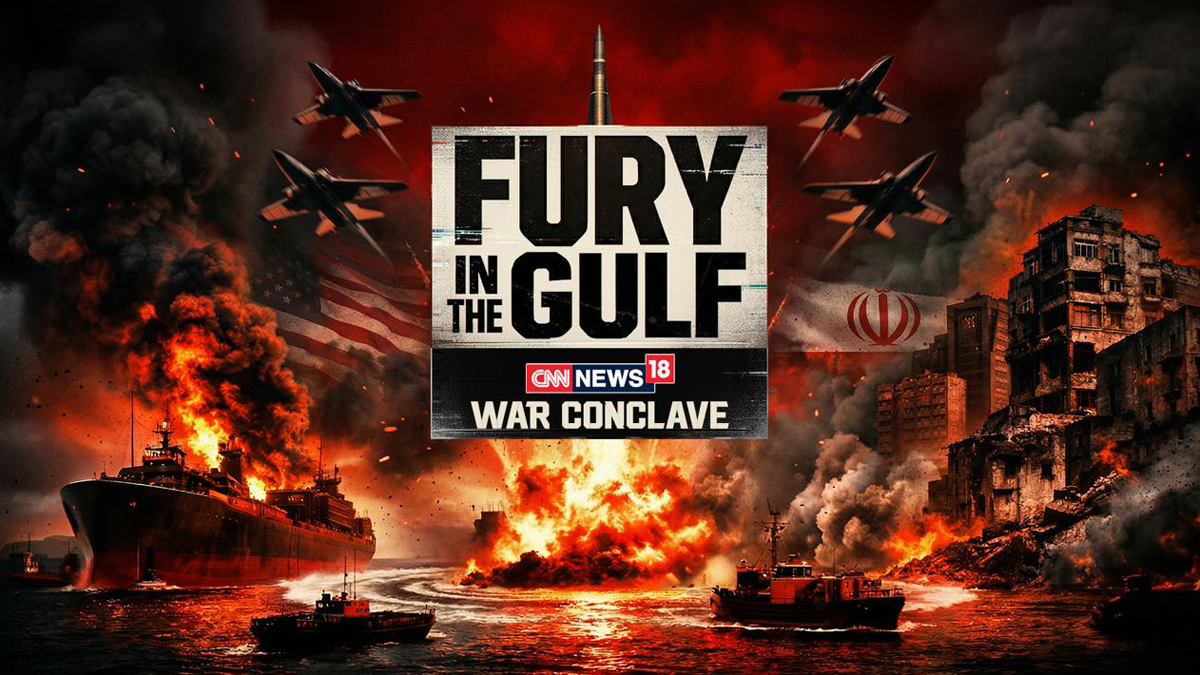
MUMBAI: CNN-News18 is set to host a special three-hour broadcast, Fury in the Gulf – War Conclave, on April 7, aiming to decode the escalating West Asia crisis and its far-reaching implications for India.
Scheduled from 4:00 PM to 7:00 PM, the conclave comes at a time when tensions between Iran and the United States are reshaping global geopolitics and triggering economic uncertainty. With India’s deep energy ties, trade links and large diaspora in the Gulf, the developments carry significant domestic relevance.
Built around the theme ‘Conflict, Consequences, and The Future,’ the programme will feature six curated sessions combining one-on-one interviews and panel discussions. The focus is to cut through the clutter and offer viewers a clearer understanding of the fast-evolving situation.
Key sessions include ‘Diplomacy in Times of War’ featuring Shashi Tharoor, and ‘World After the Iran Conflict’ with voices such as Ram Madhav, Reuven Azar, representatives from the European Union and the Iranian Deputy Envoy. Another session titled ‘Another Dunkirk?’ will bring together K. J. S. Dhillon and Jitin Prasada among others.
CNN-News18 editorial affairs director Rahul Shivshankar said, “In times of war, clarity becomes the most powerful tool. Fury in the Gulf – War Conclave brings together credible voices to address the questions and confusion that arise amid an overwhelming influx of information.”
He added that the initiative is aimed at delivering “facts, perspective, and insight” at a time when misinformation can easily cloud public understanding.
Echoing the sentiment, CNN-News18 CEO– English and business news Smriti Mehra said the conflict marks a defining global moment, with consequences that extend well beyond the region. She noted that the conclave seeks to present the crisis with “depth, nuance and responsibility” so audiences can better grasp its real-world impact.
As geopolitical tensions continue to dominate headlines, the conclave positions itself as an attempt to bring order to the noise, offering viewers a structured, insight-led look at a complex and rapidly shifting global situation.






