News Broadcasting
BBC is best for global breaking news

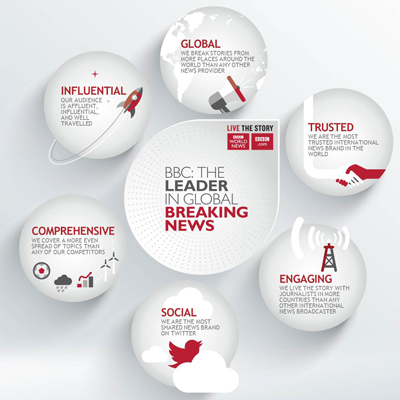
MUMBAI: Two studies have revealed that BBC World News is the leader in global breaking news, with stories from a wider spread of locations and journalists in more countries than other international news broadcasters. The BBC’s leadership in coverage of fast moving international stories is also reflected in independent data which shows that the BBC is by far the most retweeted news source on Twitter.
These findings form the basis of two new marketing campaigns which are running on the channel and bbc.com to highlight the broadcaster’s breaking news leadership and social media credentials.

The original study, conducted in partnership with LiveStation, examined the four main international news providers and showed that BBC World News is ahead on the breadth of its editorial agenda and the extent of its editorial resource.
Peter Horrocks, Chairman, BBC Global News Ltd, said:
“Audiences rightly value the BBC for its accuracy and impartiality and we are consistently rated the world’s most trusted news broadcaster. This data also shows we are just as fast as our competitors and are number one for breaking news from around the world.
“The BBC’s breaking news is authentic news – rather than the non-existent or minor developments in stories which other broadcasters label ‘breaking news’.
“Our competitors boast about how far they go to cover stories. We don’t need to ‘go there’ because the BBC is there already – in a far wider range of locations than other news broadcasters.”
The study reveals that the BBC covers stories from the widest variety of locations, with journalists in almost 100 countries. This is more than any other broadcaster and offers the unique ability to provide local insight into events of global importance. Over the study period, the BBC had local reporters covering breaking news stories from considerably more countries than any of its competitors.
BBC World News also has the richest variety of content, reporting on a more even spread of topics across the world than the other news channels.
Contrary to widespread perceptions, the BBC is as least as fast as other international broadcasters, and often faster. When compared to its competitors, the BBC was first with the story on marginally more occasions than anyone else.
The LiveStation findings have since been validated by a similar study conducted this month in partnership with Kantar Media. Breaking news matters on radio, TV, online and especially on social media. Recent research from NewsWhip shows that the BBC is the world’s most retweeted news brand, with its stories shared a record 2.7 million times in March – almost 50% more than any other publisher. Bbc.com also achieved record figures with 96 million unique users and an all-time high of 1.3 billion page views* over the same month.




News Broadcasting
CNN-News18 to host Fury in the Gulf conclave on West Asia crisis
Three-hour summit to unpack geopolitical fallout and impact on India
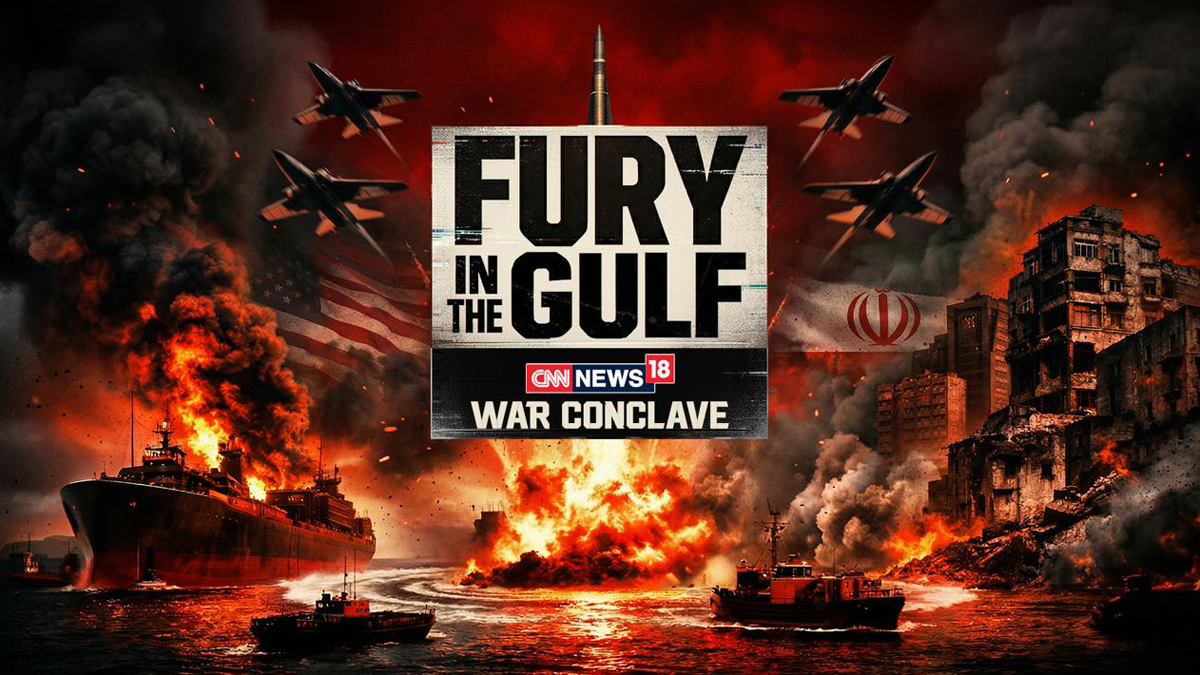
MUMBAI: CNN-News18 is set to host a special three-hour broadcast, Fury in the Gulf – War Conclave, on April 7, aiming to decode the escalating West Asia crisis and its far-reaching implications for India.
Scheduled from 4:00 PM to 7:00 PM, the conclave comes at a time when tensions between Iran and the United States are reshaping global geopolitics and triggering economic uncertainty. With India’s deep energy ties, trade links and large diaspora in the Gulf, the developments carry significant domestic relevance.
Built around the theme ‘Conflict, Consequences, and The Future,’ the programme will feature six curated sessions combining one-on-one interviews and panel discussions. The focus is to cut through the clutter and offer viewers a clearer understanding of the fast-evolving situation.
Key sessions include ‘Diplomacy in Times of War’ featuring Shashi Tharoor, and ‘World After the Iran Conflict’ with voices such as Ram Madhav, Reuven Azar, representatives from the European Union and the Iranian Deputy Envoy. Another session titled ‘Another Dunkirk?’ will bring together K. J. S. Dhillon and Jitin Prasada among others.
CNN-News18 editorial affairs director Rahul Shivshankar said, “In times of war, clarity becomes the most powerful tool. Fury in the Gulf – War Conclave brings together credible voices to address the questions and confusion that arise amid an overwhelming influx of information.”
He added that the initiative is aimed at delivering “facts, perspective, and insight” at a time when misinformation can easily cloud public understanding.
Echoing the sentiment, CNN-News18 CEO– English and business news Smriti Mehra said the conflict marks a defining global moment, with consequences that extend well beyond the region. She noted that the conclave seeks to present the crisis with “depth, nuance and responsibility” so audiences can better grasp its real-world impact.
As geopolitical tensions continue to dominate headlines, the conclave positions itself as an attempt to bring order to the noise, offering viewers a structured, insight-led look at a complex and rapidly shifting global situation.






