Factual
Animal Planet launches new series ‘Super Senses’

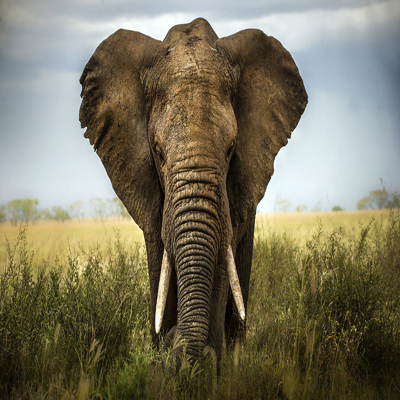
MUMBAI: Have you ever wondered why an elephant has huge ears? Why the snake has a split tongue? Why an alligator uses low-pitch rumbles to make the water around them dance and what it is like to be a bat and to see with sound? Animal Planet’s new series Super Senses will reveal why some animals have strange looking sense organs.
Animals use sight, smell, taste, touch, hearing and other special senses to negotiate their way through a sometimes cruel and unforgiving world. Every feature has a special purpose that has evolved to ensure the survival of the animal. Just like humans, animals rely on their senses to communicate with each other, find their way around, stay safe and most importantly, to find food. The antennae of a butterfly which up close look like feathers, the sensory cells on a crocodile’s skin – these evolutionary traits aren’t just for decoration. In fact, the size, shape and location of these animal’s sense organs is all for a purpose. Super Senses will give a deep insight into the amazing abilities that animals have, with a focus on vision, sound, taste, touch and scent.

Starting 13 April, Super Senses will air Monday to Thursday at 10 pm only on Animal Planet.
The series will reveal how caribou use UV light to avoid wolves, how nocturnal animals can see in pitch-darkness and how sperm whales’ magnetic superpower senses help in distance migrations. The viewers will discover how seeing in slow motion gives dragonfly an advantage to make its kill. It will also showcase how elephant trunks are responsive to touch, that they are capable of receiving pressure differences as low as zero point zero one in depth, and their sensory cells can pick up on the tiniest vibrations.
The episode line-up includes:
Sixth Sense: Sensitivity to the earth’s electromagnetic fields, or to weather pressure, can be used to aid navigation. Some animals can predict earthquakes. Predators put these senses to lethal use: vampire bats detect the infra-red radiation of blood, and rattlesnake sees a ‘heat picture’ of its victim.
Sight: A vulture can spot a carcass from a great distance, the four-eyed fish can see above and below water simultaneously, a fly’s multi-faceted eye sees a very different world than a human eye, while other insects can see into ultra-violet light. And lions have an area on the retina which actually empathizes with their prey.
Sound: Human ears have a limited range and are deaf to a low-register elephant conversation or the high-pitched squeaking of mice. Whales use sonar to communicate across hundreds of miles of sea, while spiders listen out for the wingbeats of prey and the kangaroo rat has hearing so sensitive that it can hear the rattlesnake’s strike—and avoid it. Birds, meanwhile, use sounds to detect changes in the weather and as an aid to navigation.
Scent: Smell is invaluable in hunting, protecting a species, mating, and navigation. Petrels use it to find fish in the open sea, springboks emit an ‘alarm’ odour to warn the herd of a predator, salamanders inject their females with aphrodisiac, and a salmon’s epic journey across the ocean to spawn and die is achieved through its sense of smell.
Sense of Timing: Courting, egg-laying, hibernation—the cycles of the earth, moon, and sun are the rhythms which govern all life. Every animal’s perception of time varies, according to its heart rate. A shrew lives 30 times faster than an elephant, so time appears to pass more slowly. Also shown is the rare 17-year eruption of the US cicada.
Making Sense: Each animal has a unique view of the world derived from a combination of different senses. The mind creates mental maps for navigational skills, which can also be affected by genetic programming. Other super-senses have resulted from the need to hunt or avoid becoming a meal. The mind decides what skills it needs to survive.






Factual
National Geographic launches ‘Postcards from Hong Kong’ with Ridhi Dogra
New series explores the city’s hidden gems and vibrant contrasts, premiering 28 March.

MUMBAI: Ridhi Dogra just sent a postcard from Hong Kong that’s worth framing because when a bustling metropolis reveals its quiet trails and timeless traditions, even the skyline takes a back seat. National Geographic has unveiled Postcards from Hong Kong, a refreshing travel series hosted and curated by actor Ridhi Dogra. Produced by National Geographic Creative Works in collaboration with the Hong Kong Tourism Board, the show offers an intimate, Indian traveller’s perspective on one of Asia’s most iconic cities, moving beyond its glittering harbour and skyscrapers to uncover serene beaches, scenic hiking trails and deep cultural traditions.
Across three visually rich episodes, Ridhi journeys through contrasting sides of Hong Kong. The first episode takes her on a quieter path of self-discovery to places like Sai Kung, Big Wave Bay, Dragon’s Back, Tai O, Ngong Ping, Po Lin Monastery and the Tian Tan Buddha. The second episode dives into the city’s energetic side, from the bustling streets of Causeway Bay to Happy Valley Racecourse, Michelin-starred spots and luxury shopping at Landmark.
Ridhi Dogra said, “Being part of Postcards from Hong Kong with Nat Geo was a deeply enriching experience. What I love about this journey is that it goes beyond the obvious; it’s not just about the skyline or the speed of the city but about the stories that live in its quieter corners.”
A National Geographic India spokesperson added, “With Postcards from Hong Kong, we set out to go beyond the familiar and explore the city through a more intimate, human lens.”
Hong Kong Tourism Board director of South Asia Puneet Kumar noted, “Postcards from Hong Kong is a reflection of meaningful storytelling that brings the city to life in an immersive way. It beautifully captures the diversity and spirit that define Hong Kong.”
Blending travel, culture and personal storytelling, the series celebrates Hong Kong as a city of contrasts where modern life meets tradition and every corner holds a story waiting to be discovered. It premieres on 28 March at 8 pm on the National Geographic Channel and will also stream on JioHotstar.
In a world of hurried travel reels, Postcards from Hong Kong slows things down just enough to let viewers truly see the city not just its lights, but its layers, proving that the best souvenirs are the stories you bring home.






