Education
8 Daily Writing Habits of Successful Writers


All great writers have their secrets; there’s a reason they’ve gone through the whole creative process and achieved publishing success and recognition. Although some prefer to keep their information private and never share the details with their readers or potential competitors, many are ready to offer free pieces of advice. After all, writing isn’t an ending resource, and you don’t get poorer just by sharing excellent ideas with others. This short review has gathered information from many authors. It will cover the common writing habits of people who have already achieved something great. Let’s dive right in; the earlier, the better, isn’t it?
Reading all the time
The first important aspect is not writing itself but reading. In any academic environment, you’ll learn that the best way to know how to do something is to read about it. For writers, the situation isn’t different either. Just as you can’t become a great painter without seeing any paintings, you can’t write and develop good language skills if you don’t listen to other voices. You can read anything you need for your soul and writing goals: scientific papers about new banana-growing techniques or a recent romantic story of your liking. By reading, you keep in mind how other people work with words. Through reading, we gain inspiration, ideas, and a desire to work further. When people read, they understand how to create a high-quality piece of text.

Write every day
That one isn’t surprising either, is it? With every essay, you get better. Although many features are unique to different writers and show their original approach, this habit is pretty regular. All successful writers write every day. For some, there’s a fixed number of words they have to write to complete their plan every day; for others, writing for a certain period of time works better. Very few writers actually write only when struck by inspiration; unfortunately, our minds don’t remain equally fascinated with a story all the time. To become an expert, you have to write. A lot.
Keep your notebook or sketchbook with you
The best ideas don’t come to a writer when he or she sits near their desk, patiently waiting for a muse. Reality is much different: you can get new ideas when you want to buy food in a store or when you sit in the park and watch a bird perch on the branch near you. If you don’t have anything to write your idea in, you will have to hope that you won’t forget about the idea until you come home. Life has shown that people do forget and start from scratch. Take a nice notebook and have it with you all the time. If you like using your phone, don’t take anything aside from it. If you draw and feel that it’s necessary to add visuals, do the same. It works with both fiction and nonfiction types of writing.
Revise old work
Although this writing habit isn’t particularly enjoyable, a professional writer polishes their text. It shouldn’t be too daunting at first, but even if your work is excellent, you won’t get great reviews if you’ve got many grammatical errors. It is important to note, however, that a good writer waits a little and puts aside their written text before editing it. Let it lay somewhere without reading it, relax, and work on any other assignment. After that, dedicate some time to using editing services of your choice from cheap to expensive, and read your paper, checking how it sounds.
Sometimes, students, professional writers, and even educators can find themselves at a loss: creating a perfect piece is difficult. If you’re struggling with creating a flawless piece or can’t revise your old work, you may benefit from becoming a customer of a professional essay writing service, for example, AdvancedWriters. Such companies always focus on delivering top service with great care.
Spend time outside
Perhaps that would be surprising for you to hear but not all writing habits have to be present at your home. It’s impossible to remain sane and do your job if you don’t have any time for the world outside. Unless you write a monologue, you’ll need to observe others. Writers don’t create in an environment that’s sterile and entirely objective. Regardless of what you’re writing about, you’ll need to observe the people, an event, or even a landscape to gain a better understanding of the surrounding reality. If you’re bored, find yourself some company and spend time with others. However, if you’re doing it for your writing purposes, listen more than talk.
Create a distraction-free space
A lot of great ideas come to writers when they are on a run. But there’s a different reality as well: to feel comfortable, you need to have your personalized writing spot. Some writers have entire offices with large wooden tables, while others prefer a small place near their favorite window. Creating a personal space with a nice chair and a clean table will help you work on your paper. Getting into the right mood and having zero distractions would be great for any writer because it’ll help them create a perfect piece for college or a publisher.
Do your research
All types of writing require knowledge of the subject in order to create a persuasive argument. If you don’t research the specific historical period you put your characters in or don’t understand the market conditions while writing about the company, you’ll face serious problems. All excellent essays have a large amount of evidence behind them: a story is more trustworthy and interesting if it has specific details. Before even making your main argument, make it a custom for yourself to research and collect information in a separate file or even physical version.
Fortunately, you can find almost anything online, and there’s always a website for the rarest of topics ever existing.
Participate in writers’ journals and digests
Unsurprisingly, all writers need a community where they can share with each other the ideas and tips on improving their skills. Everyone needs assistance and a friendly hand once in a while, and writers’ journals and digests offer just that. Some even provide regular workshops or meetings to exchange one’s experiences. There are definitely many English-speaking writers’ communities in the USA, Canada, and European countries, but you can search for more in any language you like, and there are high chances of finding such places.
Make your actions regular
Now that you’ve read the list of things you can (and often should) do to become a better writer, it’s much easier for you to understand the expected scope of work. Realistically speaking, a lot of people have their lives with full-time jobs, and it’s impossible to read and write from start to finish of the day. Do what you can even if writing every day would mean creating one paragraph only. Once you start, you’ll feel more confident in your words and feel more and more inspiration for your future self as a writer.




Education
Govt to set up creator labs in 15,000 schools to boost AVGC sector
Budget boost and WAVES initiatives aim to scale India’s creator economy
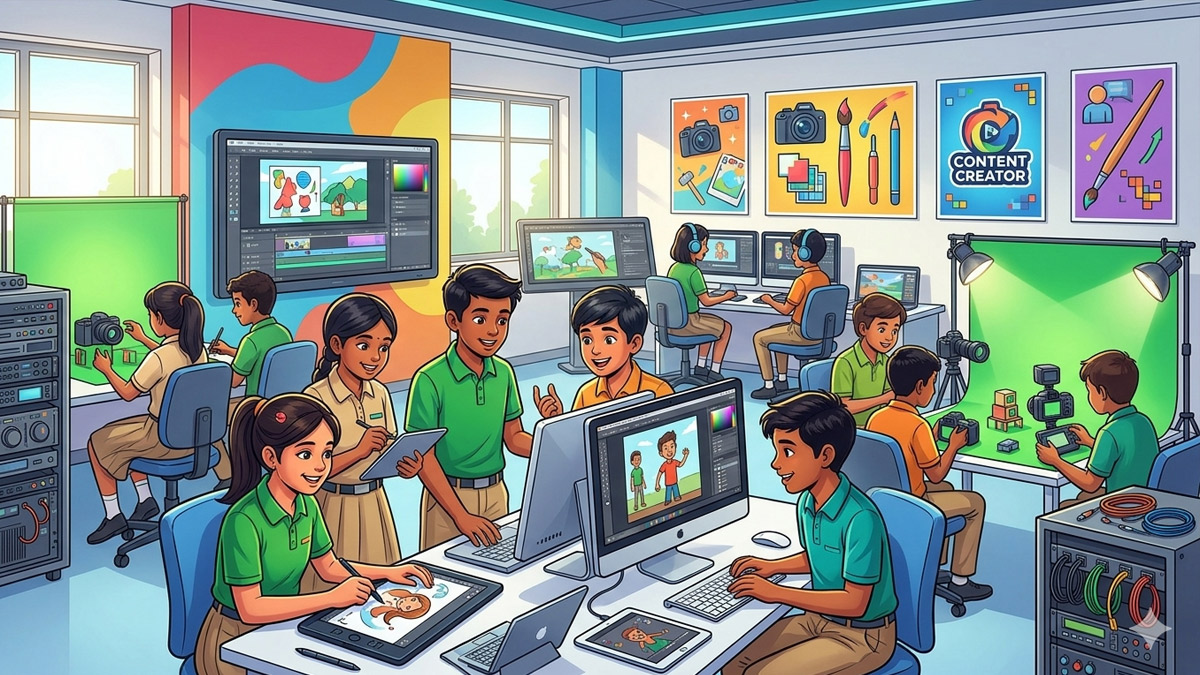
NEW DELHI: The government is doubling down on India’s so-called orange economy, rolling out an ambitious plan to expand content creation infrastructure and skill development across the country.
At the heart of the push is a proposal to set up AVGC Content Creator Labs in 15,000 secondary schools and 500 colleges, backed by an allocation of Rs 250 crore in the Union Budget 2026-27. The move is aimed at nurturing talent early and building a pipeline for the fast-growing animation, visual effects, gaming and comics sector.
The Indian Institute of Creative Technologies has been designated as the nodal agency to steer this rollout. Operating from the campus of National Film Development Corporation in Mumbai, the institute has already launched 18 courses, with over 130 students enrolled and a trainer network beginning to take shape.
The broader ecosystem push is rooted in recommendations by the AVGC Promotion Task Force, which estimates that the sector could require around two million skilled professionals by 2030. The government is now working to align training, infrastructure and policy to meet that demand.
Flagship platforms such as WAVES 2025 are playing a central role in this strategy. The summit brought together creators, investors and global industry leaders, while initiatives like the WaveX Startup Accelerator Programme are helping startups scale through mentorship, funding access and international exposure.
The Create in India Challenge has also emerged as a key talent pipeline. Its first edition saw 33 challenges and participation from over one lakh creators, including many from smaller cities, signalling a democratisation of content creation across India.
Sharing details in Parliament, Ministry of Information and Broadcasting minister of state L Murugan outlined the government’s multi-pronged approach in response to queries raised by Kriti Devi Debbarman and Eatala Rajender.
With policy, funding and platforms now aligning, India’s creator economy is getting a structured push. The message is clear. From classrooms to global screens, the next wave of storytellers is being built at scale.






