News Broadcasting
Zee TV tightens hold on 2nd spot in prime time


MUMBAI: The last time indiantelevision.com analysed the Hindi General Entertainment Channel rankings (CS4+HSM) in February 2006, Zee TV had gone ahead of its nearest competitor Sony in the all day time band. Also, there was a neck and neck fight going on in the coveted prime time band.
The big question was, would Zee TV be able to post a convincing win over Sony in the prime time, while sustaining its all day performance?
Now, after a couple of months it is time to update the score card. Analysing the Tam data (2 April 2006 to 30 April 2006, CS4+ HSM), we have Zee TV proving that its good show in the past months was not a mere flash in the pan. The channel has not only retained the second rank in the all day part with a clear margin, but also reached the number two position (behind Star Plus) in the prime time band.
Zee’s ad sales wing also rose to the occasion. Based on the good performance, Zee Telefilms increased the ad rates for certain Zee TV shows last week. The programmes in question are on the expected lines: Saath Phere (an increase from Rs 75,000 to Rs 80,000 for 10 seconds), Kasamh Se (from Rs 40,000 to Rs 70,000) and Sa Re Ga Ma Pa – Ek Main aur Ek Tu (Rs 40,000 to Rs 70,000.).
“The logic behind the rate hike is fine performance. We wanted our inventories to meet the demand-supply situation. And hence, we have increased the ad rates of some shows, which passed the bench mark. For the upcoming shows Johnny Ala Re and Shabash India, we have zeroed in on decent rates, which we think are right,” says Zee Network EVP Sales Joy Chakraborthy.

The data says it all: In the prime time band, the average channel share Zee TV has posted within the above five week period is 14.6 per cent, against Sony’s 14.2 per cent. In the all day time band, Zee holds a significant 18.6 per cent of channel share, while Sony’s share now stands at a meagre 12.4 per cent.
Apart from the channel driver Saath Phere, the serials which powered the good show include Kasamh Se and debutant Jabb Love Hua. Saath Phere and Kasamh Se are running in the range of 4 TVRs (see the programme rating chart below), according to Tam. Zee TV programming head Ashwini Yardi considers Jabb Love Hua as the latest find. “The soap opened with 0.6 TVRs in the opening week and the following week it recorded a far better 1.7 TVR. The storyline is going to gather much steam in the coming weeks and we are confident of the soap giving a solid performance,” she says.
Zee’s best prime time band performance in this five week duration came from the week beginning 23 April. The week was a significant one for Hindi GEC since three prime time shows launching (Jabb Love Hua on Zee and Aisa Des Hai Mera and Thodi Khushi Thode Gham in Sony) simultaneously on 24 April. Now, as per Tam, the day favoured Zee TV, as the channel improved its share by 20 per cent in the week – from 15.4 per cent to 17.6 per cent. Meanwhile, Sony’s channel share dropped from 17.4 per cent to 12.4 per cent.
Yardi attributes the jump to a good opening by the soap Jabb Love Hua. “Zee TV’s ratings for that particular slot went up by about 400 per cent on 24 April. That played a key role in the surge,” she says.
According to Yardi, Zee TV is not about to rest on its laurels. The channel is planning various strategies to further improve the performance of its prime time soaps. “For example, Saath Phere is going to be in the spotlight in the coming week. The story will take a major turn as we reveal a well-kept secret in the serial. We also have a new show coming in to fill the Kam Ya Zyaada slot,” Yardi offers. The channel dropped the Manoj Bajpai-anchored gameshow two weeks ago. Re-runs of the celebrity show Jeena Isika Naam Hai has replaced Kam Ya Zyaada temporarily.
Channel
Key properties
April-May average ratings combined
Star Plus Kyunki…, Kahaani…, Kasauti… 12.64 TVR
Star One Laughter Challenge, Mano Ya Na.., Kya Hoga.. 2.61 TVR
Zee TV Saath Phere, Kasamh Se 4.44 TVR
Sony Idol final & Idol Muqabla, Fear Factor, CID 3.36 TVR
Sahara One Cricket, Woh Rehne Wali.., Hanuman (film) 2.76 TVR
Sab TV Caravan (film), Idol Takka Tak, Wah Wah, Lo Kal.. 0.52 TVR
(Source: TAM Peoplemeter System TG: CS 4 years+ Hindi Speaking Markets Period: 2/4/06 to 6/5/06)
Hasn’t Zee TV’s big ticket reality show Business Baazigar’s non-performance dampened the mood a bit? “Business Baazigar is totally different from all the other reality shows that happened on Indian television so far. The format is new and people are taking their time to get into the loop. The show is delivering a TVR of 0.6 on an average and we expect this go up in the coming weeks,” Yardi reasons.







News Broadcasting
Kamlesh Singh receives Haldi Ghati Award from MMCF
India Today Group editor honoured for three decades of journalism at Udaipur ceremony.
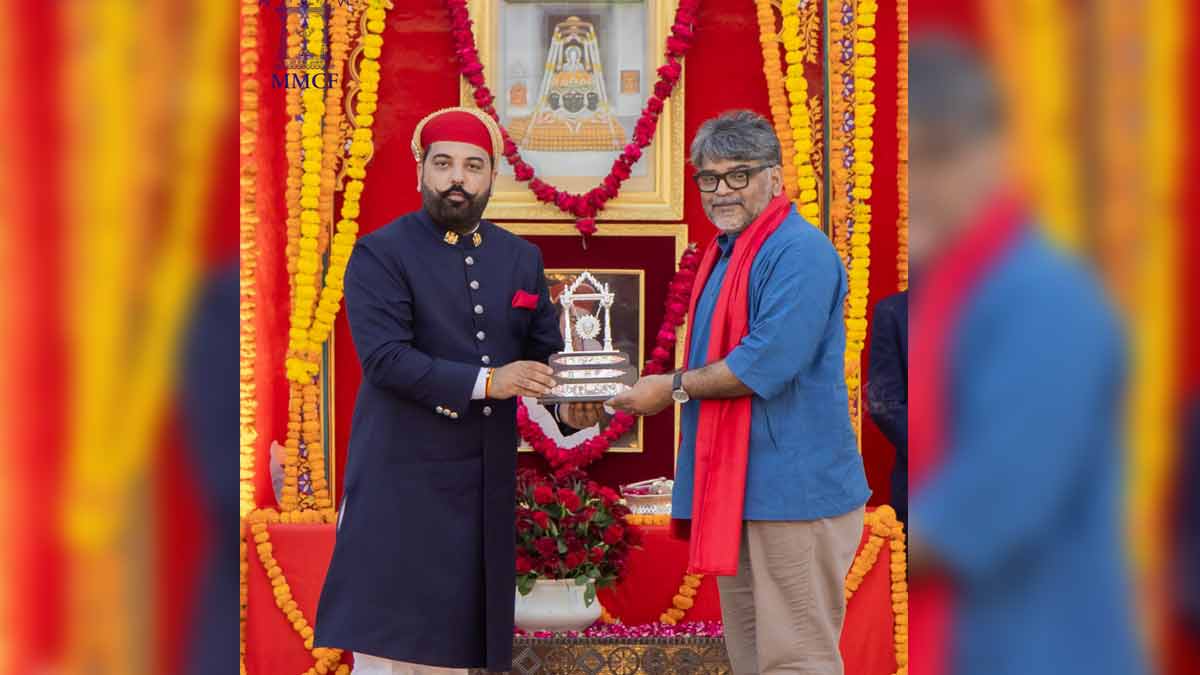
MUMBAI- Kamlesh Singh just turned a lifetime of sharp words into a shiny shield because when journalism wakes up a society, even the Maharana of Mewar wants to pin a medal on it.
The Maharana of Mewar Charitable Foundation (MMCF) conferred its prestigious Haldi Ghati Award on Kamlesh Singh, a senior editor at the India Today Group, during a ceremony in Udaipur on 15 March 2026. The national award, instituted in 1981-82, recognises “work of permanent value that initiates an awakening in society through the medium of journalism.”
Singh, who leads several editorial initiatives including Aaj Tak Radio, the Teen Taal community and The Lallantop, was presented the honour by Lakshyaraj Singh Mewar, Managing Trustee of MMCF. The citation highlighted his three decades of contributions to Indian media, innovations in digital journalism, mentoring young reporters, and his popular podcast persona “Tau” on Teen Taal, which fosters thoughtful public discourse.
The Haldi Ghati Award, named after the historic Battle of Haldighati symbolising valour and resilience, is one of four national awards given annually by MMCF. Past recipients include Tavleen Singh, Piyush Pandey and Raj Chengappa.
Other honourees this year included Padma Vibhushan Pt Hari Prasad Chaurasia, Vedamurti Devvrat Rekhe, Treeman of India Marimuthu Yoganathan, Vir Chakra Capt Rizwan Malik, and US-based researcher Molly Emma Aitken, who received the Colonel James Tod Award for contributions to understanding Mewar’s spirit and values.
In an era where headlines often shout louder than substance, the MMCF quietly reminded everyone that real journalism isn’t about noise, it’s about the quiet, persistent work that stirs society awake, one thoughtful story at a time.







